
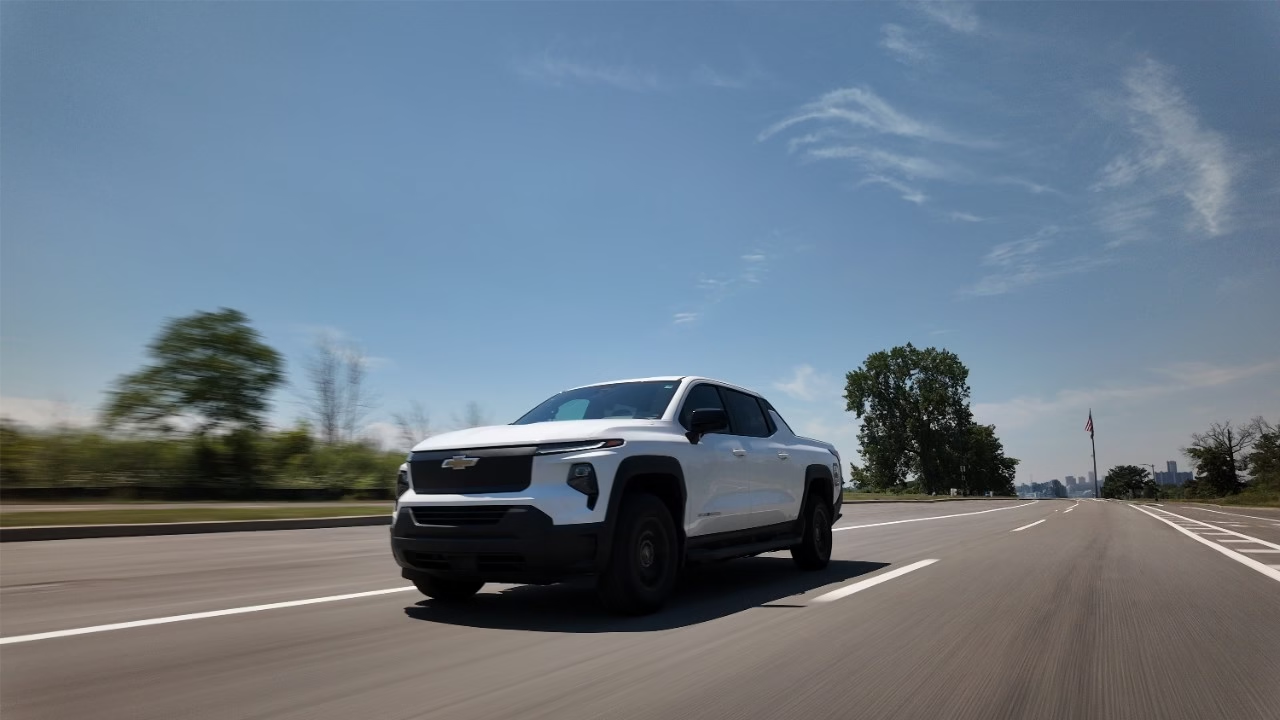
Setting New Benchmarks in Electric Truck Range
Electric vehicles are rapidly evolving, with range anxiety often cited as a key barrier to adoption. In 2025, leading automakers are pushing the limits of EV technology to deliver vehicles capable of longer trips without recharging. Recently, General Motors took a giant leap forward by breaking the EV range record with their Chevy Silverado EV Max Range Work Truck. This breakthrough shows how automakers can optimize existing EV technology to dramatically increase driving distance, providing practical benefits for work and everyday use. This achievement enhances the viability of electric trucks for long-haul and demanding use cases, illustrating how innovation continues to reshape the EV market landscape.
Breaking the Record: How GM Achieved Over 1,000 Miles on a Single Charge
The 2026 Chevrolet Silverado EV Max Range Work Truck was put to the test in a real-world, on-road range challenge executed by GM’s engineering team near Milford Proving Ground, Michigan. This test covered an unprecedented 1,059.2 miles on a single charge, significantly surpassing the previous 749-mile record set by Lucid earlier in 2025. Notably, GM engineers made no hardware or software modifications to the truck. Instead, success relied on optimizing driving habits and minor adjustments within the owner’s manual guidelines—such as maintaining an average speed of 20-25 mph, maximizing tire pressure, minimizing drag, and avoiding unnecessary acceleration or braking. These refinements highlight how integrated engineering across battery chemistry, vehicle aerodynamics, drivetrain efficiency, and software calibration enables remarkable gains in EV range.
Why This Record Matters for EV Adoption and Truck Applications
Range is a top priority for EV buyers, especially in trucks, where utility and long-distance capability are critical. The Silverado EV Max Range Work Truck’s EPA-estimated 493 miles already leads the electric truck segment, but this real-world achievement signals the potential for even greater range. Extended driving distance on a single charge reduces range anxiety and expands the practical applications of electric trucks in construction, agriculture, logistics, and general transportation. It also sets a new benchmark for competitors and drives innovation across the industry. As electric trucks become more capable, they will accelerate the shift towards sustainable transport in traditionally heavy-duty sectors, supporting broader environmental goals and meeting customer expectations for reliability and performance.
Engineering Innovation Drives the Future of Electric Vehicles
GM’s record-breaking Silverado EV test is more than a feat of endurance—it’s a testament to the rapid progress in electric vehicle technology. By pushing “what if” scenarios into real-world achievements, GM engineers demonstrated that thoughtful engineering and holistic optimization can maximize EV capabilities today. These insights will inform future improvements in battery tech, vehicle design, and energy management systems. With continued innovation and supportive policies, the future of electric vehicles—especially in the truck segment—looks promising, offering consumers and industries cleaner, more efficient options than ever before.