EV Market Boom Sets New Records
Electric vehicles surge across Europe in 2025. From January to October, 2.02 million battery electric vehicles (BEVs) registered, up 26.2% from 2024. This tops last year’s full total of 1.99 million units. Moreover, the overall car market grew just 1.9% to 11 million registrations. As a result, BEVs claim 18.3% share, rising from 15.4%. Germany leads with 434,627 BEVs, a 39% jump and 18.4% share. Meanwhile, the UK follows at 386,244 units (22.4% share), and France logs 250,418. Thus, electromobility outpaces traditional sales. For context, global EV sales near 22 million this year, with Europe at 17% share amid China’s dominance.
Regional Divides Shape Adoption
Europe splits into two speeds for EV growth. Northern leaders shine bright. Norway tops with 95.1% BEV share. Denmark hits 66.5%, Sweden 35.5%, Netherlands 35.4%, and Belgium 33.7%. However, Southern and Eastern markets lag. Italy stays at 5.2%, Spain 8.5%. Poland grows 125% yet holds 6.4% share, like Czechia’s 5.6%. Some even decline, such as Croatia (-43%) and Estonia (-33%). Germany, France, and UK sit mid-pack. Additionally, this uneven progress fuels consumer uncertainty over 2035 engine phase-out debates. Expert Stefan Bratzel warns flexibility risks long-term competitiveness. Still, EVs power urban commuting and delivery fleets effectively here.
Germany Forecasts Record BEV Sales
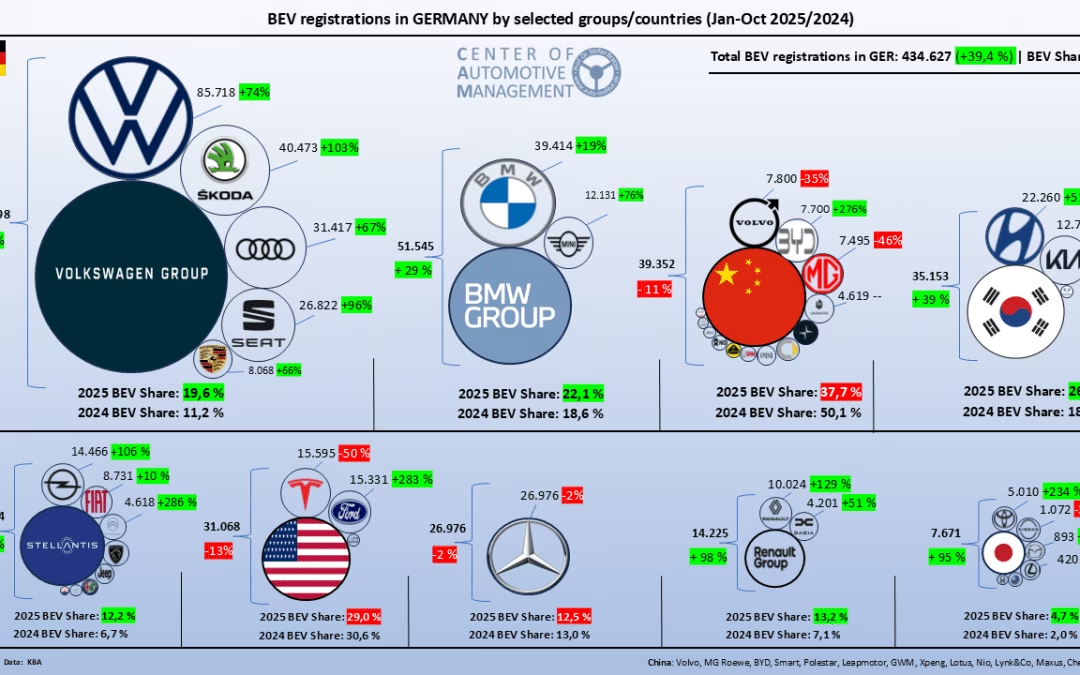
Germany eyes 530,000 BEV registrations in 2025, topping 2023’s bonus-driven peak. Jan-Nov sales hit 490,368, up 41.3%, with 18.8% share. PHEVs rise to 10.8% projection too. Volkswagen Group dominates, selling 192,498 BEVs (+81%), boosting share to 19.6%. Škoda surges 103%, Seat/Cupra 96%, VW cars 74%. BMW Group adds 51,545 (+29%), share at 22.1%. MINI leaps 76%. Hyundai/Kia gain 39% to 35,153 units, 26.5% share. Thus, these models suit family sedans and compact city cars perfectly. Overall, BEVs transform German highways and public transport.
Manufacturer Winners and Challenges
VW Group leads Europe too, with 2.96 million total registrations (+4.6%). Chinese brands explode 22.5% to 641,042 units; BYD jumps 285%. Yet, Tesla drops 50%, US brands down 13% to 31,068 in Germany. Stellantis grows 64% to 32,654 BEVs, share to 12.2%. Renault doubles to 13.2% share. Mercedes lags at -2%, 12.5% share. Chinese mix: BYD gains, but Volvo (-35%), MG (-46%) falter. Ford bucks trend with +283%. Moreover, thermal innovations like advanced battery cooling enhance these EVs for long-haul trucks and cold-weather reliability. Competition sharpens EV applications in logistics and ridesharing.
Policy Insights and Future Push
Subsidies spark debate in Germany. Bratzel favors charging infrastructure over purchase bonuses to avoid value distortions. Free charging for a year on affordable EVs builds sustainability. Meanwhile, Europe’s overall market stalls, but VW, BMW, Renault gain share. Chinese rise challenges incumbents. Uncertainty lingers on propulsion future. Yet, clarity boosts buying. For example, fast charging networks expand 50% in Europe. EVs cut emissions in buses and vans effectively. IAA 2025 previews more, like Hyundai’s compact concepts. Thus, 2025 pivots electromobility forward.
EV Applications Drive Everyday Impact
Electric vehicles excel in diverse roles. Passenger cars lead, but fleets thrive too. Delivery vans gain range via thermal management. Buses in Norway cut urban pollution sharply. Compact BEVs suit city parking and commutes. High-share nations deploy EVs in public transit seamlessly. Germany’s VW models power cross-country travel. Innovations like intelligent energy systems optimize truck efficiency. Overall, these trends signal mainstream shift. Adoption accelerates sustainable mobility worldwide.