CATL pushes forward with solid-state battery innovation. The company files a key patent to fix sulfide electrolyte issues. This step prepares for 2027 pilot production. China sets a national standard in July 2026. Thus, CATL positions itself as a leader confidently.
CATL Solid-State Battery Infographic
CATL’s patent PCT/CN2025/086345 details a positive electrode active material. It uses fluorine-containing lithium salts with sulfide electrolytes. These materials create stable solid-electrolyte layers effectively. As a result, batteries resist degradation during cycles. Chief Scientist Wu Kai stresses this roadmap focus.
Sulfide electrolytes suffer from interface failures often. High-voltage cathodes worsen this problem quickly. However, CATL’s approach generates lithium fluoride shields. This innovation boosts longevity and fast charging. Moreover, it reaches technology readiness level 4 now. Engineers aim for levels 7 or 8 by 2027.
Development stays at lab validation stage currently. Yet, CATL builds on 10 years of research experience. Global rivals like Toyota and Samsung file similar patents actively. Therefore, competition drives rapid progress forward.
Massive Reservations Fuel Scaling Efforts
CATL signs a huge deal with Guangdong Jiayuan Technology. They reserve 626,000 tons of copper foil for 2026-2028. This agreement values at 66 billion yuan roughly. Copper foil serves as anode current collectors crucially. Thus, it supports both semi-solid and all-solid routes.
Jiayuan’s capacity ensures steady supply amid shortages. In 2025, their shipments to CATL were small initially. However, this pivot signals industrialization commitment strongly. Past joint ventures show deepening ties reliably. For example, earlier pacts built high-performance foil projects.
Supply chain stability cuts risks effectively. It allows focus on engineering hurdles ahead. Consequently, CATL avoids material bottlenecks during solid-state pilots.
Engineering Hurdles Demand Innovative Solutions
CATL targets 60Ah automotive-grade prototypes soon. Current samples stand at 20Ah levels. Sulfide stacks require constant high-tonnage compression. Brittle layers act like “polished slate tiles” under pressure. Therefore, rigid casings challenge weight advantages.
Costs remain 3-5 times higher than lithium-ion now. Engineering moat lies in reliable scaling. CATL tempers hype around 2,000 km range rumors. Instead, early uses target drones and robotics. There, density trumps cost parity.
October 2025 statements confirm science hurdles mostly solved. Yet, manufacturing persists as key barrier. Active strategies like doping improve stability further. For instance, oxygen substitution aids chemical resilience.
Pilot Production Looms by 2027
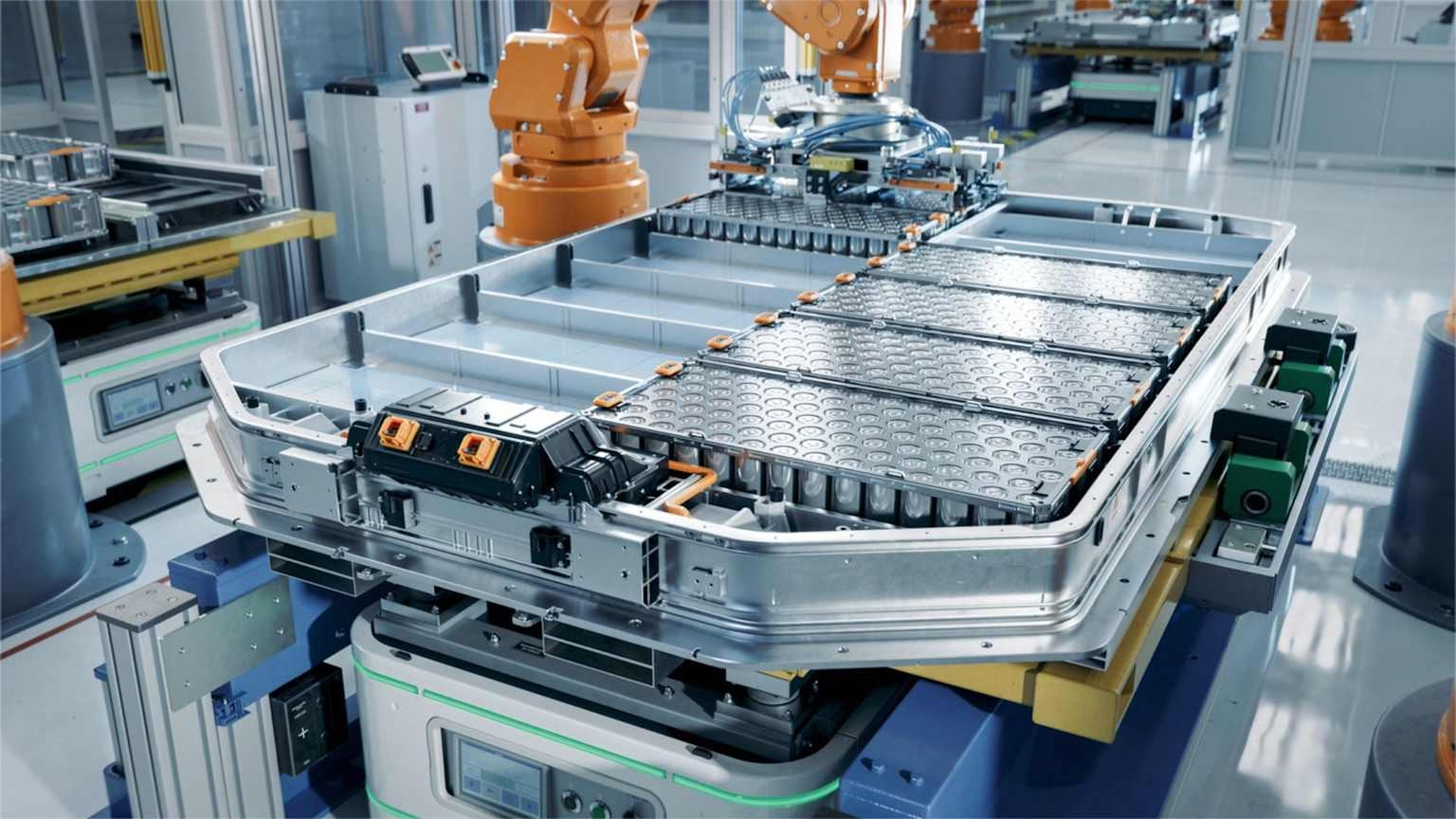
CATL’s Ningde Shidai All-Solid-State hits 500 Wh/kg density. Pilot development starts in China actively. By 2027, vehicles integrate prototypes. Semi-solid shipments forecast at 160 GWh by 2028. All-solid follows at 13.5 GWh.
Lithium solid-state market grows at 42% CAGR to 2028. Demand surges for long-range EVs. CATL’s dual strategy locks IP and materials. Rivals watch closely as standards emerge. Thus, China ignites the global race fiercely.
This patent and pact mark strategic wins. They pave way for mass production by 2030. Investors note record 2025 profits too. Overall, CATL leads solid-state commercialization boldly.