
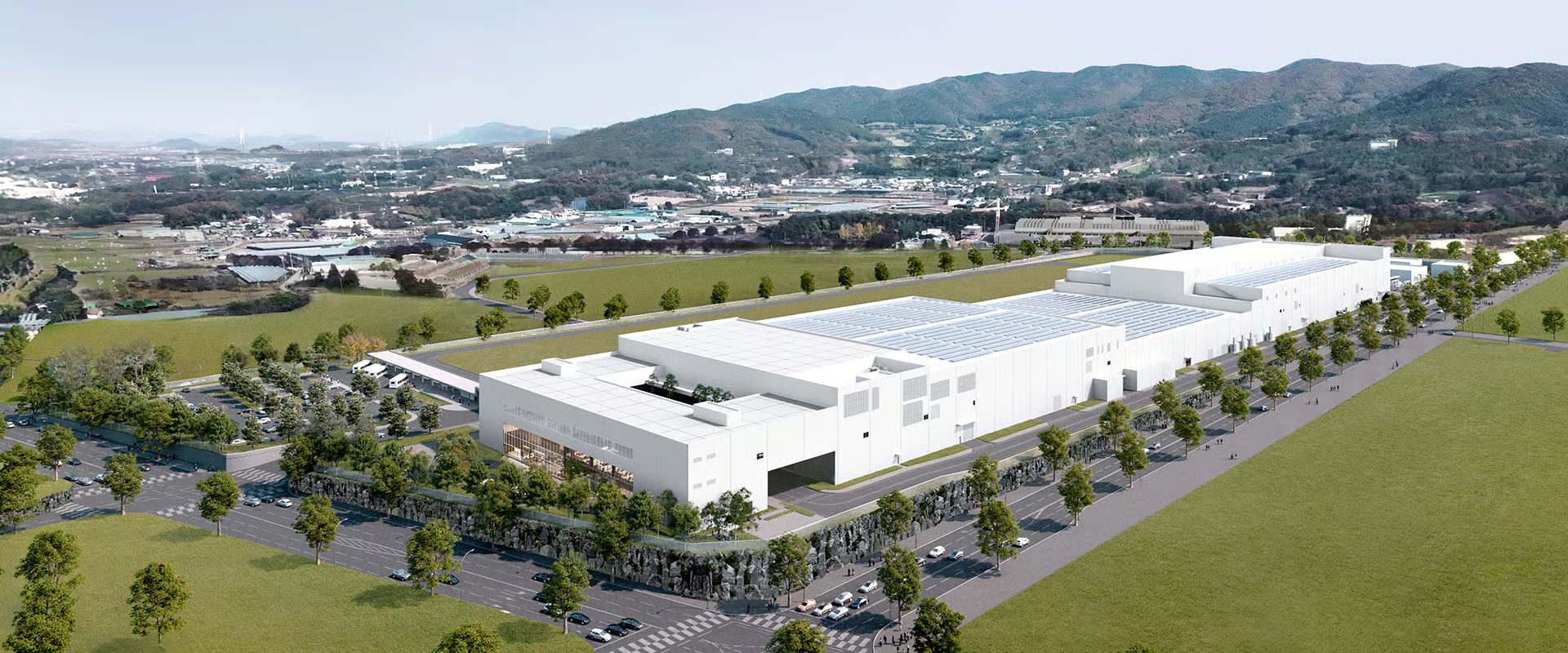
Accelerating EV Battery Innovation with a New R&D Hub
Hyundai Motor Group is significantly advancing its electric vehicle (EV) battery technology through the development of its Future Mobility Battery Campus in Anseong, South Korea. Marking a major milestone, the group held a topping-out ceremony in late 2025, highlighting steady construction progress since January of that year. This cutting-edge facility is supported by a KRW 1.2 trillion investment. Besides is set to become Hyundai’s first fully integrated battery research and development center. Spanning a sprawling 197,000 square meters with 111,000 square meters of floor space, completion is targeted for the end of 2026. This campus represents Hyundai’s strategic push to internalize core battery technologies, including cell design, process engineering, and control systems. To optimize EV battery performance and seamless vehicle integration—essential drivers in the ongoing global electrification push.
Comprehensive Battery Technology Research & High-Precision Validation
Hyundai’s Future Mobility Battery Campus has advanced infrastructure that replicates precise battery cell production processes. Such as electrode preparation, assembly, and activation under controlled, real-world conditions. This allows Hyundai to perform iterative validation on battery safety, quality, scalability, and lifecycle performance. From single cells to full vehicle integration. The facility’s holistic approach to research extends beyond basic cell development to continuous process verification. Ensuring consistent quality and reliability geared to meet high-performance and safety standards demanded by modern EVs and extended range electric vehicles (EREVs). This meticulous validation process facilitates the refinement of next-generation lithium-ion cells and adaptation to emerging battery formats and materials.
Integration of Digital Technologies and AI in Battery Development
Innovation at Hyundai’s battery campus is further enhanced by the integration of AI and big data analytics. The facility employs predictive modeling and automated testing platforms to accelerate research accuracy and process efficiency. AI-driven data analytics generate deep insights into battery reliability and performance optimization, supporting faster iteration cycles and reduced development risks. This digital transformation equips Hyundai Motor Group with the tools needed to maintain leadership in a competitive EV market. Where cutting-edge battery technology is a crucial differentiator.
Strategic Industry Collaboration and Future Mobility Expansion
Hyundai plans to leverage the campus as a nucleus of collaboration with battery manufacturers and industrial partners across the value chain. This collaborative ecosystem aims to accelerate technology commercialization, facilitate shared innovation, and reduce technical risks. Moreover, the group envisions expanding the campus’s research scope beyond EVs to include robotics and Advanced Air Mobility (AAM). Positioning itself strongly for future mobility trends. Hyundai’s recent partnership with Gyeonggi Province and Anseong City to build a thriving battery industry ecosystem underlines its commitment to sustainable growth and economic development alongside technological advancement.
Elevating Hyundai’s Global EV Competitiveness
The Future Mobility Battery Campus embodies Hyundai Motor Group’s vision of enhanced global competitiveness in electric vehicles. By internalizing core battery technology R&D and validating these technologies under precise real-world conditions, Hyundai expects to optimize EV performance, safety, and cost-efficiency. This initiative will help Hyundai meet expanding consumer demand for durable, efficient EV batteries. Thereby accelerating the global transition toward electric mobility. With the facility’s completion scheduled for late 2026, Hyundai stands poised to lead advancements in battery innovation that will underpin next-generation EVs and sustainable transportation solutions worldwide.