Fachhochschule Dortmund drives innovation in electric vehicles through the ODYSSEV project. ODYSSEV project is funded by the European Union under GA No. 101192612, and spans 42 months. The project is led by CIRCE-Centro Technologico in Zaragosa, Spain, and brings together 14 European partners from eight countries, to develop high-voltage powertrains beyond today’s 800 volts. ODYSSEV aims to cut charging times and boost ranges significantly. This work tackles key buyer hesitations head-on. Moreover, it promises lighter, more efficient cars for daily use.
Physics Powers High-Voltage Breakthroughs
High-voltage systems transform how electricity flows in electric cars. Think of current like water in a hose—higher pressure means more power with thinner pipes. Consequently, vehicles need less cable weight. They also lose less energy as heat. ODYSSEV pushes voltages over 1,000 volts. However, challenges arise with insulation and semiconductors. Batteries must handle rapid energy surges without overheating. The project addresses these hurdles directly.
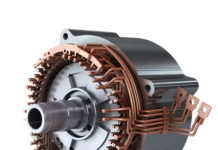
Teams develop advanced materials and power modules. For instance, they create custom electric motors paired with flexible battery packs. This setup scales efficiently across models. Simulations guide early designs, saving time and costs. Later, prototypes hit the LaSiSe test track in Selm. Such steps ensure real-world reliability. Additionally, cloud tools speed up integration across components like chargers and inverters.
Dortmund Leads System Architecture
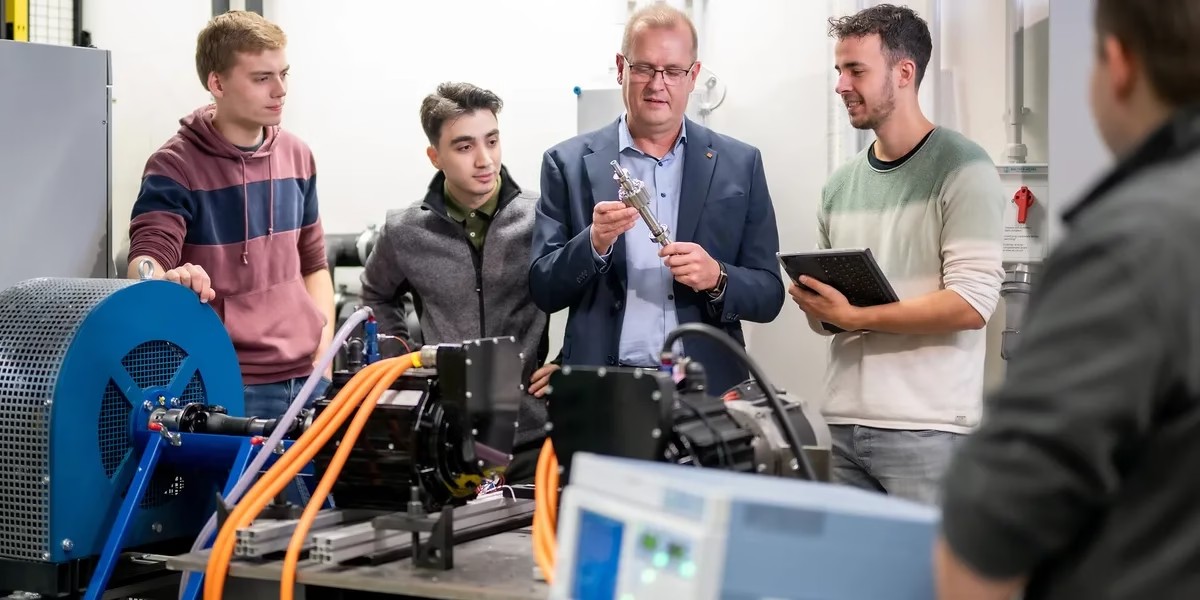
Fachhochschule Dortmund (FHDO) is a significant contributor in ODYSSEV, leading the system-level design of next-generation high-voltage electric powertrains. FHDO’s team is led by Prof. Dr. Markus Thoben, who will lead the design and simulation of the powertrain package at the system level, with attention to thermal management and wiring. Another key contribution of FHDO is the real-time data monitoring through a cloud-based model, ensuring the durability and cooling efficiency of the thermal management of the vehicle.
Prof. Thoben emphasizes practical gains. Thinner cables reduce vehicle weight notably. Efficiency rises, making EVs appealing to more drivers. Research associate Seyed Saeed Mirsafian handles modeling tasks. His team optimizes interactions digitally first. This approach cuts prototype risks effectively.
ODYSSEV started in early 2026 with a kick-off in Zaragoza, Spain. A lab tour at CIRCE Institute inspired all partners to give their best in this joint effort. Next, partners will meet in Dortmund by June 2026.
EU Strategy Fuels Electromobility Goals
ODYSSEV aligns with Europe’s climate ambitions. Transport emissions drop as EVs adopt faster. High-voltage tech secures a competitive edge. It matches global rivals like China’s rapid advances. Yet, Europe focuses on safety standards too. The project defines norms for voltages above 800V. This prevents risks in fast charging.
Industrial players like Mitsubishi Electric contribute expertise. They refine on-board systems for mass production. Universities add theoretical depth. Together, they build scalable solutions. Test results will validate claims soon. For buyers, shorter charges mean less range anxiety. Daily commutes become seamless. Thus, adoption accelerates across Europe.
Future Roads for Sustainable Drives
High-voltage innovations reshape EV markets profoundly. Lighter cars extend ranges naturally. Efficiency curbs energy waste further. ODYSSEV demonstrator tests prove viability. Europe leads in sustainable powertrains now. Buyers gain practical benefits quickly. Meanwhile, standards ensure safe growth.
Projects like this bridge lab to road swiftly. Dortmund’s role highlights applied research strengths. Partners integrate findings holistically. Outcomes influence policy and industry alike. Electric mobility thrives as a result.