
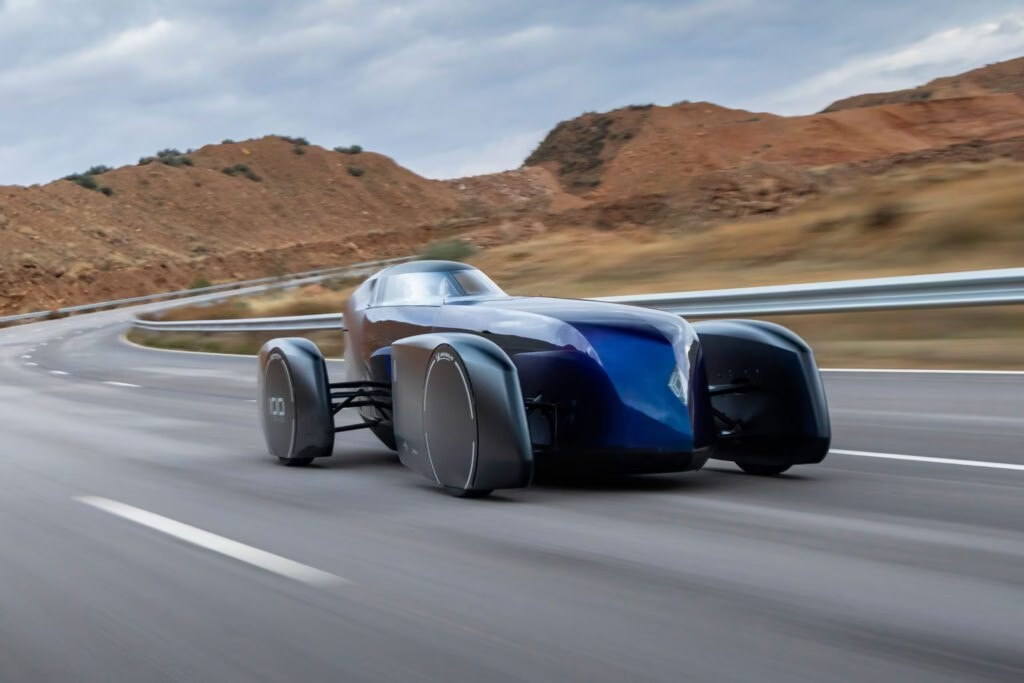
Range anxiety fades as innovations emerge. Renault‘s Filante Record 2025 proves this shift. It traveled 1,008 km at 102 km/h average speed using just an 87 kWh battery. This matches the Scenic E-Tech electric’s capacity. Thus, highway travel becomes viable without frequent stops.
Ultra-Aerodynamic Design Drives Breakthrough
Engineers slashed the drag coefficient from 0.40 to 0.30. They redesigned wheel fairings and minimized air intakes after wind tunnel tests. Additionally, the car weighs only 1,000 kg thanks to carbon fiber construction. Michelin crafted custom low-rolling-resistance tires. Ligier built the powertrain, chassis, and structure. As a result, consumption hit 7.8 kWh per 100 km. At the finish in Morocco’s UTAC circuit, 11% battery remained—enough for 120 more km above 100 km/h. Consequently, the nine-hour-52-minute run doubles efficiency of rivals like Tesla Model 3.
Steer-by-Wire and Lightweight Tech Shine
The Filante features steer-by-wire and brake-by-wire systems. Teams used 3D-printed aluminum parts for precision. These choices cut weight while boosting control. Sandeep Bhambra, Renault’s Chief Designer Advanced, highlights the teamwork. Experts optimized aerodynamics, tires, and materials. Therefore, electric vehicle applications expand to sustained motorway speeds. Prototypes like this inform production models. For example, future Scenic variants gain similar efficiency tweaks.
Electric Vehicle Applications in Long-Haul Travel
Electric vehicle applications thrive beyond cities. Long-distance highway drives now work seamlessly. The Filante demo shows family-sized batteries suffice for 1,000+ km trips. Fleets benefit first—think delivery vans and coaches. Moreover, passengers enjoy stress-free road trips. Rivals like Mercedes EQXX inspired this push. Yet, Renault focuses on real-world speeds over eco-mode tricks. Thus, adoption surges. By 2030, experts predict 40% of Europeans drive EVs on highways daily. Challenges like weather persist, but modular designs solve them.
Broader Impacts on Sustainable Mobility
Insights from Filante flow to Renault’s lineup. Production EVs adopt cell-to-pack batteries for better space use. Narrow 1.71m width aids airflow without sacrificing stability. Meanwhile, partners like Michelin scale tire tech. Global tests validate results across climates. As a result, lifecycle emissions drop sharply. Overall, this record accelerates the shift. Electric vehicle applications redefine reliability for commuters and travelers alike. Renault leads with practical proofs, not just promises.