RWTH Aachen University’s PEM Chair launched the ViDeLL project on January 19, 2026. This initiative tackles rising freight transport demands head-on. Professor Achim Kampker warns of imminent road congestion. Therefore, ViDeLL creates virtual road sections for automated logistics vehicles. Funded by North Rhine-Westphalia and the EU’s ERDF program, it runs until December 2028. Moreover, partners like TH Köln, Ecoro GmbH, and ETO drive innovation forward.
Virtual Logistics Lanes Enhance Efficiency
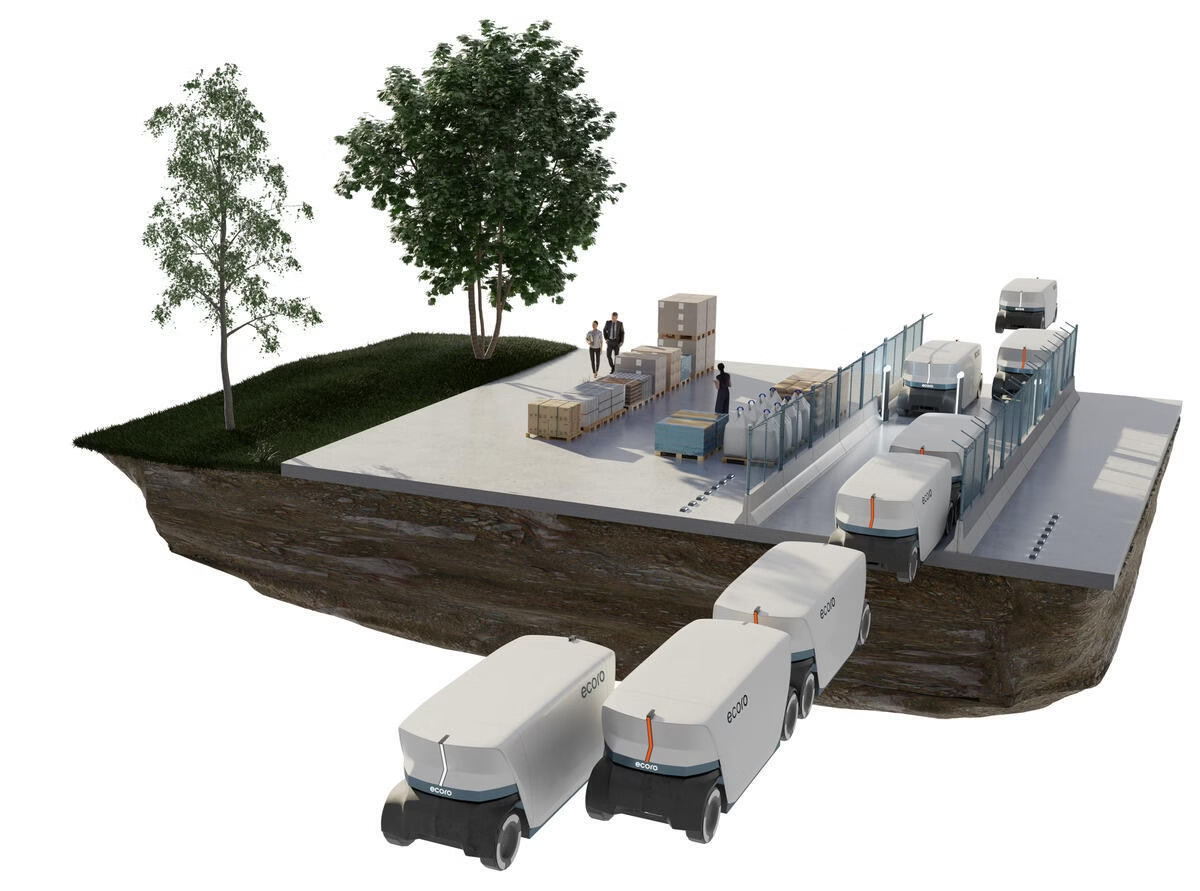
Virtual logistics lanes offer temporary exclusive access for autonomous vehicles. Unlike physical lanes, they use smart road markings and sensors. This approach saves costs significantly. For example, Ecoro’s electric shuttle hauls 2.4 tonnes at 60 km/h. It mirrors indoor AGVs but operates outdoors. Consequently, cities avoid expensive infrastructure builds. PEM’s Tarik Hadzovic highlights economic benefits. Flexible optical systems maximize existing road space. Thus, urban areas gain smarter traffic flow.
Smart Road Markings Power the System
Intelligent road markings form the backbone of ViDeLL. They integrate with infrastructure sensors and a central control unit. Automated vehicles read these markings in real-time. As a result, logistics firms deploy fleets without vehicle-mounted sensors. This cuts expenses further. On-site sensors prove cheaper and more scalable. For instance, they secure virtual sections dynamically. Transitioning to such tech aligns with Europe’s push for green logistics. Overall, ViDeLL sets a new standard.
Algorithms Drive Real-Time Traffic Control
Project teams develop algorithms for dynamic lane allocation. Real-time traffic data fuels these smart systems. Therefore, lanes adapt instantly to freight needs. PEM focuses on urban last-mile delivery and industrial routes. Current projects optimize EV charging or routes alone. However, ViDeLL goes further. It blends vehicles, sensors, and controls holistically. Moreover, it studies interactions with cyclists and cars. Safety concepts emerge from these analyses. Regulators gain clear adjustment recommendations.
Freight Boom Demands Urgent Innovation
Freight volumes surge across Europe. By 2030, road traffic could rise 40%, per EU forecasts. Cities like those in North Rhine-Westphalia face gridlock daily. ViDeLL counters this effectively. It targets commercial and end-user logistics alike. Industrial sites connect seamlessly too. For example, automated shuttles reduce emissions versus diesel trucks. Ecoro’s vehicles exemplify zero-emission potential. Thus, air quality improves noticeably. Furthermore, noise pollution drops in dense areas.
Broader Impacts on Sustainable Mobility
ViDeLL promises regulatory and economic realism. Feasibility studies validate urban integration. Partners analyze use cases thoroughly. Consequently, cities implement proven solutions faster. PEM‘s expertise in e-mobility components shines here. Past projects like hydrogen refueling tools build credibility. Moreover, virtual lanes support electric fleets directly. They ease last-mile challenges for EVs. As adoption grows, congestion eases. Workers benefit from reliable routes. Businesses cut delivery times sharply.
Partner Synergies Fuel Project Success
TH Köln leads the consortium expertly. RWTH spin-off PEM Motion adds motion tech prowess. ETO supplies sensor innovations from Baden-Württemberg. Ecoro brings autonomous shuttle reality. Together, they craft a technical demonstrator. Field tests validate concepts soon. For instance, Munich’s startup proves outdoor AGV viability. This collaboration mirrors RWTH’s Smart Logistic Grids legacy. That initiative optimized supply chains with real-time data. Now, ViDeLL advances urban freight specifically.
Future of Automated Logistics Unveiled
ViDeLL transforms traffic management fundamentally. Virtual lanes boost flexibility beyond static infrastructure. Logistics firms gain competitive edges. Cities welcome greener, quieter streets. Therefore, stakeholders eye rapid scaling. EU funding underscores its strategic value. By 2028, prototypes pave deployment paths. Moreover, algorithms ensure safe human-machine harmony. Regulators adapt rules proactively. In turn, North Rhine-Westphalia leads innovation. Electric shuttles proliferate efficiently. Freight evolves sustainably.
Economic and Environmental Wins
Costs plummet with virtual over physical builds. Construction disrupts less too. Sensors on roads outpace vehicle retrofits financially. Emissions fall as EVs dominate lanes. For example, 60 km/h shuttles replace vans effectively. CO2 savings align with net-zero goals. Jobs shift to tech oversight positively. ViDeLL positions Germany as logistics pioneer. Global cities watch closely.