Electric vehicle applications extend far beyond roads. Ferries and ships now lead maritime electrification. Global sales of battery-electric ship s hit record highs this year. For instance, Europe deploys over 500 electric ferries. Norway alone operates 80% of its short-sea routes on batteries. Meanwhile, Asia tests mega-batteries for cargo ships. These advances cut emissions by 90% on routes like Buenos Aires to Uruguay. Thus, Incat Tasmania’s Hull 096 sets a new benchmark. It proves large-scale EV tech works at sea.
Hull 096 Achieves Historic Power-Up
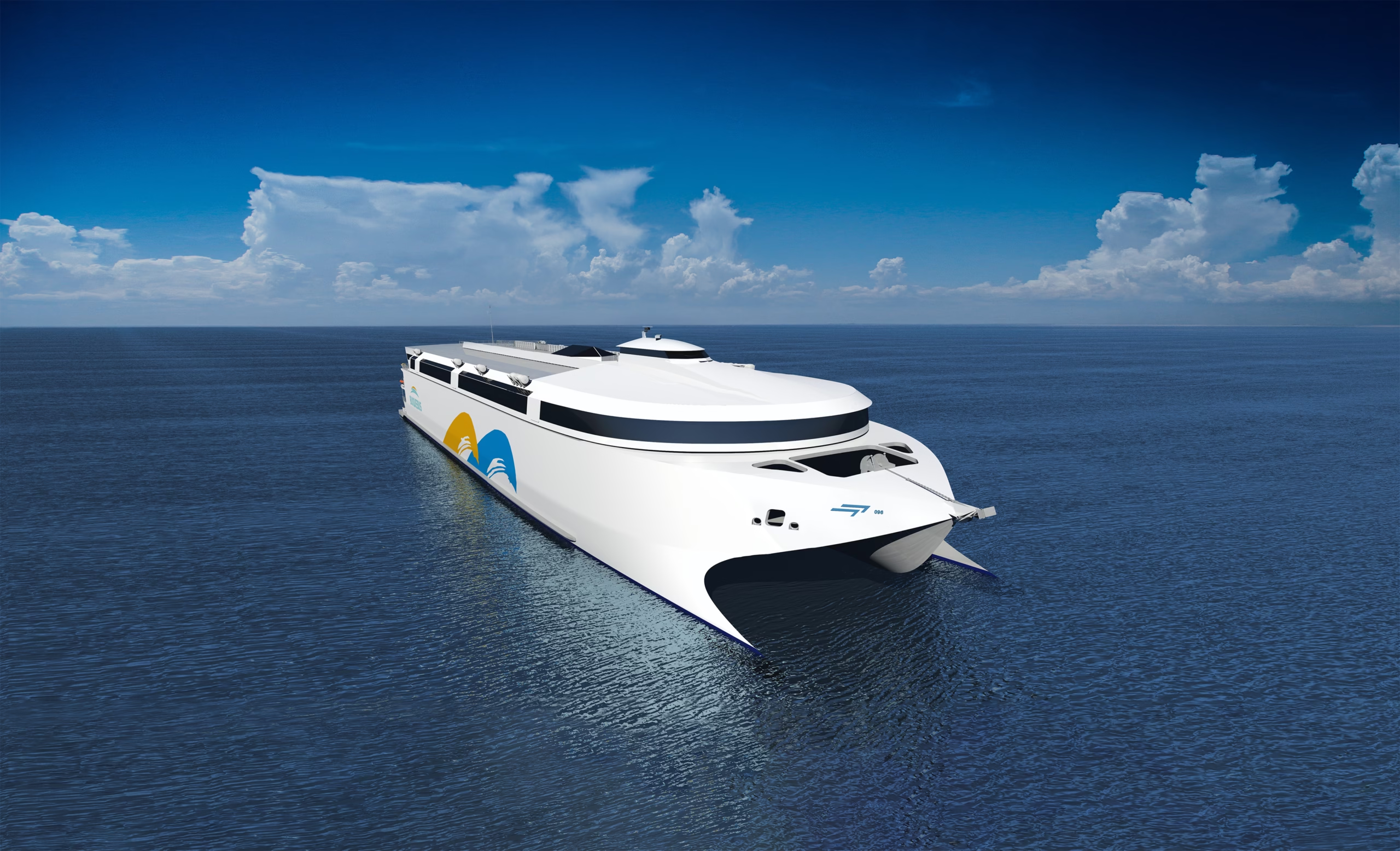
Incat Tasmania marked history on December 14, 2025. The firm powered up Hull 096 in Hobart. This 130-meter vessel became the largest battery-electric ship ever. Moreover, it ranks as the biggest electric vehicle globally. The ship carries 2,100 passengers and over 220 vehicles. Incat Chairman Robert Clifford activated its waterjets. Dignitaries like Tasmanian Premier Jeremy Rockliff watched the demo. First, the e-motor trial succeeded on the River Derwent. Therefore, the vessel operated 100% on battery power.
Massive Battery System Drives Innovation
Hull 096 packs over 250 tonnes of batteries. Its Energy Storage System (ESS) delivers more than 40 MWh. This capacity dwarfs prior maritime installs by four times. Eight electric-driven waterjets propel the ferry. Wartsila partnered on these efficient units. Consequently, the ship hits speeds over 40 knots. Full charges take just 40 minutes at berth chargers in Argentina and Uruguay. Batteries sustain 90-minute crossings on the River Plate. As a result, zero-emission service becomes viable for high-volume routes.
Ferry Applications Transform Short-Sea Travel
Electric vehicle applications shine in ferries. Hull 096 targets Buenos Aires-Uruguay runs for Buquebus. It joins eight prior Incat vessels for the operator. Daily, it hauls passengers, cars, and trucks emission-free. Retail space spans 2,300 square meters duty-free. Moreover, lightweight aluminum construction boosts efficiency. Similar ferries now serve Oslo fjords and Scottish isles. Thus, coastal fleets cut fuel costs by 70%. Heavy-duty EV tech scales to commercial shipping next.
Tasmania Leads Sustainable Shipbuilding
Incat built Hull 096 entirely in Hobart. This feat highlights Australian advanced manufacturing. Tasmania pioneered aluminum catamarans decades ago. Now, it dominates battery-electric ferries. Robert Clifford calls it a “turning point for shipbuilding.” Trials continue before South America delivery. Pilots confirm propulsion reliability. Hence, global operators eye similar designs. Competition grows from Chinese yards too. Yet, Incat sets scale records.
Broader Impacts on Global Maritime EVs
Maritime electrification accelerates worldwide. Incat’s success inspires cargo and cruise sectors. By 2030, experts predict 15% of ferries go electric. Policies like EU’s Fit for 55 mandate zero-emission short-sea ships. Battery costs dropped 20% in 2025 alone. Therefore, payback periods shrink to five years. Challenges like shore charging persist. However, megawatt chargers roll out in ports. Overall, Hull 096 propels the industry toward net-zero seas.