
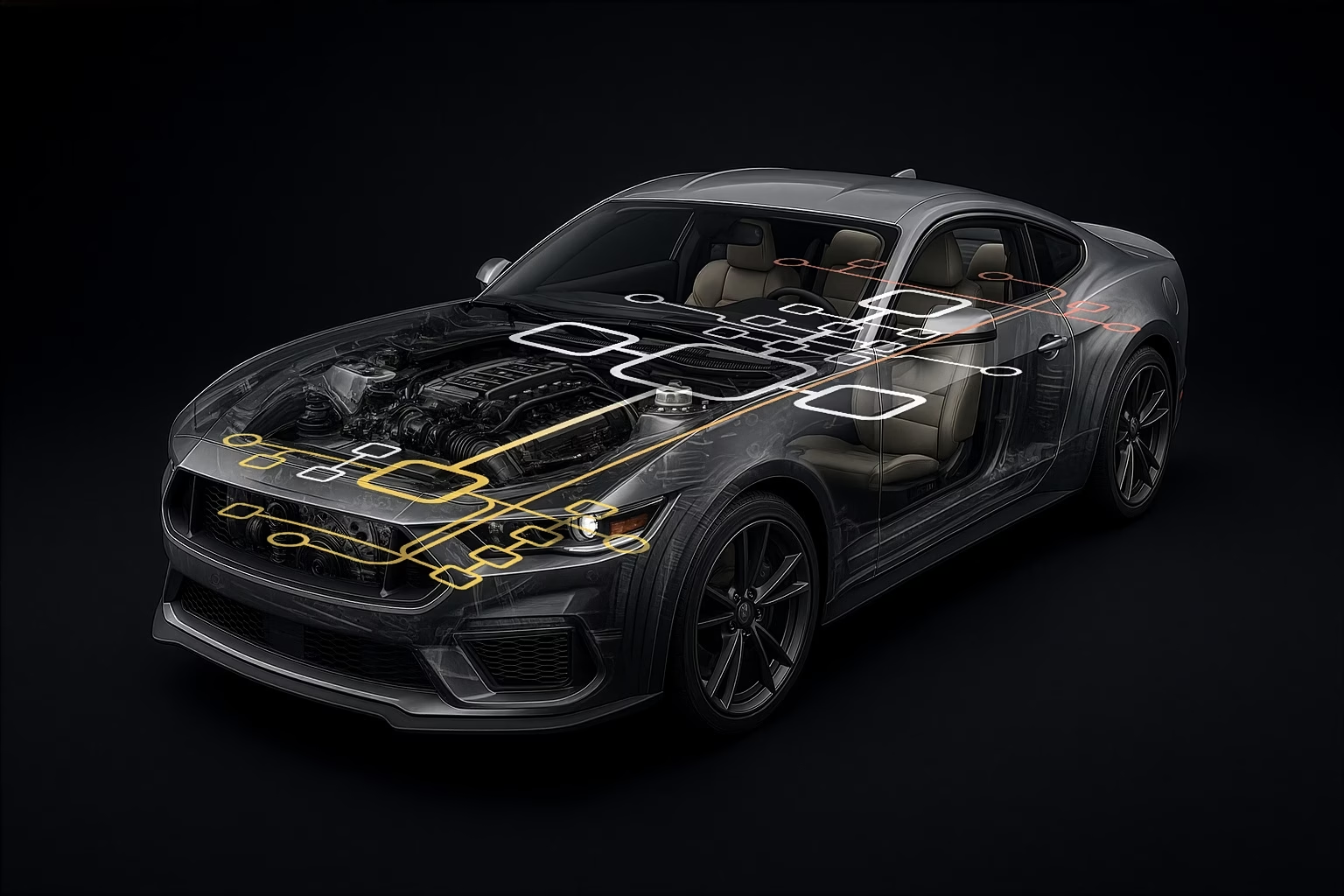
Arrow Electronics kicks off a bold initiative to reshape vehicle electrical and electronic (E/E) architecture. This move targets the rise of software-defined vehicles. Automakers and suppliers gain vital engineering support and stable supply chains. Moreover, the company opens a dedicated research hub. It equips teams to handle complex shifts in automotive design.
The Shift to Centralized E/E Systems
Traditional vehicles rely on separate computers for each feature. This approach creates clutter and inefficiency. However, next-generation E/E architecture changes that. It centralizes power into fewer, smarter computing hubs. These hubs manage multiple functions seamlessly.
As a result, vehicles become lighter and more energy-efficient. Wiring drops by up to 20%, for instance. Engineers update systems via software updates over the vehicle’s life. This evolution aligns with trends toward intelligent mobility. Consequently, cars adapt faster to new tech demands.
Arrow’s Expertise in Hardware and Software
Arrow acts as a key aggregator for E/E solutions. Its team excels in semiconductors and IP&E components like interconnects and passives. They bridge individual parts to full systems. Plus, global inventory ensures supply chain reliability. Multisourced strategies prevent shortages and obsolescence.
On the software side, Arrow expands rapidly. Experts handle AUTOSAR standards, functional safety, and cybersecurity. Recent acquisitions, such as iQmine and Avelabs in 2024, strengthen this. These firms enhance software centers and the Automotive Center of Excellence. Therefore, customers speed up their time-to-market.
Building a Stronger Automotive Ecosystem
Murdoch Fitzgerald, Arrow’s chief growth officer, highlights the impact. He calls E/E architecture the cornerstone of automotive revolution. It shifts from hardware-focused machines to software-driven platforms. Arrow combines engineering, components, and software for this. Thus, it helps clients navigate complexity.
The new research hub offers practical tools. Visitors find whitepapers, technical insights, and design resources. Procurement leaders and engineers benefit most. They access strategies for redesign projects. In addition, this hub fosters innovation across the ecosystem. Partners collaborate more effectively as a result.
Future-Proofing Vehicles with E/E Innovation
Software-defined vehicles demand scalable designs. Arrow’s initiative addresses this head-on. Centralized systems cut costs and improve performance. For electric vehicles (EVs), lighter wiring boosts range and efficiency. Industry experts predict widespread adoption by 2030.
Moreover, cybersecurity grows critical. Arrow’s expertise ensures secure architectures. Supply chain stability remains a top priority too. With $31 billion in 2025 sales, Arrow proves its scale. It serves thousands of manufacturers globally. Therefore, this positions the company as a leader.
Strategic Acquisitions Drive Growth
Arrow’s 2024 moves prove forward-thinking. Acquiring iQmine and Avelabs added deep software skills. These specialists focus on automotive engineering. Now, Arrow’s centers handle advanced development. Clients gain end-to-end support.
The research hub ties it all together. It delivers actionable content for E/E projects. Engineers download tools and case studies easily. This resource hub evolves with industry needs. As vehicles integrate more AI, such support becomes essential. Ultimately, Arrow empowers the next mobility era.
This initiative reflects broader automotive trends. Companies race to simplify E/E systems. Reduced wiring aids sustainability goals. Lighter vehicles lower emissions. Software updates extend lifecycles. Arrow’s role ensures smooth transitions for all players. Its global reach amplifies impact.