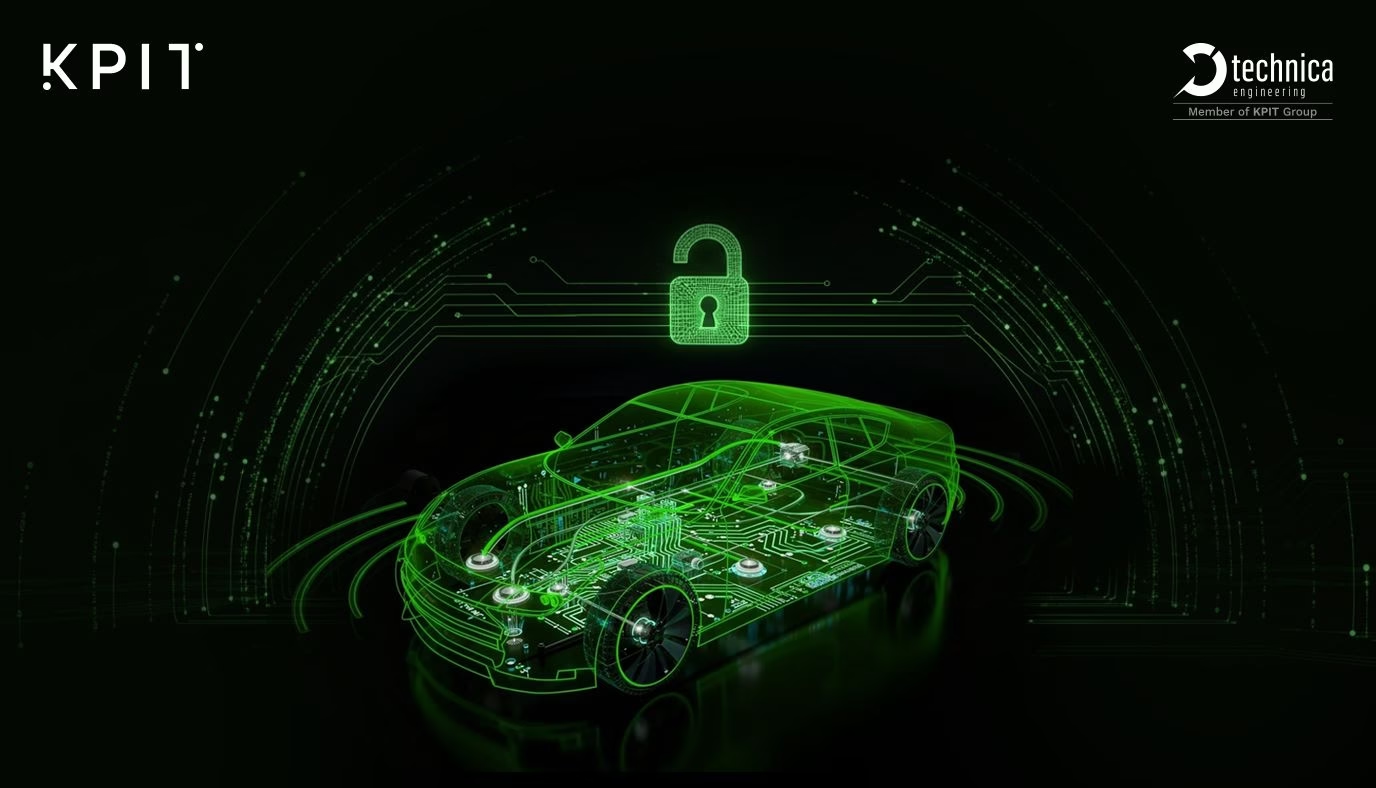
Global electric vehicle sales pushes Automotive Ethernet as a backbone for software-defined vehicles (SDVs). Manufacturers now prioritize fast data exchange between sensors, ECUs, and cloud services. Meanwhile, companies like Technica Engineering and KPIT Technologies lead this shift. They recently opened the SOME/IP specification, a key protocol already in 40 million vehicles. This move accelerates electric vehicle applications, from advanced driver assistance systems (ADAS) to real-time fleet management.
Why SOME/IP Matters for Electric Vehicles
SOME/IP, or Scalable Service-Oriented Middleware over IP, handles secure data transfer across vehicle networks. Originally from BMW, it now supports cameras, sensors, and high-performance computers in EVs. For instance, electric vehicle applications rely on it for low-latency communication in autonomous driving features. Moreover, this protocol ensures cybersecurity, vital as vehicles connect more deeply.
Technica Engineering made SOME/IP freely available, breaking proprietary barriers. Developers, OEMs, and academics can now innovate without restrictions. As a result, software maturity grows faster. Transitioning to open standards like this aligns with industry trends toward interoperability.
Boosting Software-Defined Vehicle Innovation
Software-defined vehicles redefine mobility, and SOME/IP forms their communication core. It enables service-oriented architecture, where updates roll out over-the-air (OTA). Electric vehicle applications thrive here—think battery management systems sharing data instantly with powertrains. Additionally, commercial fleets gain efficiency through seamless sensor integration.
KPIT’s Anup Sable highlights how Ethernet connects actuators and computers for consumer features. Open access speeds up development cycles. Consequently, OEMs deliver safer, smarter EVs quicker. Cybersecurity strengthens too, as broader testing uncovers vulnerabilities early.
Expanding Electric Vehicle Applications
Electric vehicle applications extend beyond passenger cars. Commercial trucks and special-purpose vehicles now use Ethernet for complex tasks. SOME/IP supports this by ensuring data flows reliably between diverse systems. For example, in fleet electrification, it links charging infrastructure to onboard diagnostics.
Industry leaders praise the move. Thomas Königseder, Technica’s CTO, notes it unlocks ecosystem collaboration. Dr. Lars Völker adds that open-source adoption cuts development time. Thus, vehicles become more connected and efficient. In 2026, expect wider SDV deployment, especially in Europe and Asia.
Industry Impact and Future Outlook
Technica Engineering, part of KPIT Group, specializes in Ethernet prototyping and validation. With 600+ engineers across Munich, Spain, Tunisia, and the USA, they drive E/E architecture advances. KPIT, with 13,000 experts worldwide, partners on embedded software and AI for mobility.
Opening SOME/IP at some-ip.com marks a milestone. It fosters co-development in electric vehicle applications like ADAS and V2X communication. Ultimately, this propels cleaner, safer transport. As Ethernet dominates, expect faster innovation and standardized architectures. The automotive ecosystem gains a unified foundation for tomorrow’s vehicles.