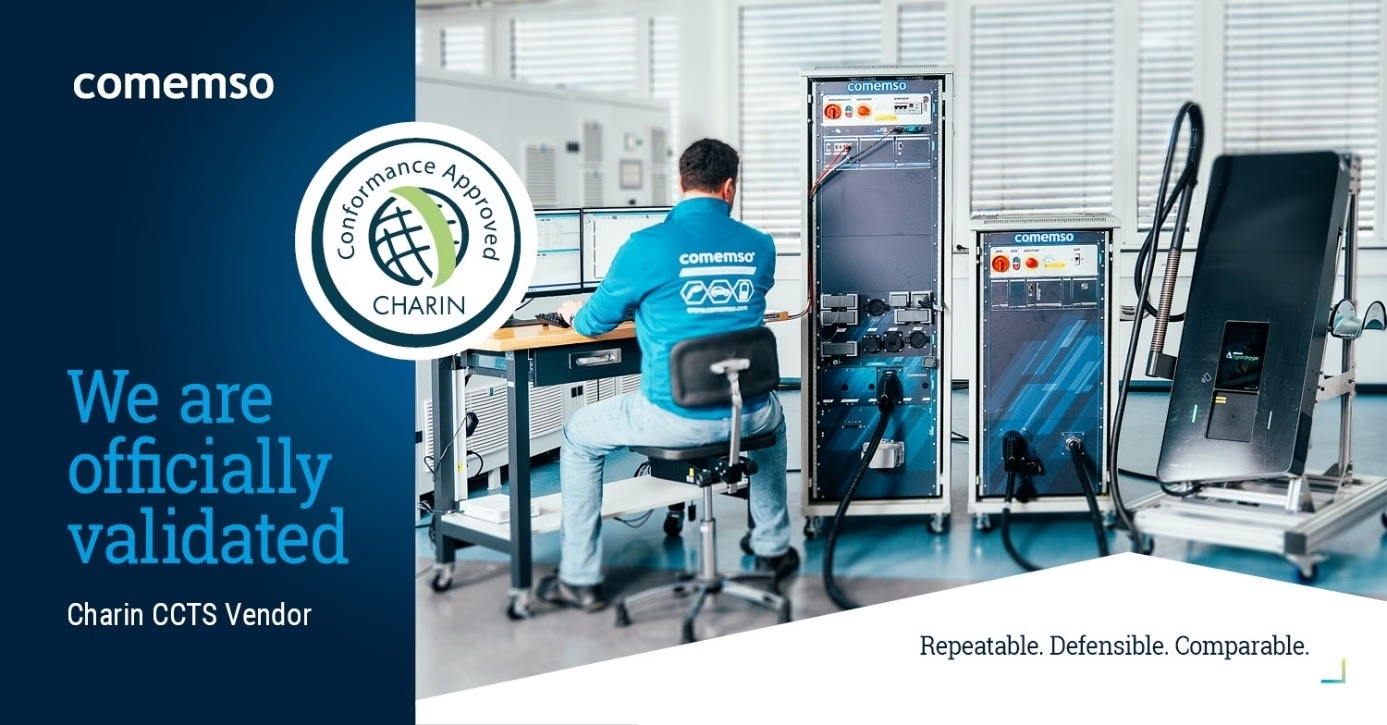
CharIN e.V. just validated comemso electronics GmbH’s EVCA as a Conformance Test System (CCTS) for DC EVSE. This covers both Basic and Extended scopes. Moreover, it guarantees standard-compliant, reproducible tests. Engineers now rely on consistent results across labs worldwide.
The EVCA aligns perfectly with key standards like IEC 61851-1, IEC 61851-23, DIN 70121, ISO 15118-2, and ISO 15118-3. Thus, it supports CharIN’s Umbrella Documents for DC charging systems. For example, manufacturers test fast DC chargers up to 1,000 kW reliably. This step forward tackles a major pain point in electromobility.
Interoperability matters greatly today. EVs from Tesla to Volkswagen need seamless charging. Without it, drivers face errors at public stations. comemso EVCA changes that dynamic.
Core Standards Supported
comemso EVCA handles essential norms head-on. IEC 61851 governs conductive charging basics. Meanwhile, ISO 15118 enables Plug & Charge features. DIN 70121 adds legacy support for older systems.
CharIN’s validation verifies full test case implementation. It checks system performance rigorously. Therefore, labs get comparable outcomes every time. No more guesswork in certification.
Umbrella Documents Role
CharIN Umbrella Documents define official test suites. The Basic DC EVSE version covers core functions. Extended adds advanced scenarios like bidirectional charging. You can download them directly from CharIN’s site for reference. However, EVCA automates execution, saving weeks of manual work.
This validation arrived on February 4, 2026, from Ostfildern, Germany. It marks a key milestone for comemso. Thus, global OEMs gain a trusted tool.
comemso’s Commitment to Quality
comemso electronics GmbH leads in EV test solutions. They serve OEMs, suppliers, and labs worldwide. Their EVCA goes beyond compliance libraries. For instance, it offers automated interoperability tests. Engineers analyze errors fast during development or field service.
Reliable testing builds future-proof infrastructure. comemso stresses this point clearly. “Reliable conformance testing forms the foundation,” they state. Moreover, it fosters trust in electromobility.
Real-world scenarios drive their approach. They translate standards into practical systems. As a result, charging networks expand safely. No station left behind.
This news ripples through the industry. Fast DC charging dominates 2026 trends. Europe pushes for 350 kW+ stations everywhere. However, interoperability lags without tools like EVCA. CharIN’s ecosystem now strengthens.
OEMs benefit directly. Volkswagen and BMW integrate ISO 15118 for smart charging. Tesla’s NACS adapter era demands cross-protocol tests too. comemso EVCA fits all. Thus, it accelerates market rollout.
Labs gain efficiency. Automated functions pinpoint issues quickly. Commissioning shortens from days to hours. Field service teams verify fixes on-site. In short, downtime drops sharply.
Sustainability ties in too. Reliable chargers cut failed sessions. Drivers charge confidently. Moreover, bidirectional V2G setups emerge viable. EV adoption surges as barriers fall.
Future of Testing in Electromobility
comemso pushes boundaries further. They plan advanced libraries for CCS2 and NACS. Meanwhile, 800V architectures demand precise validation. EVCA evolves with them.
Industry shifts favor this. Fast charging infrastructure doubles by 2027. However, standards unify slowly. CharIN CCTS bridges that gap effectively.
Trust grows organically. Manufacturers choose validated systems. Labs standardize processes. End-users experience flawless charging. For example, a road trip from Berlin to Paris works seamlessly now.
comemso’s role expands. They partner with top players. Their solutions scale globally. Ultimately, electromobility thrives on such innovations. Expect wider adoption soon.