In-wheel motor tech gains traction amid zonal architectures. For instance, YASA’s axial flux motors deliver 1,000 bhp per wheel. Thus, partnerships like Donut Lab and WATT push boundaries. They target low-volume production for diverse electric vehicle applications. CES 2026 previews this shift in Las Vegas.
PACES Platform Meets Donut Lab Motors
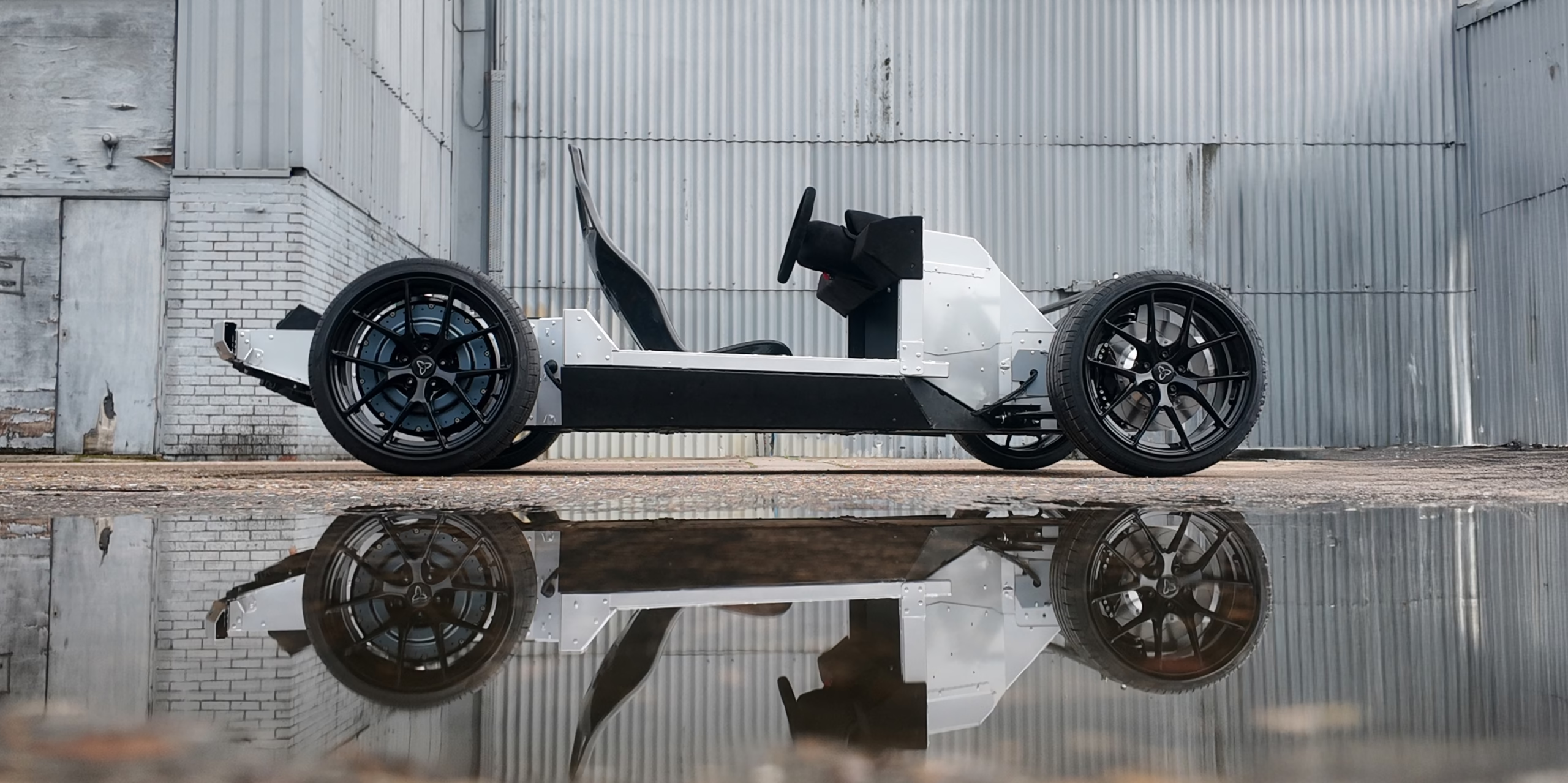
WATT’s PACES skateboard uses aluminum construction and module-to-chassis batteries. Donut Lab adds direct-drive in-wheel motors at the rear axle first. A four-wheel drive version follows in 2026. Engineers control each motor independently with millisecond precision. This enables advanced torque vectoring. As a result, vehicles gain superior agility. Neil Yates, WATT’s CEO, highlights how low mass complements this setup. Meanwhile, traditional powertrains vanish. Direct drive simplifies designs. Therefore, electric vehicle applications expand easily.
Key Tech Features Drive Innovation
Donut Lab’s motors boast high torque and power density. PACES’ light chassis lets them perform optimally. Marko Lehtimäki, Donut Lab CEO, praises this synergy. The modular platform suits low-volume runs. Builders configure for various needs. For example, beach buggies handle sand effortlessly. Sports cars accelerate sharply. Delivery vans navigate cities efficiently. Transition words like “for example” link features to real use. Moreover, no drivetrain components cut weight further. Hence, range improves noticeably.
Torque Vectoring Enhances Handling
Independent wheel control shines in corners. Motors adjust torque instantly. Drivers feel precise responses. Electric vehicle applications in racing benefit most. Commercial fleets avoid skids on wet roads. Safety rises across board. Additionally, low inertia boosts efficiency. Batteries last longer in stop-go traffic. Thus, total ownership costs drop.
Broad Electric Vehicle Applications Emerge
This platform transforms mobility segments. Beach buggies tackle off-road fun. Sports cars deliver thrill without noise. Delivery vehicles cut emissions in urban zones. Furthermore, scalability supports custom builds. Low-volume production speeds market entry. CES 2026 demo draws crowds. Industry watchers expect ripple effects. For instance, similar tech appears in Verge TS Pro motorcycles. IAA 2025 showcased zonal EVs from VW. Competition heats up. Yet, Donut Lab and WATT lead with prototypes ready.
Commercial and Passenger Versatility
Delivery vans electrify last-mile logistics. Sports cars attract enthusiasts. Passenger configs fit families. All gain from direct drive perks. Range anxiety fades with efficient motors. Charging times shrink too. Policymakers favor such innovations for net-zero goals. Europe mandates zero-emission buses by 2030. US incentives boost fleets. As a result, adoption accelerates globally.
Future Outlook for EV Skateboards
Partnerships like this redefine chassis design. In-wheel motors eliminate complexity. Modular batteries adapt quickly. Electric vehicle applications multiply across vans, cars, and beyond. Prototypes prove feasibility now. Full launches follow soon. Challenges like cost persist, but scale solves them. Meanwhile, rivals invest heavily. Tesla explores cybertrucks with similar efficiency.