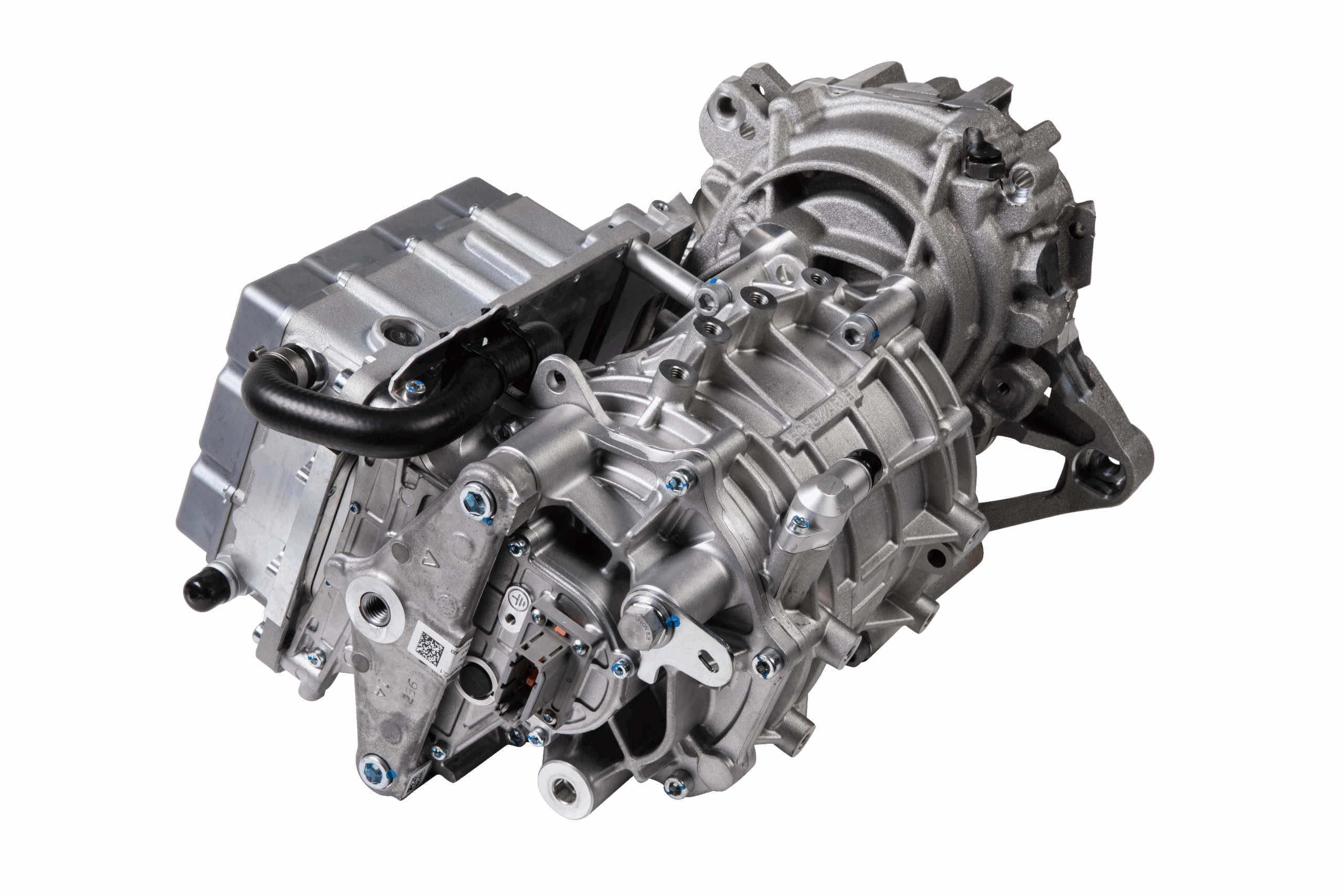

Global electric vehicle OEMs racing toward software-defined architectures that cut development time and wiring costs. For instance, Tesla’s full self-driving updates and Rivian’s zonal controllers show how SDVs dominate, reducing harness weight by up to 70%. Moreover, this REE-Cascadia Motion collaboration fits perfectly, as EV platforms demand modular components for commercial fleets and specialty vehicles. Industry leaders like BorgWarner push high-efficiency motors, aligning with Europe’s 2035 ICE ban and U.S. incentives. Thus, electric vehicle applications expand rapidly in logistics and urban delivery.
Compact EDU Integrates Cutting-Edge Tech
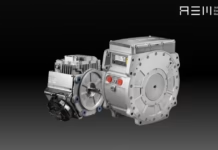
REE Automotive and Cascadia Motion signed a non-binding MOU to co-develop a groundbreaking electric drive unit (EDU). This compact system merges Cascadia’s iM-125 motor and inverter with REE’s REEcorner tech. Engineers designed it for global OEMs, speeding up EV timelines through modularity. For example, it suits commercial vans and specialty rigs perfectly. Additionally, the unit pairs seamlessly with REE’s vehicle control units.
The EDU emphasizes cross-platform flexibility. Teams aim for quick commercialization in phased plans. Cascadia gains an exclusive, time-limited distribution option under royalties. Furthermore, this setup accelerates production using REE’s North American assembly lines and suppliers. Consequently, OEMs access scalable solutions sooner. Electric vehicle applications thrive here, powering efficient fleet electrification.
Software-Defined Architecture Enables Future-Proofing
REE’s SDV architecture stands out with its centralized zonal control model. It slashes wiring complexity while managing dynamics, chassis, body, safety, and connectivity. Developers ensure ASIL-D functional safety and secure OTA updates. Vehicles evolve over their lifecycle via software tweaks. For instance, similar systems in Lucid Air allow instant performance boosts without hardware swaps.
This MOU explores broader SDV demand, like standalone REEcorners and software stacks. Integration with existing systems proves straightforward. OEMs favor by-wire platforms for flat chassis and flexible configs. As a result, electric vehicle applications gain enhanced autonomy in ride-hailing and goods transport. Transitioning fleets becomes easier and cost-effective.
Market Growth Powers EV Adoption Surge
Industry forecasts predict the global EDU market growing at 9% CAGR from 2025 to 2035. Battery-electric vehicles drive this boom, with commercial segments leading. REE and Cascadia position their solution for near-term OEM needs. Data from firms like IDTechEx confirms hybrids fade as pure EVs scale. Moreover, U.S. commercial EV registrations jumped 65% in 2025 alone.
Partnerships like this counter supply chain hurdles. REE shares tooling and inventories, easing manufacturing ramps. Thus, OEMs deploy EVs faster in high-demand sectors. Electric vehicle applications shine in last-mile delivery, where range and uptime matter most.
Strategic Collaboration Drives OEM Innovation
OEMs crave EV-native designs that evolve with software. This REE-Cascadia tie-up delivers exactly that, blending propulsion prowess with by-wire smarts. Low, flat chassis enable creative vehicle forms. Safety and updates ensure longevity. For comparison:
| Feature | REE-Cascadia EDU | Traditional EV Drivetrains |
|---|---|---|
| Modularity | High (cross-platform) | Medium |
| Wiring Reduction | Up to 70% zonal control | 30-40% |
| OTA Updates | Secure, ASIL-D | Limited |
| Applications | Commercial/specialty | Passenger-focused |
Events like IAA 2025 highlighted such integrations, with Volkswagen showcasing similar zonal tech. Overall, this MOU accelerates scalable EV platforms. Electric vehicle applications transform industries, from autonomous trucking to urban mobility solutions.