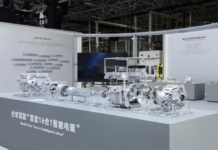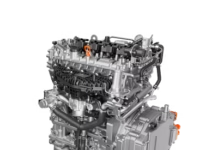
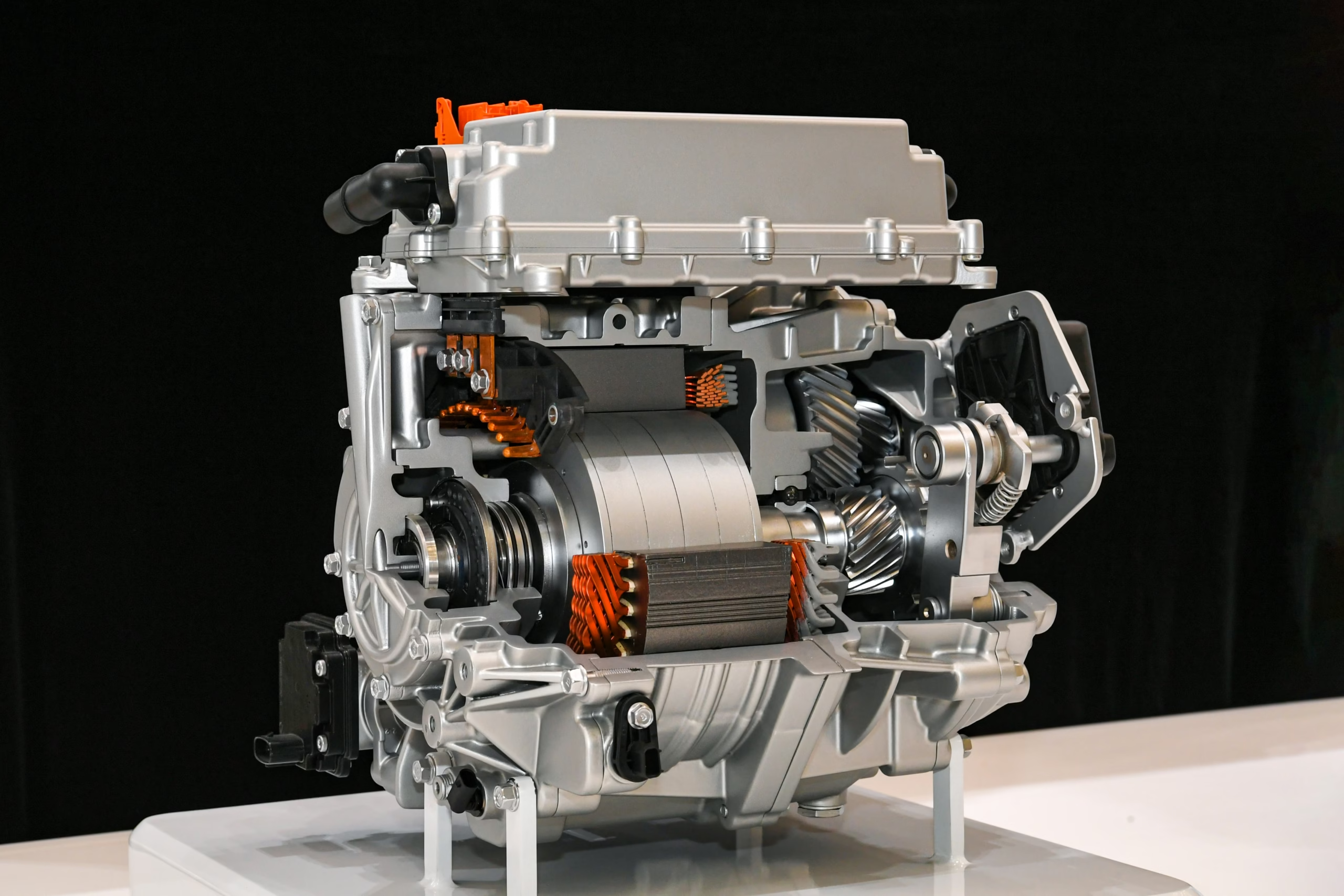

Traditional automakers develop unique powertrains for each new vehicle launch individually. Hyundai Mobis broke from this pattern by creating standardized PE system modules instead. Their approach uses platform-like architecture applicable across multiple vehicle models simultaneously. This strategy proves far more efficient when electric vehicle numbers multiply rapidly worldwide.
Global automakers typically collaborate with separate suppliers for individual component technologies. Those suppliers then assemble PE systems based on specific customer orders only. Mobis now designs everything in-house and offers pre-built models to customers proactively. Overseas buyers have already shown significant interest in this new business model shift.
The difference matters as EV production scales globally at unprecedented rates. Developing custom powertrains for every new model becomes financially unsustainable quickly. Standardization enables faster mass production while maintaining performance quality consistently. Mobis positioned itself as solution provider rather than reactive supplier strategically.
Three Power Tiers Cover Complete EV Market Spectrum
| Power Level | Target Vehicle | Key Characteristic |
|---|---|---|
| 120 kW | Compact cars | Minimal size, emerging market pricing |
| 160 kW | Mainstream EVs | Balanced performance, universal application |
| 250 kW | High-performance | Maximum output, premium segment |
Most mass-produced electric vehicles today need roughly 215 horsepower equivalent power. The 160-kilowatt system delivers exactly this performance level for mainstream applications perfectly. Installing dual systems on front and rear axles doubles output to 430 horsepower total. This flexibility serves everything from city commuters to performance SUVs adequately.
Small mobility vehicles require different optimization than full-size electric cars do. The upcoming 120-kW model minimizes both size and weight compared to larger versions. Price competitiveness specifically targets emerging markets where cost sensitivity remains high. Completion scheduled for first half of 2026 according to official company timelines.
High-performance electric vehicles demand maximum output and advanced cooling systems instead. Last year’s 250-kW system secured competitive edges in torque, output, and thermal management. This tier serves premium brands requiring superior acceleration and sustained power delivery. Together, all three tiers address every electric vehicle category comprehensively now.
Performance Gains Come From Modular Engineering Choices
Specific power measurement tracks output weight ratios for electric drive systems typically. Mobis increased this metric by approximately 16% through strategic component optimization choices. Overall system volume decreased nearly 20% simultaneously using modular design technology extensively. These improvements matter immensely for vehicle packaging and efficiency calculations internally.
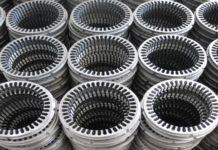
New cooling technology application fundamentally improved motor structure performance capabilities significantly. Power modules utilize advanced power semiconductors maximizing energy conversion efficiency dramatically. The stator, inverter, and power module became standardized building blocks across all tiers. This standardization enables scalability without sacrificing performance quality or reliability standards.
Traditional PE systems lacked this level of component-level standardization historically. Each customer required custom solutions drawing from supplier inventories of partial technologies. Mobis now controls complete design technology through dedicated in-house R&D investments instead. Mass production becomes more predictable when components remain consistent across models.
Business Model Transformation From Supplier to Technology Provider
Hyundai Mobis previously handled PE system mass production only after receiving customer orders. The company now unveils proprietary drive models.ready for proactive customer proposals instead. This represents fundamental transformation from contract manufacturer to technology provider strategically. Profitability improves when companies control both design intellectual property and production capacity.
Battery system orders from global customers proved the company’s electrification credibility earlier. This PE system development extends that credibility into the critical powertrain sector now. The electrification portfolio expanded from energy storage to complete drive systems comprehensively. Competitors face heightened pressure as Mobis strengthens market positioning significantly.
Establishing complete design-to-production capability required substantial internal investment priorities. Securing technology for each auto component within the PE system took focused R&D efforts. Planning establishes the three-model lineup before mid-year 2026 completion deadlines arrive. Global competitiveness in electrification components enhances through this vertical integration strategy.
Critical Components Inside The PE System Package
- Motor: Converts electrical energy into mechanical wheel rotation power
- Inverter: Controls electrical current flow and motor speed precisely
- Reduction Gear: Translates motor output into appropriate wheel torque levels
- Stator: Standardized component enabling modular motor assembly
- Power Module: Bundled semiconductors maximizing energy conversion efficiency
Market Timing Aligns With Global EV Production Acceleration
Electric vehicle model counts increase rapidly across every major automotive market globally. Platform-based approaches become advantageous for future mass production scalability significantly. Mobis positioned its system-level standard model exactly when the industry needs flexibility most. Traditional customization approaches cannot keep pace with accelerating EV launch schedules.
Mobis 160-kW PE system suitable for most currently mass-produced electric vehicles worldwide. Performance level balances capability, cost, and packaging requirements for mainstream brands well. Dual-axis installation option provides performance upscaling without completely new development programs. This matters as automakers rush to electrify existing model lines aggressively.
Emerging markets present different challenges than mature automotive economies do today. Price competitiveness remains critical where purchasing power stays lower than developed nations. The 120-kW model addresses this segmentation through minimized size and cost optimization. No other supplier offers this complete tiered approach to universal PE systems currently.
Sources: Hyundai Mobis