
Schaeffler sees hybrid powertrain moving from “bridge” to core mobility architecture. Hybrids now cover mild, full, plug‑in, and range‑extender configurations for a broad market.These systems help OEMs cut CO₂, meet fleet targets, and keep driving comfort high.
By 2035 the company expects about half of new cars and light‑commercial vehicles to be pure‑electric. Hybrids could account for roughly 30 percent, while efficient combustion‑only units may reach 20 percent. Europe focuses on stricter ICE‑phase‑out rules, but many regions still favor hybrid long‑term.
Regional demand for hybrids
In Europe much policy pushes toward battery‑electric, yet hybrids remain important during transition. Outside the EU, North and South America plus Southeast Asia show strong appetite for hybrid models. Japan could see hybrids reach around 77 percent of new vehicle output by 2035.
This mix justifies Schaeffler ’s technology‑neutral strategy across all powertrain types. The company can adapt to divergent regulations and local fueling infrastructure. Hybrid will stay relevant where charging networks are patchy or where consumers resist pure‑EV cost hikes.
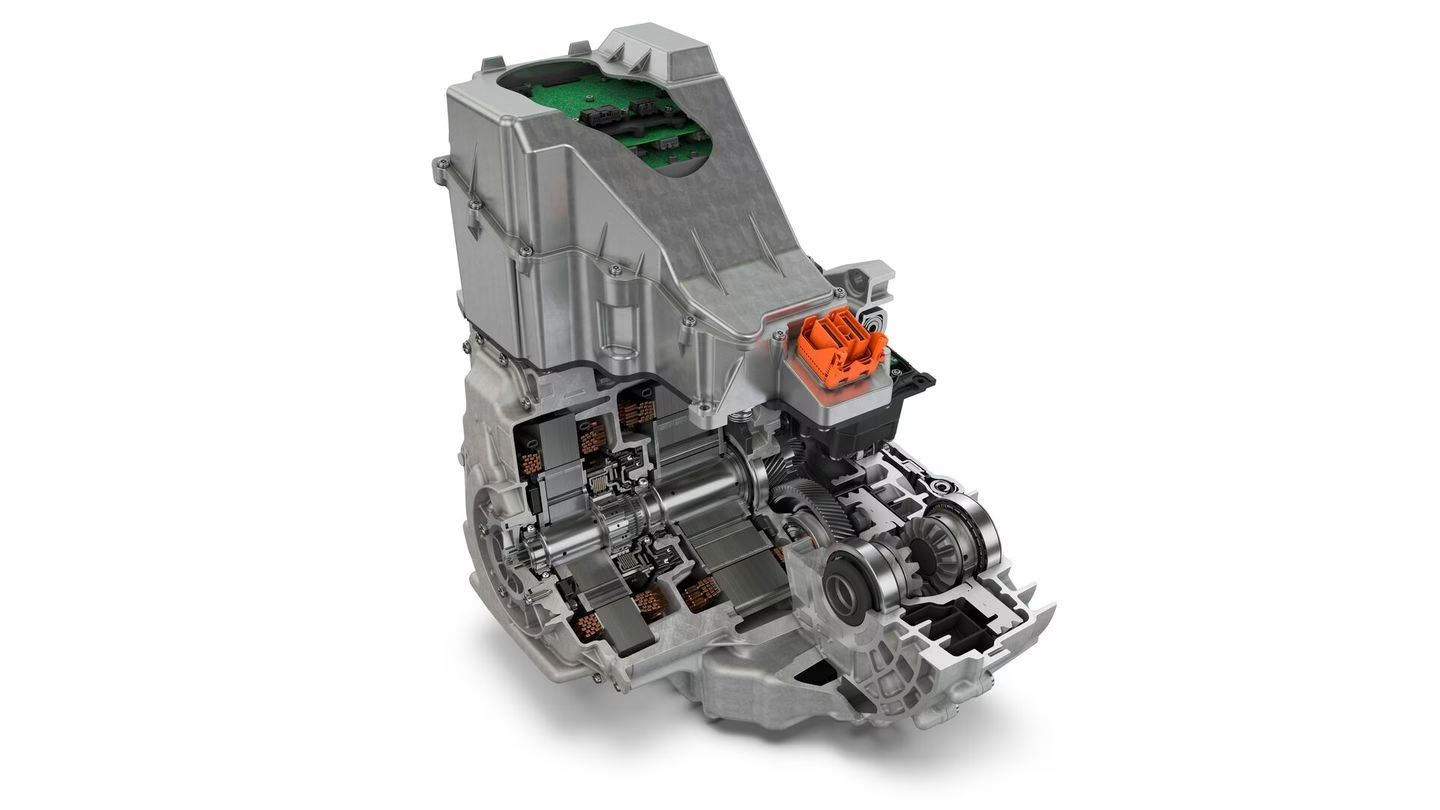
MultiMode hybrid transmission
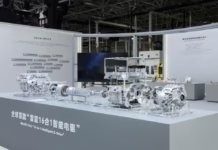
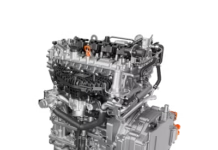
Schaeffler ’s MultiMode dedicated hybrid powertrain already enters volume production in 2026. The unit supports three driving modes: electric‑only, serial‑hybrid, and parallel‑hybrid operation. At full tilt it can deliver up to 145 kW of peak power from a single 125‑kg module.
The box integrates two electric machines, power electronics, and smart hydraulics in one compact housing. Hydraulics manage clutch actuation, cooling, and parking‑lock functions without extra hardware stacks. Software and control functions come from Schaeffler as a unified package for OEMs.
In serial mode the internal combustion engine runs at a fixed, high‑efficiency point. This decouples the ICE from direct wheel demand and reduces fuel consumption in mixed‑mode use. Parallel mode allows mechanical coupling for highway driving and high‑speed efficiency.
Broad hybrid system portfolio
Schaeffler offers a full spectrum of hybrid powertrain topologies, from mild to plug‑in and range‑extenders. These vehicles matter most when driven mainly in pure‑electric mode for city and daily‑commute duty. Each kilogram of CO₂ saved strengthens automakers’ fleet‑average compliance and brand‑image.
Over the past decade Schaeffler has tuned hybrid systems for integration with OEM platforms. The MultiMode DHT is scalable and can support both full and plug‑in hybrid layouts. OEMs benefit from shared hardware, software, and testing to contain development cost.
Crankshaft and engine‑level components
Even in hybrids, internal combustion engines must be highly efficient and ultra‑quiet. Emissions standards still tighten, and NVH requirements grow more demanding over time. Schaeffler tackles these needs with compact, low‑friction components at the engine level.
A good example is the spoke damper mounted directly in the crankcase. This design absorbs torsional vibrations without an external crankshaft seal. Eliminating that seal reduces friction losses and axial space, which helps downsized hybrid engines.
Spoke damper and NVH benefits
Torsional dampers are standard on most ICEs to avoid resonance and stress peaks at crankshaft eigen‑frequencies. Traditional dampers sit outside the crankcase and require seals exposed to oil and temperature swings. The spoke‑damper concept shifts the mass absorber inside the crankshaft housing.
Because it sits within the crankcase, the spoke damper avoids sealing‑related friction. It also lowers axial packaging height, which is valuable in tightly laid‑out hybrid powertrains. Leading Chinese OEMs already use the spoke damper in volume, with more launches planned in 2026.
Next‑generation camshaft phasing
To improve combustion efficiency without hurting driveability, Schaeffler offers electric camshaft phasing. The latest generation uses brushless DC (BLDC) motors with integrated electronics and control units. Valve timing can be adjusted quickly and precisely across wide load and speed ranges.
High phasing speed makes combustion more stable during transient maneuvers and cold starts. This supports aggressive start‑stop strategies without roughness or performance lag. Precise angle control also helps optimize Euro‑7 and China‑7‑style emission targets.
Production of these camshaft phasing units started at Schaeffler’s Taicang plant in China last year. From there the company supplies customers worldwide, including Europe and Asia. OEMs can swap hydraulic and electric phasing units without altering the design envelope.
Sensor technology and emission control
The 2024 merger with Vitesco Technologies expanded Schaeffler’s sensor and electronics portfolio. Sensors now play a key role in emission control, exhaust‑gas aftertreatment, and fuel‑system tuning. One example is the Flex Fuel sensor, which measures ethanol content in the fuel line.
The Flex Fuel unit sits between the tank and engine, mapping actual bio‑fuel content before injection. This data allows the ECU to trim injection timing and air‑fuel ratios for each blend. Flexible‑fuel capability becomes more important as renewable fuels and regional ethanol mandates grow.
Technology‑neutral strategy
Schaeffler’s strategy stays neutral across pure‑electric, hybrid, and efficient combustion architectures. This approach helps cope with regional differences in regulation, fuel prices, and consumer preferences. Partners can mix Schaeffler components into different powertrain topologies without reinventing interfaces.
The company highlights its broad R&D capabilities in powertrain, chassis, and electronics. Global manufacturing and engineering sites support localized development and fast validation. Vertical integration from bearings through gear systems and software simplifies supply‑chain risk.
Hybrid as user‑friendly electrification
Matthias Zink, CEO Powertrain & Chassis, frames hybrids as a smooth entry into electric driving. Drivers gain electric‑only range for city trips without true range‑anxiety or major charging‑behavior changes. Every gram of CO₂ saved by hybrid‑mode operation adds up across fleets and regions.
Hybrids also suit markets where charging‑station density, grid stability, or battery‑cost sensitivity limit pure‑EV adoption. Consumers in many countries still value fuel flexibility and long‑distance capability. Schaeffler’s component and system portfolio gives OEMs tools to balance these needs with emission targets.
Key hybrid technologies discussed
- MultiMode dedicated hybrid transmission with electric, serial, and parallel modes
- Two‑electric‑machine module weighing 125 kg and up to 145 kW peak power
- Smart hydraulics for clutch actuation, cooling, and parking‑lock functions
- Spoke damper on crankshaft for torsional‑vibration control and friction reduction
- BLDC‑based electric camshaft phasing units with high‑speed valve‑timing control
- Flex Fuel sensors for ethanol‑content detection in flexible‑fuel and renewable‑fuel applications