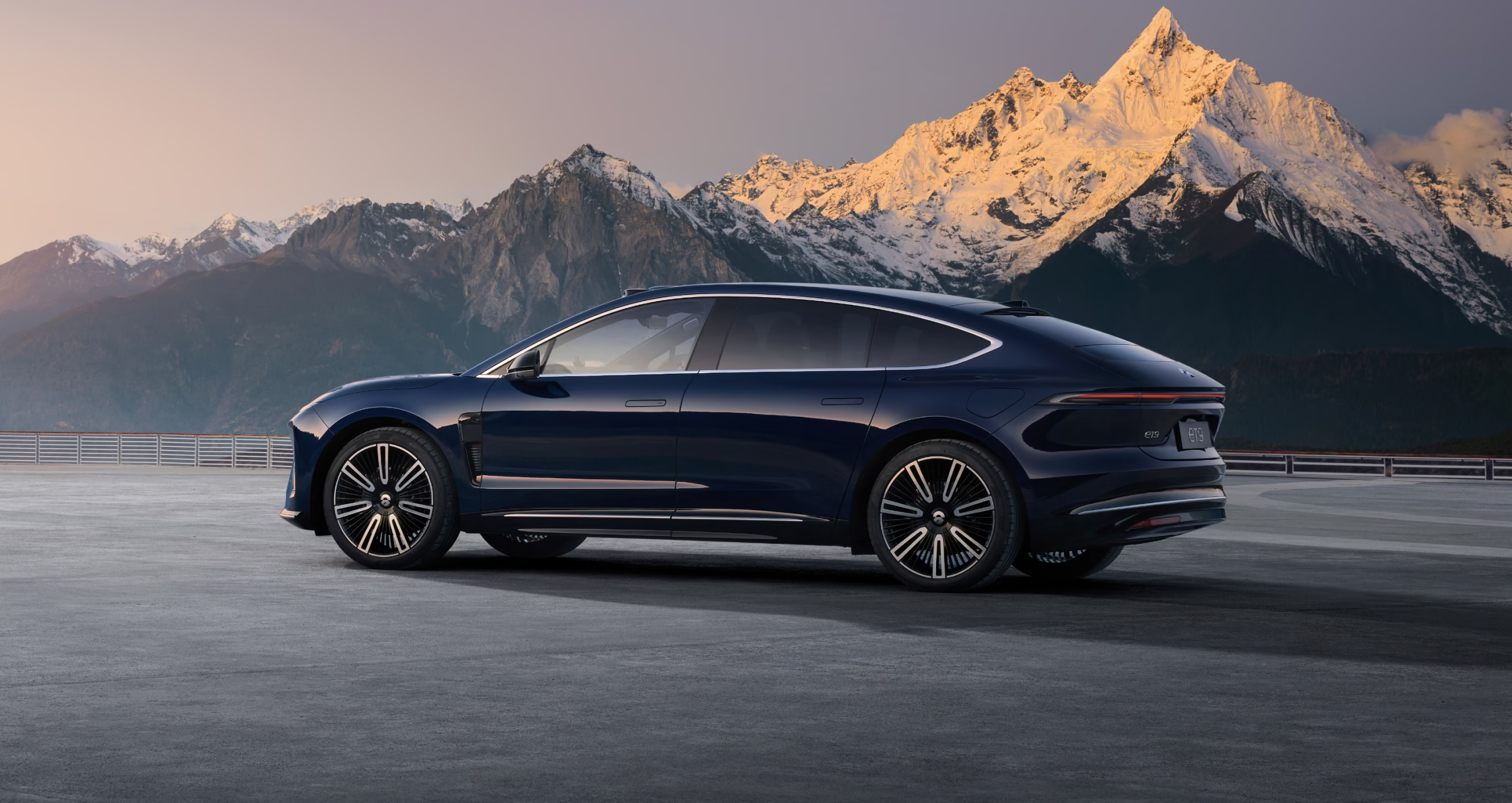

NIO and onsemi are expanding a multi‑year partnership to move from 400V to 900V EV platforms. Higher‑voltage systems carry the same power with less current. This reduces resistive losses in cables and power electronics. Less energy loss means lighter wiring, smaller components, and better overall efficiency.
The new collaboration focuses on system‑level design, not just component supply. onsemi provides EliteSiC enhanced M3e modules for traction inverters and onboard chargers. These silicon‑carbide MOSFETs form the backbone of NIO’s next‑gen drivetrain. The goal is to shorten development cycles and standardize 900V architectures across multiple models.
EliteSiC M3e and Efficiency Improvements
EliteSiC M3e technology lowers conduction and switching losses in NIO’s powertrain. Less wasted energy means more battery power reaches the wheels and less heat builds up in the system. This improves inverter efficiency and reduces battery drain during high‑speed driving.
The 900V platform also supports higher‑power fast‑charging. NIO can pair these modules with 400‑kW+ DC chargers. Charging stops become shorter for large‑capacity battery packs. That improves real‑world usability for long‑range drivers. Combined, these changes extend effective range and reduce daily charging stress.
Key Benefits of EliteSiC in NIO EVs
The expanded use of EliteSiC M3e delivers several measurable benefits for NIO EVs. First, it enables faster DC fast‑charging and shorter stop times. Second, it improves drivetrain efficiency and reduces battery‑energy consumption. Third, it increases power density in inverters and shrinks overall powertrain size.
Fourth, EliteSiC supports better thermal management and longer component life. Fifth, it reduces electromagnetic interference and switching noise. Sixth, it simplifies EMI‑filter design and cuts component count around the inverter. Seventh, it allows NIO to design lighter, more compact powertrains with higher output.
Top Advantages of EliteSiC M3e Modules
- Faster DC fast‑charging and shorter charging stops.
- Higher inverter efficiency and reduced battery drain.
- Increased power density and smaller inverter footprint.
- Better thermal management and longer component lifetime.
- Lower electromagnetic interference and cleaner power delivery.
- Reduced wiring weight and simpler high‑voltage layout.
- Easier integration into scalable 900V EV platforms.
Expanding 900V Across NIO’s Lineup
NIO’s 900V strategy now extends to several new models, including the flagship ES9 SUV. The ES9 uses the higher‑voltage architecture to deliver strong torque and stable high‑speed performance. SUVs benefit especially from reduced “electrical drag” at highway speeds.
Other upcoming NIO vehicles will debut at the 2026 Beijing Auto Show with onsemi power solutions. These models will showcase 900V compatibility and fast‑charging speed in real‑world demos. The aim is to validate a unified platform that can underpin SUVs, sedans, and sports‑oriented EVs.
System‑Level Collaboration and Engineering
This phase of the partnership emphasizes deep system‑level co‑engineering. onsemi and NIO jointly design power modules, gate drivers, and thermal layouts. This close integration shortens development time for new EV variants.
The collaboration also covers control software and protection features. NIO tunes its inverter logic to match onsemi’s specific switching behavior. That improves reliability during rapid acceleration, hard braking, and high‑temperature operation.
Shift to High‑Voltage EVs
NIO’s move to 900V reflects a wider OEM trend. Many premium brands now adopt 800–1000V architectures to improve charging and efficiency. Higher‑voltage systems reduce cable size, weight, and onboard complexity.
Silicon‑carbide MOSFETs like EliteSiC are becoming standard in these platforms. They outperform traditional silicon in high‑voltage and high‑frequency applications. Growing semiconductor‑OEM partnerships signal a shift toward co‑engineered electric powertrains.
Impact on EV Adoption and User Experience
For drivers, this collaboration means faster charging and more consistent range. A 900V platform with EliteSiC modules reduces charging stops and improves daily usability. NIO can position these benefits as a key differentiator versus 400V competitors.
From a business perspective, NIO strengthens its position in China and global markets. The partnership lowers the cost and complexity of scaling 900V platforms across multiple models. Other OEMs may follow this pattern, deepening semiconductor‑driven powertrain partnerships.