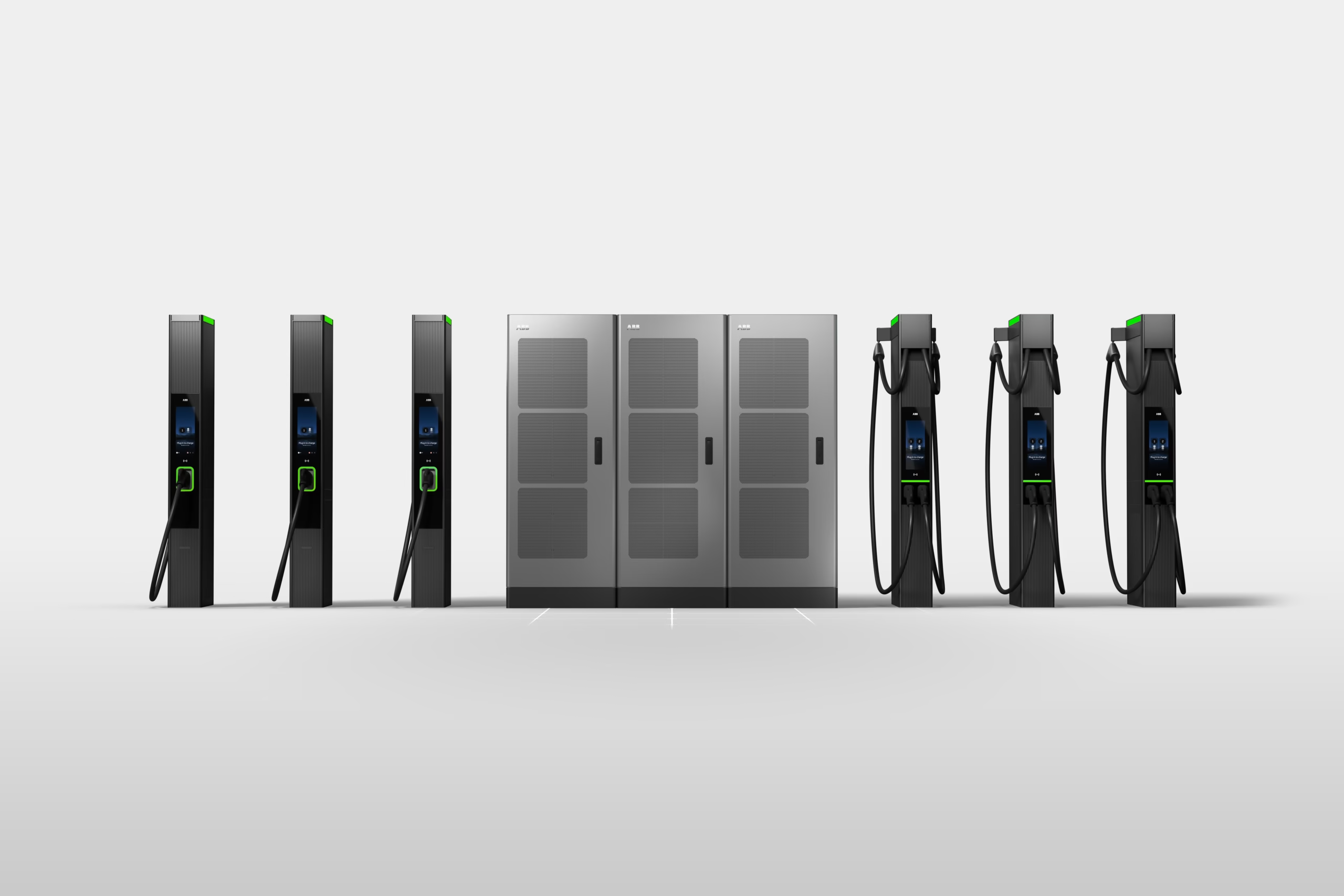

ABB E-mobility launched OM M-Series modular chargers in Zurich recently. Engineers separated power cabinets from individual charge points completely. Operators now design sites around actual delivered energy needs precisely.
Three 400kW power cabinets connect seamlessly in parallel configuration now. Total site capacity scales smoothly from 200kW up to 1.2MW maximum. Sophisticated algorithms distribute power dynamically across twenty-four charge points instantly.
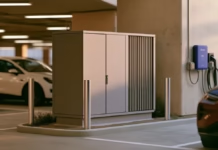
Complete megawatt system occupies compact 1.92 square meter footprint only. Power density achieves impressive 625kW per square meter rating consistently. Urban commercial sites maximize charging within limited available space effectively.
Dynamic Allocation Eliminates Traditional Waste
Conventional DC fast chargers typically waste 30-40% of installed capacity. M-Series architecture treats entire site power as shared resource pool effectively. Multiple heavy-duty trucks charge simultaneously without performance limitations now.
Tractor-trailers receive peak 400kW+ delivery during brief fifteen-minute stops efficiently. Passenger cars charge alongside without experiencing power rationing drops significantly. Site utilization rates immediately climb 35% above industry benchmarks.
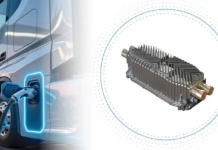
Silicon carbide electronics deliver 98.2% peak conversion efficiency continuously under full load. Air-cooled thermal design eliminates glycol liquid maintenance requirements completely. System demonstrates MTBF exceeding 100,000 operating hours reliably.
Dynamic power sharing delivers immediate benefits:
- Real-time allocation prioritizes highest-demand vehicles automatically
- Eliminates single-point capacity bottlenecks across entire network
- Mixed fleets charge optimally without performance compromises
- Boosts revenue throughput 35% above conventional systems
Field Scalability Matches Revenue Growth Perfectly
Operators deploy initial 200kW single cabinet for rapid revenue generation now. Field upgrades add 400kW cabinets without infrastructure modifications or downtime. Capacity expansion scales precisely with measured demand growth patterns.
Retail forecourt sites balance peak truck charging with sustained car sessions effectively. Destination chargers optimize mixed vehicle throughput across twenty-four hour operating cycles continuously. Fleet depots achieve complete overnight battery replenishment consistently.
Traditional infrastructure creates expensive stranded assets through chronic oversizing universally. Modular cabinet design prevents premature complete system replacement costs. Return on capital improves dramatically through synchronized capacity expansion timing.
Scalability advantages transform commercial economics:
- Single cabinet generates revenue from first day of operation
- 400kW increments expand without service interruptions
- Eliminates 25-30% traditional capacity oversizing waste permanently
- Matches infrastructure growth with three-year demand forecasts
Economic Model Drives Rapid Profitability
Delivered energy costs decline 28% versus conventional fast charger deployments consistently. Revenue generation accelerates through 40% lower minimum utilization thresholds required. Operators achieve positive cash flow within twenty-four months.
Battery storage integration enables peak demand shaving during grid constraints. Off-peak excess capacity arbitrages energy price differentials profitably across daily cycles. Bidirectional V2G capabilities unlock future grid services revenue systematically.
Real-time analytics platform optimizes dynamic session pricing continuously across demand patterns. Predictive maintenance algorithms minimize unplanned downtime across distributed networks. Enterprise data transforms charging sites into scalable profit centers immediately.
Universal Standards Ensure Long-Term Value
Native compatibility includes CCS1, CCS2, NACS plus emerging MCS specifications. Unified power network serves passenger cars through Class 8 trucks seamlessly. Fleet operators standardize infrastructure across diverse connector ecosystems efficiently.
Open API framework integrates existing third-party fleet management platforms seamlessly. Industry-standard protocols enable broad software ecosystem compatibility consistently across operators. Unified interface spans complete ABB charging portfolio uniformly worldwide.
Hot-swappable modular cabinets simplify field service interventions dramatically across networks. Individual cabinet replacement occurs without complete network service interruption effectively. Predictive analytics reduce annual service costs 22% through component insights.
Standards compatibility creates strategic longevity:
- CCS1/CCS2/NACS/MCS connectors mix natively across all charge points
- Single network architecture serves entire vehicle spectrum seamlessly
- Open APIs eliminate custom software development requirements completely
- Hot-swap design cuts service calls 45% versus competitors significantly
Global Commercial Rollout Accelerates Electrification
European highway networks secured M-Series orders for Q3 2026 installations strategically. US fleet operators schedule megawatt-scale deployments by calendar year-end successfully. Global infrastructure transformation accelerates through proven commercial viability worldwide.
High-traffic locations target 70% utilization within initial operating year confidently. Intelligent dynamic power management eliminates traditional economic barriers. Megawatt-scale charging achieves immediate profitability across diverse commercial applications globally.
Utility operators embrace sophisticated load management capabilities extensively across regions. Peak demand mitigation defers expensive transmission infrastructure upgrades significantly. Sustainable heavy-duty electrification scales rapidly through optimized commercial economics worldwide.
Deployment advantages:
- Eliminates 6-12 month grid connection delays through intelligent management
- Reduces total ownership costs minimum 27% annually versus competitors
- Enables profitability at 42% utilization threshold across applications
- Delivers 65% smaller footprint than equivalent conventional systems
- Supports 15+ year commercial lifespan through modular upgrades