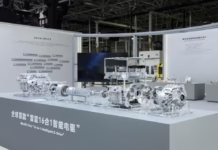
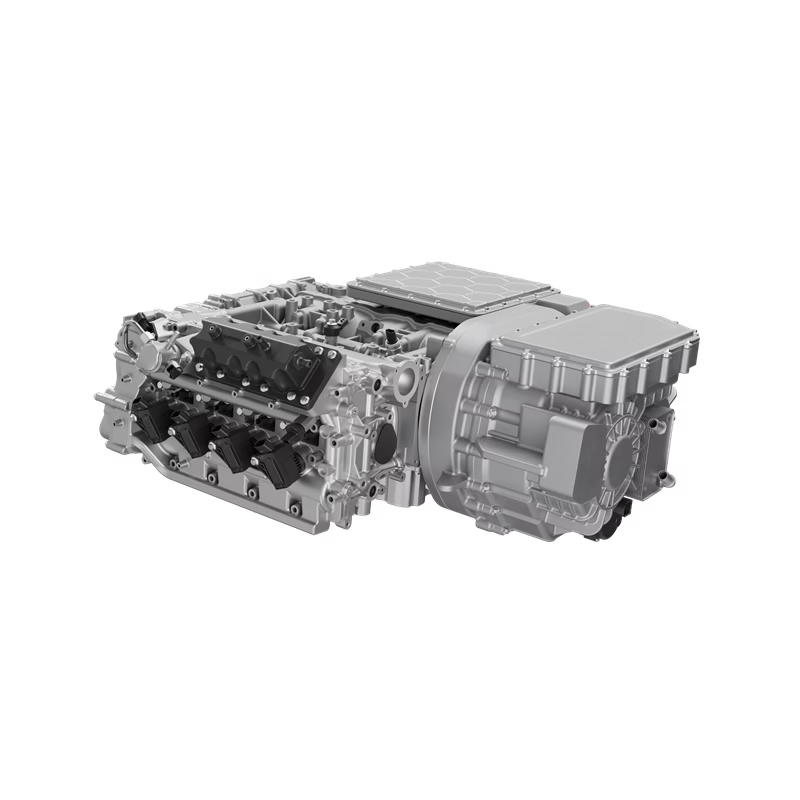

Horse Powertrain has introduced the X‑Range C15 Direct Drive. It is a compact, all‑in‑one hybrid powertrain that lets OEMs turn BEV platforms into HEVs, PHEVs, and REEVs. The unit replaces the rear electric drive of a BEV with minimal changes to the vehicle design or production layout. This approach shortens development time and cuts costs for automakers still committed to electrification.
How the X‑Range C15 Direct Drive works
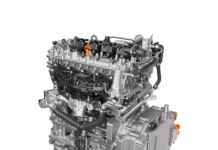
The X‑Range C15 Direct Drive mounts to the rear subframe of a BEV. It integrates a 1.5‑liter four‑cylinder engine, a hybrid transmission, and two electric motors into a shared housing. This flat‑profile unit supports double‑isolation installation, which improves NVH performance across the cabin.
The system uses a P1 + P3 motor layout. The P1 motor sits at the end of the crankshaft and acts mainly as a generator. The P2 motor links to the transmission output and provides electric traction. Together, they allow both serial and parallel modes of operation, improving efficiency and drivability.
Engine options and power levels
Horse Powertrain offers the 1.5‑liter engine in naturally aspirated and turbocharged versions. The naturally aspirated unit targets B‑ and C‑segment vehicles and can deliver up to 70 kW. The turbocharged build suits D‑segment cars and light commercial vehicles, with around 120 kW of peak output.
This dual‑engine strategy lets OEMs scale the same X‑Range core to different segments. Smaller cars get a lighter, lower‑power setup, while larger models receive more performance. Both versions keep the same footprint and mounting points, which simplifies tooling and assembly.
Placement, packaging, and efficiency
Locating the entire powertrain on the rear axle simplifies exhaust and aftertreatment packaging. The layout also frees up floor space for larger batteries or improved passenger room. This is valuable for BEV‑derived platforms where packaging density is already tight.
In parallel mode, the engine can drive the rear wheels directly through the transmission. Mechanical power delivery in this mode boosts overall system efficiency versus pure serial designs. In serial mode, the P1 motor runs as a generator while the P3 motor powers the wheels on its own.
Platform flexibility and drivetrain options
The X‑Range C15 Direct Drive can either power the rear axle alone or pair with a front electric drive unit. When combined with a front axle e‑drive, it forms an all‑wheel‑drive hybrid configuration. OEMs can therefore keep one BEV base platform and launch multiple variants from it.
This flexibility reduces the need for separate platforms for BEV and hybrid models. It also lets manufacturers reuse the same tools, test procedures, and software frameworks. Shorter development cycles help OEMs respond quickly to market shifts and policy changes.
Key benefits for automakers
- Enables fast conversion of BEV platforms into HEVs, PHEVs, and REEVs.
- Lowers investment in new production lines and tooling.
- Supports global compliance with CO₂ and local‑emission rules.
These advantages are especially useful in regions where EV charging is patchy or where consumers still prefer hybrids. The X‑Range C15 Direct Drive helps OEMs hedge against demand volatility while keeping electrification at the core.
Part of the X‑Range family ecosystem
The X‑Range C15 Direct Drive joins Horse Powertrain’s X‑Range toolkit. That family already includes the HORSE F15, a front‑axle “all‑in‑one” unit, and the HORSE C15 range‑extender module. Together, these systems form a complete set of hybrid add‑ons for BEV architectures.
OEMs can choose between front‑mounted or rear‑mounted solutions. They can also combine them for higher‑power or AWD layouts. This plug‑and‑play philosophy lets brands tailor powertrain content to different markets without redesigning the chassis.
Integration with power electronics and charging
The X‑Range C15 Direct Drive includes the full suite of modern hybrid power electronics. It supports inverters, DC/DC converters, and on‑board charging functions. The design can integrate an 800V charging booster, preserving fast‑charging performance on BEV‑derived platforms.
By keeping 800V compatibility, OEMs maintain one of the key selling points of many new EVs. The system also eases integration with existing battery management and thermal‑management setups. This reduces validation time and avoids major software overhauls.
Strategic value in global markets
Matias Giannini, Horse Powertrain’s CEO, frames the X‑Range family as a response to mixed market realities. Many regions still favor hybrids alongside BEVs, and fleet buyers often need range‑extender options. The modular approach lets OEMs pivot quickly between powertrain types on a shared platform.
Major customers such as Renault Group, Geely Auto, Volvo Cars, Nissan, and Mitsubishi Motors can leverage this family across Europe, China, and South America. For them, the X‑Range C15 Direct Drive is not just a new powertrain, but a way to amortize BEV investments into hybrid lineups. This strategy supports both regulatory goals and short‑term profitability.