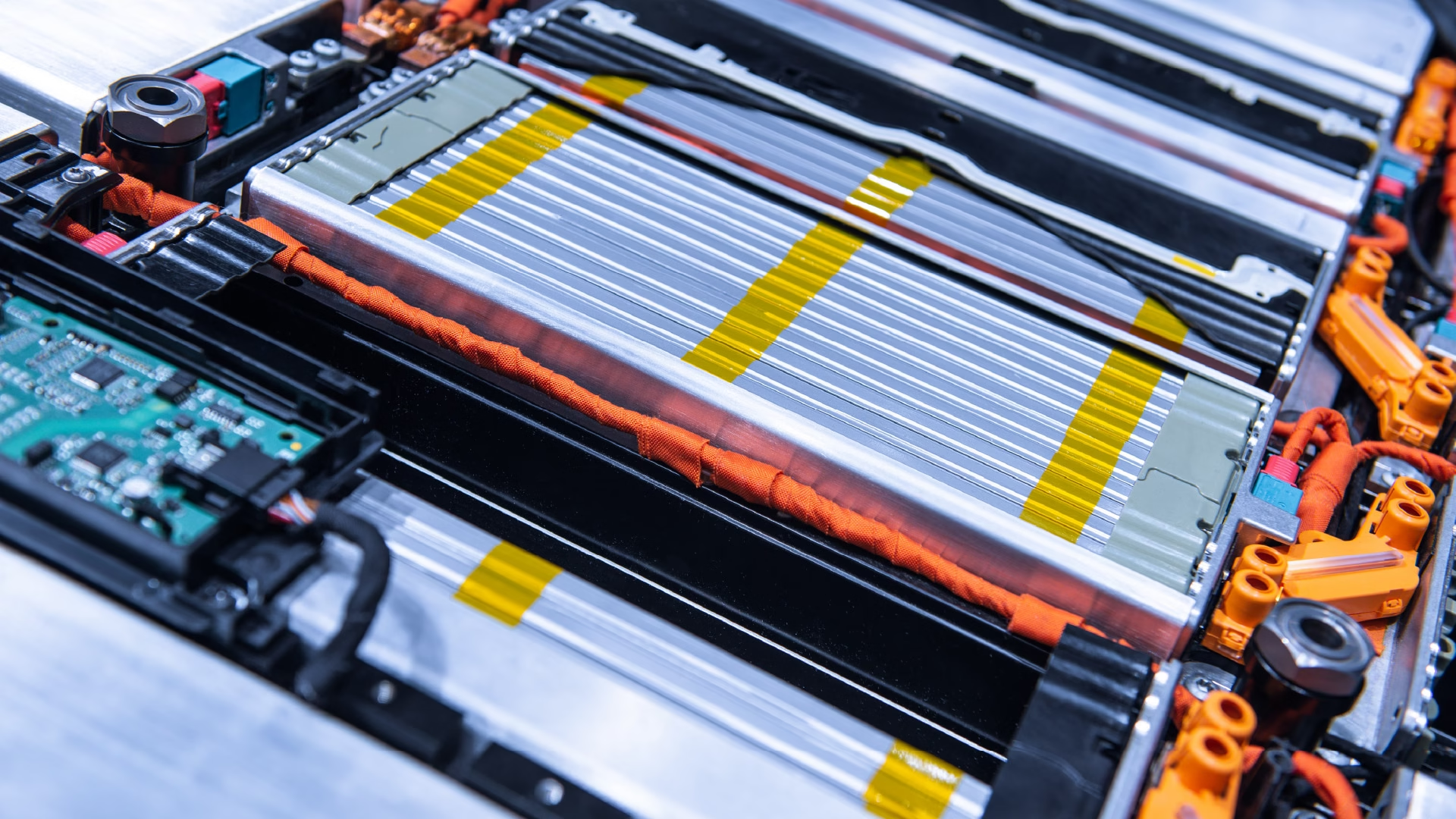
Modern EV batteries show remarkable durability, even as drivers embrace faster charging. Geotab ‘s updated study reveals an average EV battery degradation of just 2.3% per year across over 22,700 vehicles. This rate edges up from 1.8% last year, mainly due to rising DC fast charging use. However, batteries still outlast typical fleet replacement cycles. Operators gain clear insights to balance performance and longevity.
Charging Power Drives Battery Wear
Geotab says fast charging now tops the list of factors affecting EV battery health. Vehicles using DC chargers over 100 kW see degradation hit 3.0% annually—twice the 1.5% rate for AC or low-power users. Thus, power level trumps other influences. For instance, fleet managers notice this shift as commercial EVs handle tougher schedules.
Climate plays a smaller role. Hot regions add only 0.4% faster wear yearly compared to mild areas. Yet, charging habits matter more overall. Experts recommend matching power to needs, avoiding excess to preserve capacity.
Why Fast Charging Accelerates Degradation
High-power sessions generate extra heat, stressing lithium-ion cells. Batteries prefer steady, moderate inputs for longevity. Geotab data confirms this trend across 21 models. Moreover, real-world telematics tracks these patterns precisely. As a result, savvy operators adjust strategies early.
Usage Patterns and State-of-Charge Rules
Daily mileage slightly boosts degradation—by 0.8% for high-use versus low-use EVs. Still, productivity gains outweigh this cost. Fleets enjoy lower per-mile expenses over time. Therefore, intensive deployment proves worthwhile.
Strict daily charge limits lose relevance. EVs tolerate wide state-of-health (SOH) swings without harm, unless parked over 80% full or empty for long stretches. This flexibility eases operations. Transitioning to EVs becomes simpler with such findings.
Optimal Habits for Long-Term Battery Life
Keep SOH between 20-80% most days. Avoid extremes habitually. Higher utilization pays off, but monitor via telematics. Geotab urges balanced approaches. Consequently, batteries stay viable far beyond 100,000 miles.
Implications for EV Fleets
Battery health data empowers better decisions. A 60 kWh pack at 80% SOH acts like 48 kWh, yet most hold strong. Geotab ‘s insights, drawn from years of telematics, guide charging, deployment and EV battery. Fleets cut risks and boost ROI.
Hot climates or heavy fast-charging? Adjust accordingly. For example, public-sector operators rethink infrastructure. Meanwhile, individual drivers benefit too. Overall, EVs prove reliable for mass adoption.
Telematics: The Key to EV Success
Real-time SOH tracking reveals true capacity. Geotab’s report offers free benchmarks. Operators predict maintenance accurately. Batteries endure intensive use in 2026’s growing EV market.
Smart charging curbs the 3.0% fast-charge penalty. Use lowest viable power. Charlotte Argue from Geotab stresses this balance. Fleets gain longevity without sacrificing uptime. As adoption surges, these tactics scale.
Productivity trumps minor wear. Hotter areas need shade or cooling. Yet, global data shows resilience. In turn, confidence grows for electrification.
Actionable Tips from Latest Research
Prioritize AC Level 2 over DC when possible.
Limit time at 100% or 0% charge.
Leverage telematics for custom plans.
Weigh climate in fleet zoning.
EV battery health thrives despite fast-charging trends. Geotab’s 2.3% average signals maturity. Operators, act now for maximum value. This positions EVs as tomorrow’s workhorses.