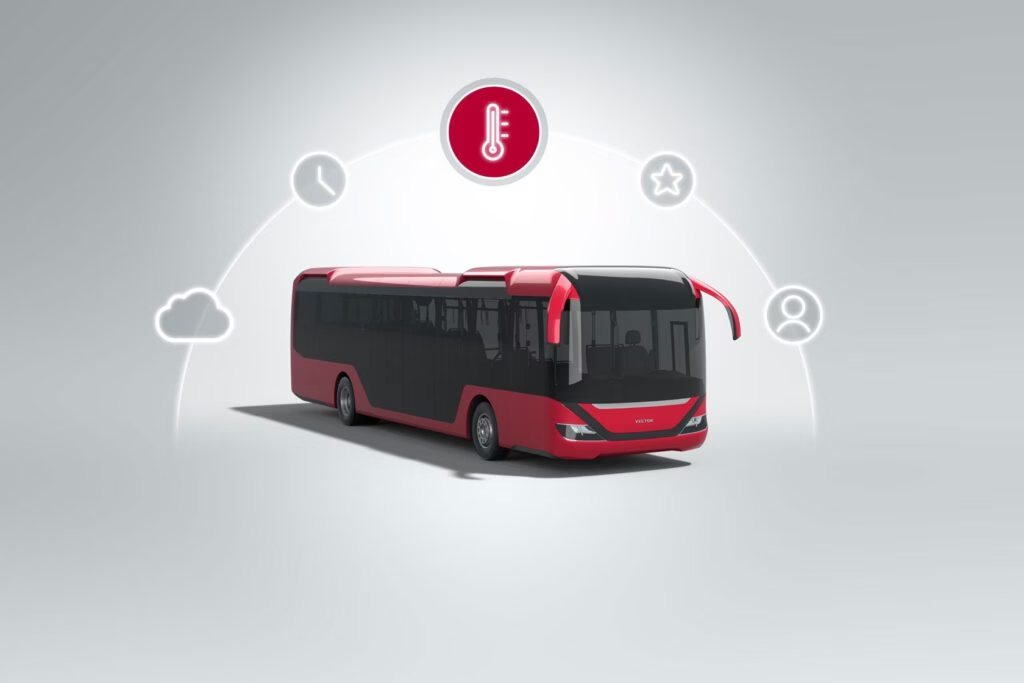

Vector Informatik and Hubject team up to transform electric bus operations. They enhance Vector’s vCharM system for VDV 261-compliant preconditioning. This standard preheats or precools bus components using charging station energy. As a result, buses depart fully charged with maximum range. Operators gain reliability without draining onboard batteries during drives. Moreover, these updates cut setup time and errors significantly.
Automated Certificate Management Transforms Deployment
Vector partners with Hubject to automate VDV 261 certificates. Previously, operators manually generated and distributed TLS certificates. This process demanded huge effort, especially for large fleets. Now, vCharM integrates Hubject’s public key infrastructure (PKI). It auto-generates and installs certificates on stations and backends. Many bus makers already embed Hubject’s root certificate. Therefore, deployment speeds up dramatically. Errors drop, and fleets scale easily across depots.
Hubject’s V2G-PKI shines here. It supports ISO 15118 standards for secure vehicle-to-grid communication. Transport firms avoid duplicate certificate systems. Costs fall, and security rises. Christian Witt, Vector’s Product Manager, highlights this breakthrough. He notes it removes key barriers to VDV 261 adoption. Operators now precondition buses faster. This synergy builds on Hubject’s vast network of over 1 million charge points worldwide.
IPv4 Compatibility Eases Network Upgrades
VDV 261 demands IPv6 communication between buses, chargers, and backends. Yet, most depots rely on IPv4 networks. Upgrading proves costly and disruptive. Vector’s vCharM.edge hardware solves this. It acts as an IPv6-to-IPv4 proxy. Buses communicate seamlessly in legacy setups. Operators skip major infrastructure changes. Implementation effort shrinks notably.
This feature fits real-world needs. Public transport fleets often use existing mobile and company networks. vCharM.edge ensures compliance without downtime. It supports both new and retrofitted systems. Consequently, more operators adopt preconditioning quickly. Energy management improves across diverse environments.
Boosted Energy Efficiency Drives Operational Gains
Preconditioning unlocks more usable energy at departure. Buses preheat cabins and batteries at the station. No drive-time energy loss occurs. Range extends, and schedules stay predictable. Planners trust consistent performance daily. Vector’s full integration makes this accessible now.
Benefits extend further. Fully preconditioned buses handle cold winters better. Battery efficiency rises in extreme weather. Studies show preconditioning cuts energy use by up to 20% on routes. Operational stability strengthens fleet management. Costs drop over time. Public transport meets sustainability goals easier.
Company Strengths Fuel EV Innovation
Vector leads in software-defined systems. With 35+ years, it serves automotive and beyond. Over 4,500 employees across 32 sites drive €1 billion+ revenue. Stuttgart-based, Vector excels in tools, cloud services, and cybersecurity. Its vCharM ecosystem now powers bus fleets effectively.
Hubject dominates eMobility. Its intercharge platform links 1,000,000+ charge points in 70+ countries. Plug&Charge supports 4.5 million EVs via ISO 15118. Hubject offers payment services too. This partnership accelerates VDV 261 rollout. Both firms prioritize interoperability and efficiency. Electric bus adoption surges as a result.
Preconditioning via VDV 261 changes public transport. Fleets operate greener and smarter. Vector and Hubject pave the way forward. Operators gain tools for tomorrow’s demands.