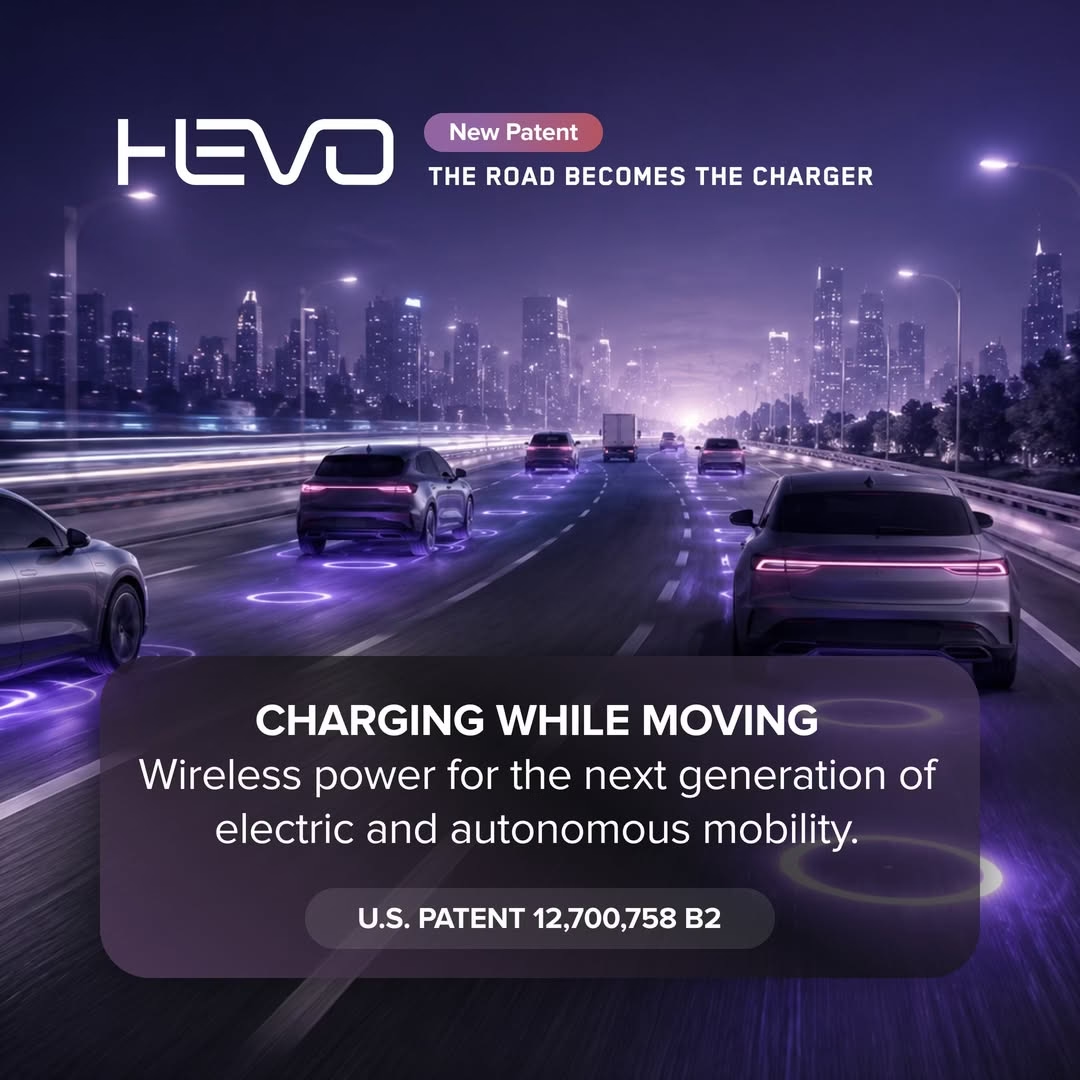

HEVO Inc. announced a new United States patent for dynamic roadway charging. The USPTO granted patent number 12,700,758 B2 on this technology. The title reads “Systems and methods for dynamic roadway charging.” This patent strengthens HEVO’s intellectual property portfolio in motion-based wireless power transfer. It supports the company’s Rezonant hardware and Journey software platform strategy.
Core system architecture for in-motion wireless charging
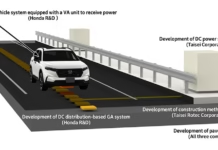
The patented system enables continuous wireless charging for electric vehicles on roadways. It uses multiple wireless charging pads placed along the travel path. Each pad includes a transmitter that sends power to vehicle receivers. Vehicles receive energy while moving relative to the roadway surface. A power station sits next to the road and connects to all pads. This station includes an inverter that feeds power from a source to the pads. The pads work together so receivers keep getting power during travel. This design removes the need for long stationary charging stops on routes.
Power transfer between adjacent charging pads
Adjacent charging pads can wirelessly transfer power between each other. This feature helps balance load across the charging segment. It also improves resilience if one pad faces temporary issues. The system can keep power flowing smoothly along the roadway. This approach supports more stable operation for moving vehicles.
Bidirectional power flow and vehicle-to-infrastructure support
The system supports bidirectional power flow across the network. Vehicles can charge from the roadway while driving forward. They can also return stored energy to the infrastructure or grid. This capability enables vehicle-to-grid and vehicle-to-infrastructure services. Fleet operators can use this feature for demand response programs. It also opens new revenue options for energy storage on wheels.
Pad construction, electronics, and thermal design
The patent describes layered pad constructions for real-world deployment. These layers include cabling, magnetic components, and power electronics. Cooling elements manage heat during high-power operation. This design helps maintain efficiency and component longevity. It also supports safe operation under varied traffic and weather. HEVO’s approach targets manufacturable and cost-competitive hardware.
Integration with power stations, depots, and storage
The system integrates with fixed power stations beside the roadway. It also supports mobile charging depots for flexible operations. Rechargeable batteries can sit adjacent to the road for buffering. This setup smooths demand spikes from many vehicles at once. It also allows local renewable energy to feed the charging zone. Such integration fits well with depot and corridor use cases.
Alignment with HEVO’s Rezonant and Journey platforms
This patent expands HEVO’s Rezonant wireless charging hardware portfolio. Rezonant pads already target high-power, efficient energy transfer. The Journey software platform manages charging sessions and data. Together they enable automated depot operations and resilient fleet charging. The dynamic roadway capability complements stationary wireless systems. HEVO notes its stationary systems hold UL certification and SAE qualification. This alignment supports a unified product strategy across use cases.
Target applications for fleets, OEMs, and infrastructure programs
HEVO positions this technology for fleet operators and logistics providers. Autonomous vehicle programs also benefit from continuous power. OEMs can integrate receivers into new vehicle platforms. Roadway infrastructure programs can embed pads in corridors. Continuous charging reduces range anxiety for long routes. It also improves fleet utilization by cutting downtime. These benefits matter for buses, trucks, and delivery vans.
List of key technical features in the patent
- Multiple wireless charging pads along a roadway path.
- Each pad includes a transmitter for moving vehicles.
- Power station with inverter feeds all pads from a source.
- Pads collectively enable continuous power during motion.
- Adjacent pads can wirelessly transfer power between each other.
- Bidirectional flow supports charging and energy return.
- Layered pad build includes cabling and magnetics.
- Power electronics and cooling elements manage performance.
- Integration with fixed stations, mobile depots, and batteries.
Safety, standards, and certification context
HEVO emphasizes third-party safety qualifications for its hardware. Its equipment targets UL 2750 and SAE J2954 compliance. These standards set minimum safety and performance rules. They also align with regulatory requirements from multiple agencies. This context supports deployment in commercial and public settings. It also helps OEMs and cities evaluate risk and liability.
Deployment scenarios and operational benefits
Corridors with heavy traffic can host these charging zones. Bus lanes and freight routes suit continuous power delivery. Airports and ports can use pads in dedicated lanes. Mobile depots can extend coverage during peak periods. Operators gain more predictable energy access per route. Drivers and autonomy stacks face fewer charging constraints. Energy managers can schedule returns to the grid when needed.
Sources: HEVO