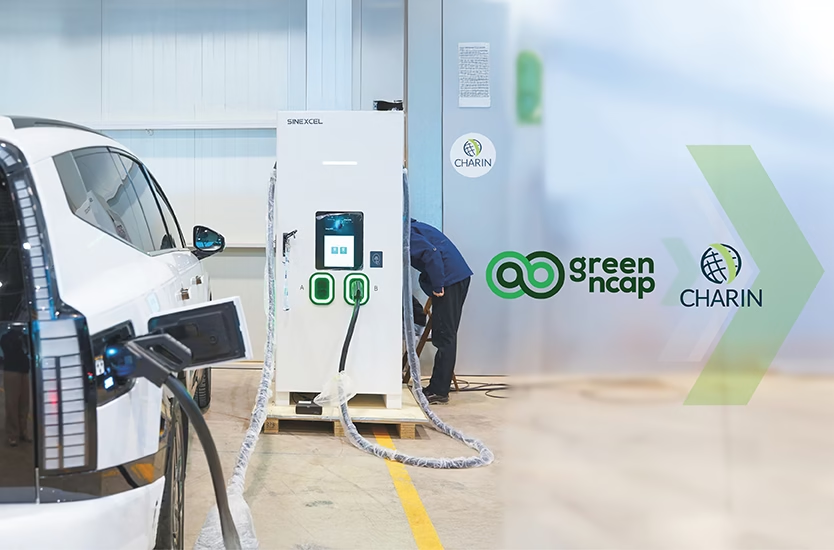
Green NCAP and CharIN e.V. signed a Memorandum of Understanding recently. This move strengthens EV charging interoperability worldwide. Both organizations aim to create seamless charging experiences for drivers.
Partnership Details Emerge
Green NCAP integrates CharIN’s conformance testing into its framework. This step evaluates EVs against charging stations effectively. Drivers gain reliable performance data from independent tests.The agreement references the CharIN Label in Green NCAP’s Driving Experience assessments. Testing follows CharIN’s processes or partners’ methods. Such alignment ensures global standard compliance.
Conformance testing verifies EVs and chargers meet technical protocols. It prevents compatibility issues across brands and networks. Thus, users charge without frustration anywhere.
Importance of EV Interoperability
Interoperability lets diverse EVs and chargers work together smoothly. It supports cross-border travel and network roaming. Without it, charging failures erode consumer confidence. Current challenges include grid limits and standardization gaps. Fast chargers demand high costs and complex setups. Battery swapping emerges as a quick alternative for fleets.
CharIN promotes the Combined Charging System (CCS) globally. Over 300 members drive this standard forward. BYD and others back it to avoid multiple systems.
Green NCAP’s Role Expands
Green NCAP assesses vehicle sustainability and real-world performance. It now adds charging compatibility to its evaluations. This empowers consumers with transparent data. Dr. Aleksandar Damyanov stresses transparency and reliability. He notes the partnership aids informed choices for drivers and fleets. Lifecycle data shows EVs outperforming combustion engines.
Such assessments influence buying decisions and policies. They benchmark industry progress in e-mobility. Fleet operators benefit from verified charging info.
CharIN’s Expertise Drives Standards
Michael Keller highlights interoperability as key for user-friendly charging. CharIN’s tests ensure seamless vehicle-infrastructure links. This fosters e-mobility expansion. The group advances Megawatt Charging System for trucks too. It harmonizes connectors like CCS and SAE-J3400. Bidirectional charging via ISO 15118-20 adds value.
OCPP compliance becomes mandatory in 2026. Interoperability events verify multi-vendor compatibility. Consolidation reduces fragmentation for better experiences.
Future Impacts on E-Mobility
This MoU builds trust in EV ecosystems overall. It combines sustainability ratings with technical prowess. Drivers enjoy frictionless charging soon. Policymakers gain tools for better regulations. Manufacturers streamline certifications efficiently. Global adoption accelerates as standards unify.
In 2026, ultra-fast and wireless charging trends rise. V2G solutions integrate grids smarter. Yet, challenges like costs persist. Partnerships like this address them head-on. EV sales hit 18 million units last year, but interoperability barriers slow growth. Now, initiatives ensure chargers work universally. Consumers win with dependable options.
Experts predict seamless roaming across networks. Automakers collaborate on payments and planning. This unified landscape scales infrastructure wisely.