Advancing Electric Vehicle Technology with Range Extenders
Electric vehicles (EVs) are revolutionizing transportation, but range anxiety and battery costs remain barriers. Range extenders like Horse Powertrain’s newly announced Horse C15 provide a practical solution by combining compact combustion engines with electric drivetrains to extend vehicle range efficiently. These systems enable manufacturers to offer versatile EV options using existing BEV platforms, catering to diverse consumer needs globally.
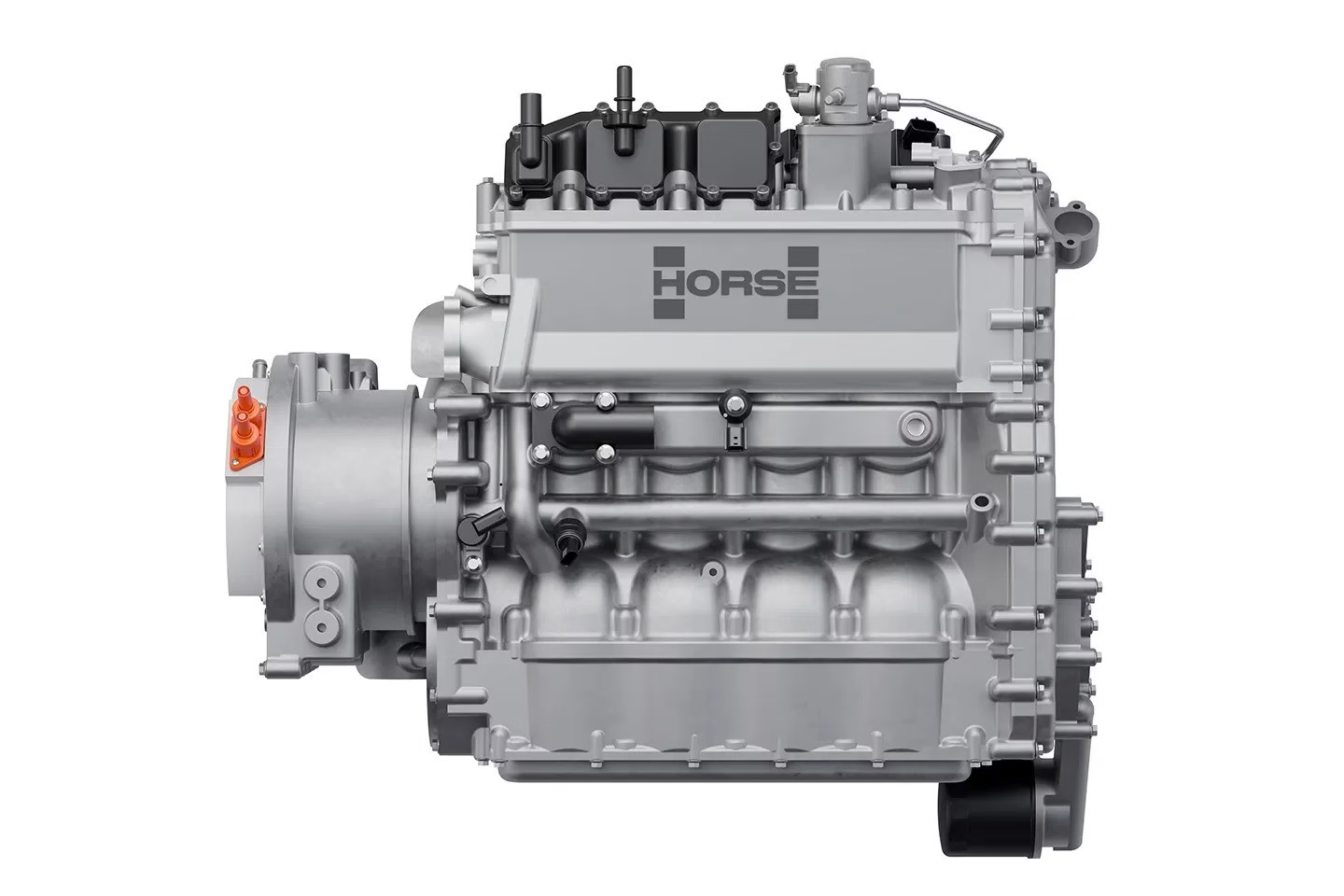
Horse Powertrain‘s Horse C15 integrates a 1.5-liter, four-cylinder engine with generator and inverter components into a sleek unit no larger than a briefcase. This innovative design allows easy incorporation into current BEV architectures without major modifications, giving automakers flexibility in vehicle design and production. The system can be configured horizontally or vertically to fit various compartments, supporting compact and larger vehicle models alike.
Engine Technology for Enhanced Efficiency and Compliance
Horse C15 is engineered to meet strict emission standards including Euro 7 and equivalents worldwide, underscoring its environmental credentials. It offers naturally aspirated and turbocharged variants that produce up to 120 kW of power, suitable for different vehicle classes from compact cars to light commercial vehicles (LCVs). Multifuel capability permits use of gasoline, ethanol, methanol flex fuels, or synthetic fuels, supporting sustainability initiatives and future fuel diversity.
Unlike traditional hybrids, the range extender engine in REEVs does not directly power the wheels but optimizes battery charge levels. This approach minimizes fuel consumption and emissions while maintaining a smooth ride by leveraging electric motor torque for propulsion. Consequently, the system reduces noise, vibration, and harshness, enhancing the driving experience akin to pure BEVs.
Key Advantages of Range Extended Electric Vehicles (REEVs)
REEVs using Horse C15 technology offer several benefits over conventional BEVs and hybrid electric vehicles (HEVs). They permit smaller, lighter batteries, cutting costs and reliance on scarce minerals crucial for battery production. The extended range capability eases consumer concerns about charging infrastructure limitations and travel distance, accelerating EV adoption.
Additionally, REEVs provide driving dynamics indistinguishable from BEVs, with smooth acceleration and regenerative braking. Charging mechanisms remain unchanged, allowing the vehicle battery to be replenished from public or home chargers. When paired with low-carbon fuels, these vehicles approach the cradle-to-grave sustainability footprint of fully electric models.
Broader Impact on the EV Market and Future Prospects
Horse Powertrain’s introduction of the Horse C15 range extender is part of a broader strategy to support diverse EV powertrain needs, encompassing full electric, hybrid, and combustion platforms under the X-Range umbrella. This product family aids automotive manufacturers in quickly adapting BEV platforms for hybrid applications with minimal redesign, speeding time-to-market and reducing development costs.
As demand for electric mobility grows worldwide, technologies like the Horse C15 play a pivotal role in bridging the gap between current infrastructure and consumer expectations. Range extended vehicles offer a flexible, efficient pathway to electrification, making electric mobility accessible while addressing range and cost challenges.