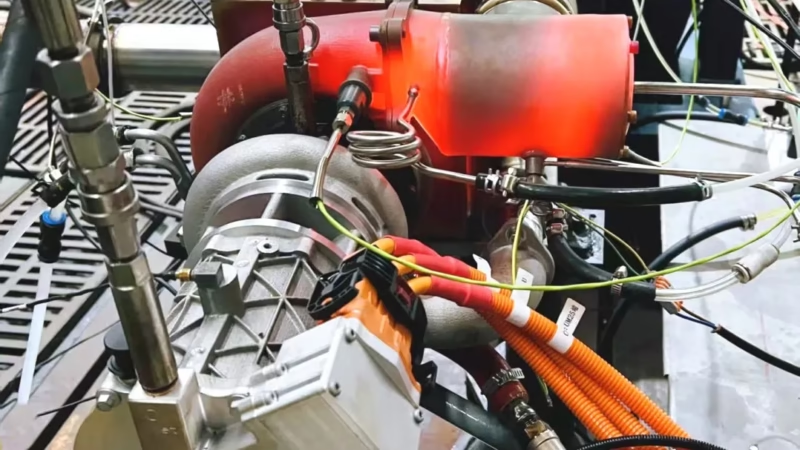

Hunan Tyen, a subsidiary of Chinese automaker Changan Auto, recently ignited its first independently developed detachable Power Turbine Generator (PTG). This modular system transforms pure electric vehicles (BEVs) into extended-range electric vehicles (EREVs). Consequently, it directly addresses persistent range anxiety among drivers. Users often worry about limited driving distances, especially in cold weather or on highways. Moreover, the PTG offers quick energy boosts without modifying the vehicle’s core structure. Therefore, it enhances flexibility for everyday commuters and long-distance travelers alike.
Overcoming Key EV Adoption Hurdles
Range anxiety tops the list of barriers holding back EV growth. Drivers fear depleting batteries far from charging stations. For example, cold temperatures can slash BEV range by up to 40%, according to industry reports. High-speed driving worsens energy consumption further. As a result, many potential buyers stick with traditional fuel cars. Hunan Tyen’s PTG steps in here. It uses a fuel-to-electricity method to generate power on demand. Thus, it extends range seamlessly. Additionally, charging convenience improves since the device supplements batteries rapidly. In turn, this boosts user confidence and accelerates EV adoption.
The system’s removable design stands out. Owners can attach or detach it effortlessly. This feature suits varied needs, from urban errands to road trips. Previously, some Tesla owners rigged homemade range extenders. However, those solutions lacked refinement and warranty support. Changan’s PTG promises a polished alternative. It integrates smoothly with existing BEVs. Hence, it lowers the entry barrier for hybrid-like performance without full redesigns.
Innovative Engineering Behind the PTG
Hunan Tyen leveraged expertise in fluid machinery for the gas turbine core. Engineers applied three-dimensional turbulence simulations to optimize compressor and turbine flow fields. They also innovated a high-efficiency ball bearing system. Plus, they developed an efficient vaned compressor and fixed-guide vane turbine. These upgrades increased turbine efficiency by over 5%. As a result, the PTG delivers higher power density in a compact package. Furthermore, it adapts to diverse fuels, broadening its appeal.
The electronic control unit (ECU) acts as the system’s brain. High power density creates thermal challenges during operation. To counter this, designers crafted efficient cooling channels. They paired these with precision thermal management from flow field simulations. Consequently, the ECU maintains stability even in extreme heat. This reliability ensures consistent performance across scenarios. Therefore, the PTG not only extends range but also upholds safety standards.
Advantages Over Traditional Range Extenders
Compared to fixed range extenders, the PTG shines in modularity. It avoids permanent alterations to BEVs. Users swap it out when full battery range suffices. This flexibility reduces reliance on massive batteries, cutting costs. Battery prices have fallen, yet they remain a major expense. The PTG eases that burden. Moreover, its compact structure fits neatly, unlike bulky aftermarket kits. Strong fuel adaptability means it handles gasoline or biofuels effectively. Thus, it bridges the gap between pure EVs and hybrids.
Safety and efficiency gains are notable too. Advanced simulations minimize vibrations and heat buildup. In contrast, DIY extenders often risk vehicle damage. Changan’s solution prioritizes integration with onboard systems. For instance, the ECU syncs power output precisely. This prevents overcharging or inefficiency. Overall, the PTG elevates EREV technology to new heights.
Expanding Applications Beyond Passenger Cars
The PTG’s versatility extends far beyond cars. It suits drones needing reliable propulsion. Outdoor power equipment benefits from its portable energy. Additionally, remote work sites or emergency response vehicles gain endurance. This multi-scenario potential amplifies its market value. Manufacturers can scale production for diverse industries. As EV infrastructure grows unevenly—strong in cities, weak in rural areas—such innovations fill critical gaps.
Market trends support this shift. Global EV sales hit record highs in 2025, yet range concerns persist. Changan’s move aligns with efforts from rivals like BYD and Geely. They too explore range-extender tech. However, the detachable aspect sets PTG apart. It empowers consumers with choice. In the long run, this could slash lifecycle costs for EVs. Lighter batteries mean less resource strain too. Thus, it promotes sustainable mobility on a larger scale.
Future Outlook for Detachable EV Tech
Industry experts predict detachable generators will reshape EV strategies. Automakers may offer them as optional kits by late 2026. This approach democratizes extended range. Consumers pick based on lifestyle—pure EV for short trips, PTG-enhanced for adventures. Regulatory nods for fuel compatibility will speed rollout. Meanwhile, ongoing R&D targets even higher efficiencies.
Challenges remain, such as fuel emissions scrutiny. Yet, the PTG serves as a bridge to full electrification. It buys time for battery breakthroughs. In summary, Hunan Tyen’s innovation tackles real-world pain points head-on. It propels Changan ahead in the competitive EV race. Drivers worldwide stand to gain from reduced anxiety and greater freedom.