Breakthrough in Electric Road Charging
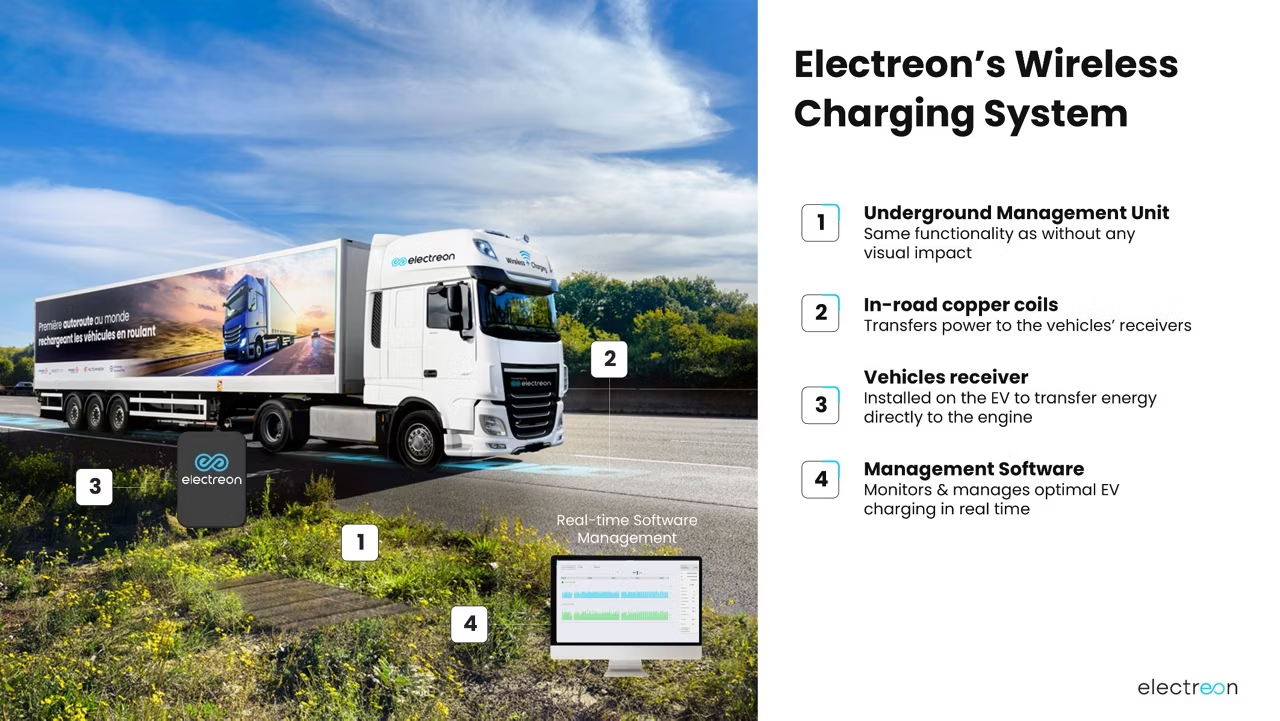
Electreon pioneers wireless electric road systems (wERS). Copper coils under roads inductively charge EVs in motion. Buses and trucks top up batteries seamlessly. Infineon supplies custom silicon carbide (SiC) modules for this. These EasyPACK 3B CoolSiC 2000 V units hit 200 kW average power. Peaks exceed 300 kW. Therefore, vehicles run 24/7 with smaller batteries.
Highways like France’s A10 now test this live. Heavy trucks and vans charge dynamically there. Test tracks span U.S., Germany, France, Norway, and more. Plans expand to long-haul routes soon. As a result, cargo space grows. Upfront costs drop sharply too.
Silicon Carbide Tech Drives Efficiency
Infineon‘s SiC modules shine in power conversion. They switch at high frequencies with minimal loss. Heat dissipates better than silicon. Compact designs fit tight spaces. Moreover, reliability holds in harsh conditions. This suits ports, airports, and toll roads perfectly.
SiC enables Vehicle-to-Everything integration next. Energy flows bidirectionally. Operators save on ops costs. Emissions plummet in dense traffic. Consequently, fleets electrify faster. Electreon’s CEO calls it a game-changer for global adoption.
Benefits for EV Fleets and Sustainability
Smaller batteries lighten vehicles. Operators carry more payload. Continuous charging ends depot stops. Buses serve routes non-stop. Trucks haul farther without pauses. This slashes total ownership costs by 30%. Plus, it eases grid peaks via smart timing.
Carbon cuts accelerate decarbonization. Heavy transport emits 25% of road CO2 today. Wireless roads target that head-on. Partners like Toyota, Ford, and UPS back it. Electreon’s ISO cybersecurity nod boosts trust. Hence, 2025 marks a tipping point for EV infrastructure.
Future of Electric Vehicle Applications
Dynamic charging transforms sectors. Commercial fleets lead with buses and trucks. Passenger cars follow on smart highways. Aviation hubs test it for shuttles. Off-road sites explore too. Infineon eyes wider SiC rollout. Competition spurs faster innovation.
Challenges remain, like coil installation costs. Yet, pilots prove scalability. Governments fund pilots amid net-zero goals. Therefore, wireless roads proliferate by 2030. EVs dominate without battery compromises. This synergy powers a greener mobility era.