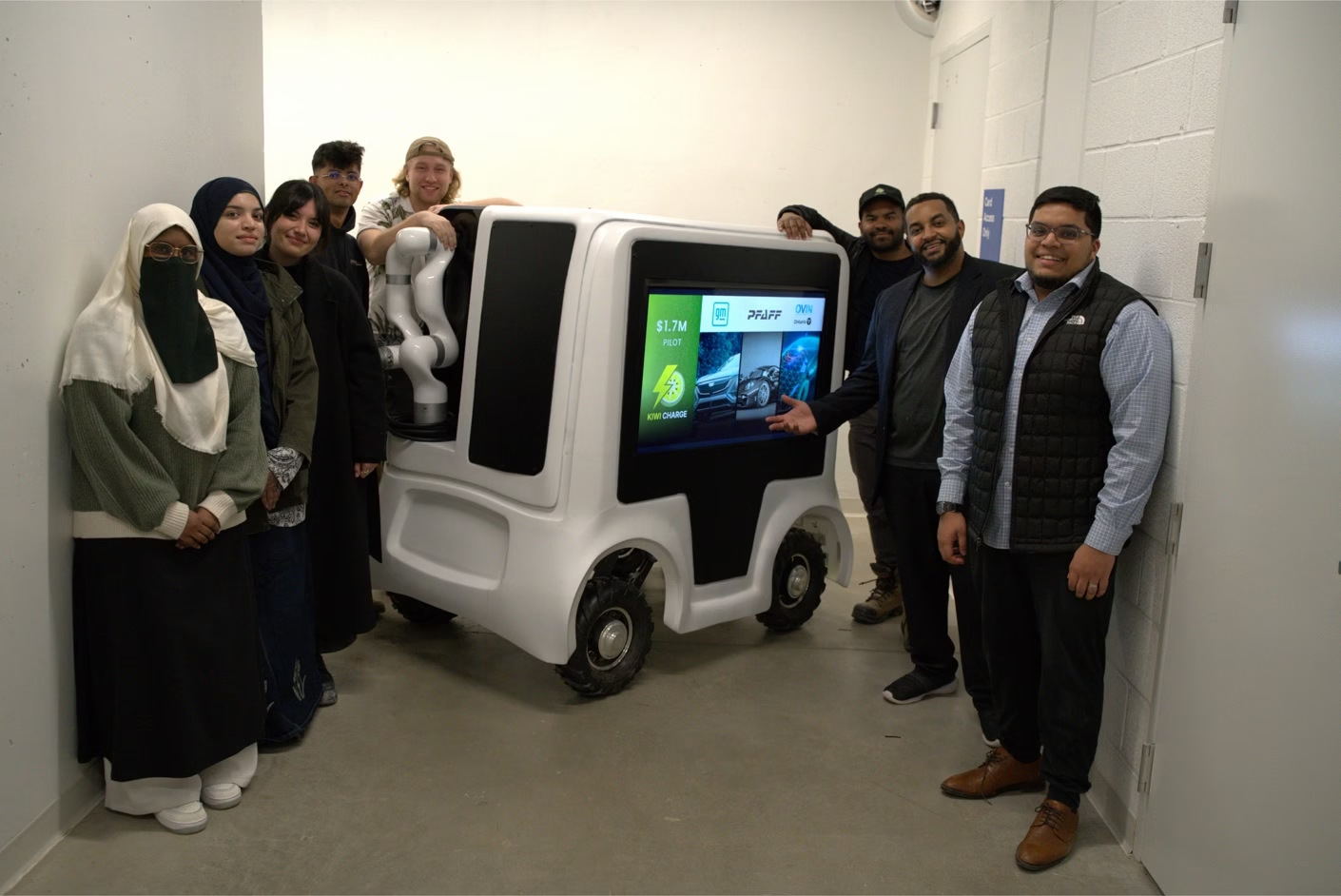
Kiwi Charge, a Toronto‑based robotics and AI startup, has launched an autonomous electric vehicle (EV) charging project backed by a $1.7 million total investment from the Government of Ontario and industry partners, including General Motors Canada and Pfaff Automotive. This project is designed to bring mobile EV charging solutions from concept to commercial deployment. It integrates artificial intelligence, robotics, and electrification into a single system. The funding package includes a $500,000 grant from the Ontario Vehicle Innovation Network (OVIN) R&D Partnership Fund, paired with $1.2 million from private‑sector stakeholders, accelerating the timeline for real‑world testing and deployment.
The company will showcase its latest autonomous charging robot at the Canadian International AutoShow from February 13 to 22, placing it alongside “Project Arrow,” Canada’s zero‑emissions concept vehicle developed by the Automotive Parts Manufacturers’ Association (APMA). This positioning signals that Kiwi Charge’s technology is not just a niche pilot, but a core component of Ontario’s broader EV and mobility‑innovation strategy. By linking its work to new‑generation electric platforms and autonomous‑mobility ecosystems, Kiwi Charge reinforces the narrative that charging‑infrastructure innovation is as vital as vehicle design itself.
Scaling Solutions for Modern Urban Buildings
In cities, approximately 30% of EV owners live in multi‑tenant buildings, where retrofitting parking garages with fixed chargers often requires major electrical upgrades and hardwired infrastructure. Kiwi Charge’s autonomous robots offer a scalable alternative: compact, mobile units that deliver on‑demand charging without rewiring parking facilities, reducing upfront costs and installation time. These robots rely on robotic mobility, AI‑powered fleet intelligence, and decentralized power management to serve multiple vehicles efficiently while minimizing strain on the grid. This approach enables older condominiums and rental properties to electrify more quickly, at roughly 40% of the cost of traditional charging infrastructure.
For building operators, the solution shifts EV charging from a fixed‑asset investment to a flexible, service‑oriented model. Instead of bearing the capital expense of dozens of fixed chargers per garage, property managers can deploy a smaller fleet of autonomous robots that roam parking levels and charge vehicles as needed. This dynamic operation improves capital efficiency and space utilization, two key constraints in dense urban environments. Moreover, the AI layer helps optimize charging windows based on vehicle arrivals, departure times, and electricity‑pricing signals, which enhances grid‑friendly operation and overall system efficiency.
Addressing Dealership and Fleet Charging Challenges
Beyond residential and commercial buildings, Kiwi Charge is also tailoring its technology for automotive dealerships, which often face logistical hurdles when managing large EV inventories on busy lots. The company is developing a manual mobile unit that can keep EVs charged on‑site without disrupting day‑to‑day operations, thereby improving vehicle readiness and test‑drive availability. By providing a moveable charging option instead of installing fixed stations around the lot, dealers reduce installation costs and gain greater flexibility in lot layout and vehicle display.
For dealerships, the main benefit lies in operational efficiency: fully charged vehicles are more likely to be driven by customers and hence more likely to translate into sales. Mobile charging units can also support rental fleets, corporate shuttle services, and third‑party logistics companies that need to keep EVs ready for shifts or deliveries. In this sense, Kiwi Charge’s platform extends beyond individual consumers and into B2B and fleet‑management use cases, broadening the markets where flexible EV charging is relevant.
Aligning with Ontario’s Climate and Innovation Goals
The Kiwi Charge project aligns closely with the Province of Ontario’s climate, housing, and innovation priorities. By enabling older buildings to adopt clean, flexible charging without extensive retrofitting, the solution supports denser, more sustainable urban housing patterns while cutting emissions from the transportation sector. At the same time, the project strengthens Ontario’s position in the global EV and battery‑technology ecosystem, positioning local companies as exporters of next‑generation charging solutions rather than just hardware suppliers.
Public and private stakeholders emphasize that the initiative is not merely technical but transformational: it aims to reshape how cities think about mobility‑related infrastructure. As Claudia Krywiak of the Ontario Centre of Innovation notes, Ontario is already a hub for electric and autonomous‑vehicle breakthroughs, and Kiwi Charge exemplifies how domestic startups can solve one of the biggest adoption barriers—charging access—through robotics and AI. Regan Dixon from General Motors Canada underlines that GM’s support of Kiwi Charge reflects a broader corporate goal to improve EV ownership experiences and encourage wider adoption through innovative, service‑driven infrastructure.
Kiwi Charge’s Path to Global Application
Kiwi Charge’s autonomous charging robots are designed to work in dense, space‑constrained environments, making them particularly suitable for urban centers in North America, Europe, and Asia where parking space and electrical capacity are tight. By reducing dependency on fixed infrastructure and leveraging Ontario’s growing AI talent pool, the company can iterate quickly and adapt its system to different building layouts and local grid conditions. Having already secured a prominent platform at the Canadian International AutoShow, Kiwi Charge is well positioned to attract further pilot partners, fleet operators, and municipal stakeholders interested in decarbonizing their transportation footprint.