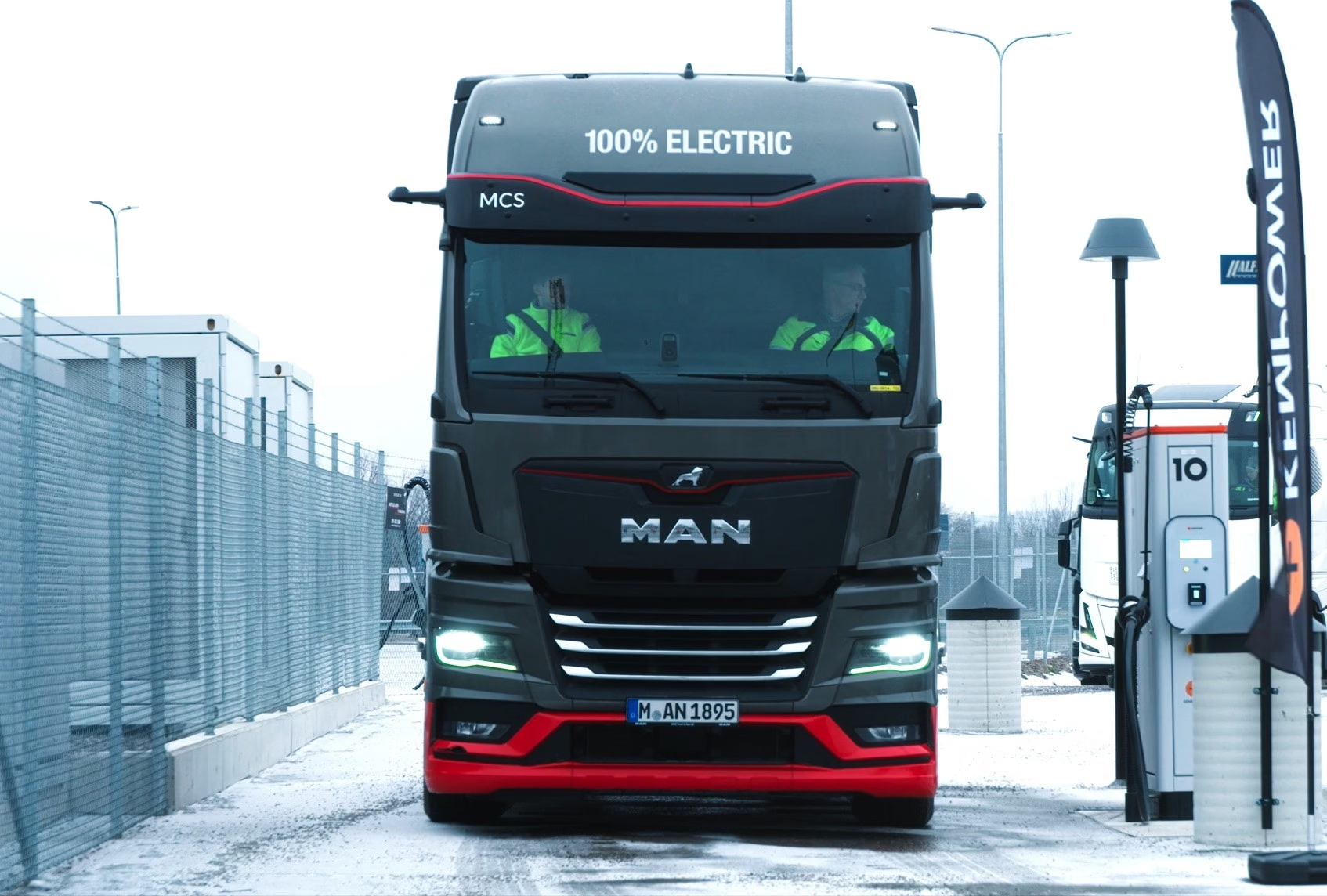
MAN Truck & Bus showcased its eTGX electric truck’s megawatt charging prowess at Kempower’s MCS Live Winter Days 2026 in Norrköping, Sweden. The vehicle charged publicly at around 750 kW using the Megawatt Charging System (MCS) amid sub-zero temperatures. This demo proved MCS reliability under harsh real-world conditions at Kempower customer Alfredsson’s site. Moreover, it highlighted seamless interoperability between truck and charger. Thus, MAN advances heavy-duty electric transport toward everyday viability.
MCS Technology Powers Rapid Charging
Engineers focused on technical harmony between the MAN eTGX and charging infrastructure. They tested stability, controlled performance, and secure vehicle-charger communication. Sven Steckhan, MAN’s Program Lead Charging, confirmed the system’s robustness for series production. The eTGX and eTGS models now offer MCS as an order option. Production starts in Q2 2026. Additionally, MCS builds on CCS by delivering megawatt-level power—up to 3.75 MW at 3,000 amps. This slashes charge times dramatically. For instance, trucks recharge from 10% to 90% in about 30 minutes.
Cold Weather Challenges and Solutions
Winter tests addressed key hurdles like low temperatures that thicken battery electrolytes and slow ion flow. Cold cuts charging efficiency by up to 40%, but larger batteries and heated systems mitigate this. MAN’s demo succeeded despite these issues, using protected chargers and robust hardware. Kempower’s event gathered industry players, infrastructure firms, and media. It illustrated MCS perks: shorter downtimes, higher availability, and lower costs. However, grids need upgrades for megawatt demands. Thus, covered plazas and heated cables become essential, adding 15-25% to infra costs yet ensuring winter reliability.
Industry Momentum Builds for Electric Trucks
Competitors accelerate too. Scania promises MCS-equipped electric trucks for early 2026 orders, targeting 20-80% charges in under 30 minutes. Mercedes-Benz tested 1 MW on its eActros 600 prototype, eyeing series maturity soon. ABB and MAN previously demoed over 700 kW prototypes. The MWCS market surges from $500 million in 2025 to $3.5 billion by 2033 at 35% CAGR. Players like Kempower, Siemens, ChargePoint, and Heliox lead. Government emission rules drive fleets to EVs. Logistics firms adopt first, followed by ports and construction. High-power segments dominate due to quick large-battery recharges.
Market Growth and Key Players
Key strategies emerge. Automakers like Scania partner via Traton’s Milence for MCS corridors. Startups innovate with proprietary nets. Challenges persist: high upfront costs and grid limits. Yet, falling battery prices and policies counter them. Smart grids manage peaks. Thus, long-haul freight turns practical and profitable. MAN’s winter success signals readiness. It boosts vehicle uptime and cuts operating expenses. Fleets gain flexibility with CCS for regional runs and MCS for hauls.
Sustainable Freight Transport
MAN megawatt charging demo marks a pivotal step. MCS expands electric truck operations in tough climates. It tackles range anxiety and downtime head-on. Industry collaboration via CharIN finalizes standards swiftly. Production ramps position MAN ahead. Moreover, real-world proofs like Sweden’s cold build trust. Operators see economic wins: faster turns mean more miles. Safety and emissions drop too. However, infrastructure must scale. Europe leads with projects like 2ZERO. Thus, megawatt charging integrates into fleets by 2027. Heavy-duty EVs redefine logistics reliability.
This breakthrough aligns with global pushes. Sweden’s Norrköping event united stakeholders. It previewed MCS’s role in decarbonizing transport. MAN orders MCS now for eTGX/eTGS. Delivery follows soon. Competitors match pace, fueling competition. Battery advances complement fast charging. Cold performance data reassures northern operators. Ultimately, MCS unlocks electric trucking’s potential. Freight moves greener, quicker, and cheaper across seasons.