
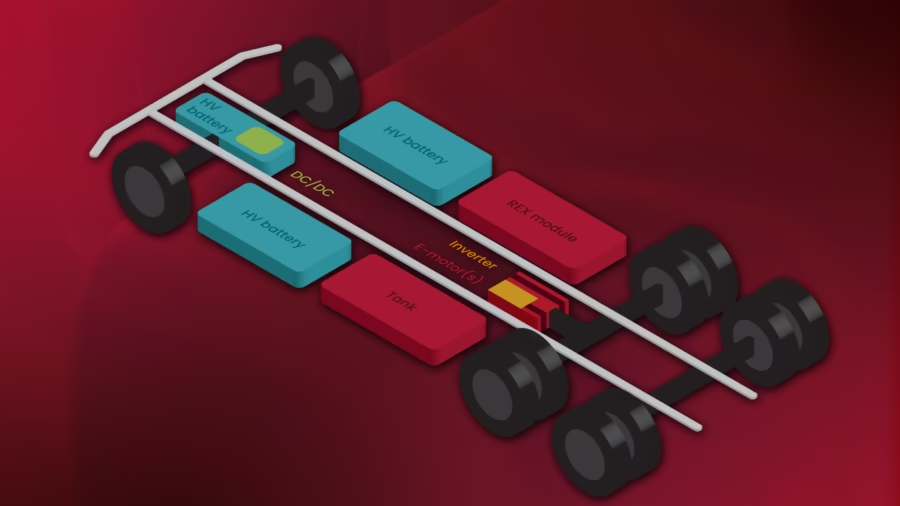
Range extender electric vehicles, or REEVs, transform commercial trucking. FEV’s recent analysis reveals striking economic benefits. These trucks lower total cost of ownership (TCO) by up to 33% compared to diesel counterparts. Moreover, they cut CO2 emissions sharply. Operators gain flexibility without massive infrastructure upgrades. This shift matters now, as fleets chase sustainability goals.
Economic Edge of REEV Trucks
FEV evaluated real-world European driving cycles. REEVs shine in short-haul tasks, delivering 33% TCO savings. Even long-haul routes yield 14% reductions. Calculations use overnight depot charging at 19 cents per kWh. Lower regional electricity rates amplify gains further. Thus, fleets see quick returns.
Battery size drives this advantage. Pure battery-electric vehicles (BEVs) need 560 kWh packs. REEVs halve that to 280 kWh. Overnight AC charging at 22 kW restores 240 kWh easily. Consequently, trucks run mostly electric daily. Payload rises too, as lighter batteries mean more cargo space.
No Need for Megawatt Charging
Infrastructure hurdles vanish with REEVs. Traditional BEVs demand megawatt chargers for long hauls. REEVs integrate into existing depots seamlessly. They charge slowly overnight, yet cover next-day needs. Dr. Norbert W. Alt, FEV’s COO, stresses this point. He notes REEVs make electric trucking viable today.
Operational flexibility grows. Fleets avoid public fast-charging dependencies. Risks drop for long-distance operators. Meanwhile, energy costs plummet with night rates. For instance, electric driving dominates, slashing fuel bills. As a result, TCO drops across scenarios.
TCO Breakdown by Cycle
Driving Cycle TCO Savings vs. Diesel CO2 Reduction
Short-Haul Up to 33% Up to 82%
Long-Haul About 14% Significant
This table highlights key wins. Short cycles maximize savings. Long hauls still outperform diesel economically.
Environmental Wins Alongside Savings
REEVs deliver ecological punch. Global warming potential falls by up to 82%, depending on energy mixes. Electric miles replace diesel combustion directly. Hybrids extend range without full battery reliance. Therefore, emissions drop fast.
FEV builds on prior passenger car studies. Now, focus turns to trucks. Demonstrators test these concepts in real conditions. Partners validate data soon. Alt calls REEVs an “immediately available” fix. They blend range, low costs, and green impact perfectly.
Industry trends support this. Battery costs fell 20% last year alone. Moreover, EU mandates push zero-emission trucks by 2030. REEVs bridge the gap effectively. Fleets adopt them to meet regs without stranding assets.
FEV’s Role in Truck Innovation
FEV leads engineering for mobility shifts. From OEMs to energy sectors, they innovate relentlessly. Over 6,100 experts at 45 global sites drive progress. Current projects target REEV demonstrators. These validate TCO models in practice. Customers gain marketable solutions fast. Beyond trucks, FEV eyes aerospace and software. Yet, sustainable transport remains core.
Why REEVs Fit Fleets Now
In summary, REEVs redefine trucking economics. They cut costs, emissions, and infrastructure needs. Operators win big in a tightening market. FEV’s work accelerates this change. Forward-thinking fleets act today for tomorrow’s edge.