Solid-state batteries transform energy storage for electric vehicles and beyond. They offer superior safety and energy density over traditional lithium-ion cells. However, scaling from lab prototypes to mass production remains tough. Lasers step in as key enablers for solid-state. They tackle issues like sintering electrolytes and cutting reactive lithium. Thus, companies race toward 2027 pilots while researchers refine processes.
Solid-State Battery Advantages Drive Demand
Solid-state batteries promise game-changing benefits. First, they boost safety by ditching flammable liquid electrolytes. Solid versions prevent leaks and fires, plus block lithium dendrites that spark short circuits. Next, energy density soars with lithium metal anodes, hitting 3860 mAh/g versus graphite’s lower capacity. This means longer EV ranges and lighter aviation packs. Moreover, wider temperature tolerance suits extreme conditions.
Industry leaders push forward aggressively. Toyota and BYD target 2027 pilot lines. Samsung SDI and SVOLT follow suit. In Europe, Mercedes-Benz tests semi-solid concepts with partners. Nissan even builds a Yokohama factory. Meanwhile, Stellantis explores applications. These moves signal a shift from labs to factories. Early adopters eye aerospace, motorsports, and medical tech where safety trumps cost. For mass EVs, luxury models lead the way. Experts note coexistence with lithium-ion cells for years ahead.
Manufacturing Hurdles Demand New Solutions
Production challenges loom large for solid-state batteries. Lithium metal anodes react fiercely with air and moisture. They ignite under stress and form unwanted layers. Traditional cutting or rolling causes smearing and tool jams. Solid electrolytes like LLZO need 1200°C sintering, but lithium evaporates, wasting costly materials. Interfaces suffer high resistance, risking uneven lithium plating. Dry rooms or inert gases add huge infrastructure costs. Reject rates hit 30%, ballooning losses to millions daily.
No recycling paths exist yet for these novel materials. Each scrap hurts economically and environmentally. Fluctuations amplify defects. For instance, oxide ceramics develop secondary phases that cut ion flow. Anode-electrolyte contacts demand precise chemistry for longevity. These bottlenecks slow commercialization. Yet, innovations address them head-on. Researchers stress early process stability to curb waste. Consequently, scalable methods become urgent priorities.
Laser Sintering Revolutionizes Electrolytes
Lasers provide targeted heat for solid-state electrolyte processing. Fraunhofer ILT tests them on LLZO layers. Rapid, local heating densifies materials without broad high temperatures. This curbs lithium loss and cell damage. Controlled cooling prevents cracks and delamination. Early results show uniform compaction. Similar work targets LATP electrolytes with stable windows.
Benefits extend further. Lasers avoid full furnace cycles, saving energy. They fit dry room setups seamlessly. However, challenges persist, like optimizing pulse durations. Teams refine parameters for repeatability. In parallel, NASICON materials undergo trials. These advances build robust layers. As a result, production efficiency climbs. Such precision suits high-stakes apps like EV powertrains.
Laser Structuring and Cutting Enhance Precision
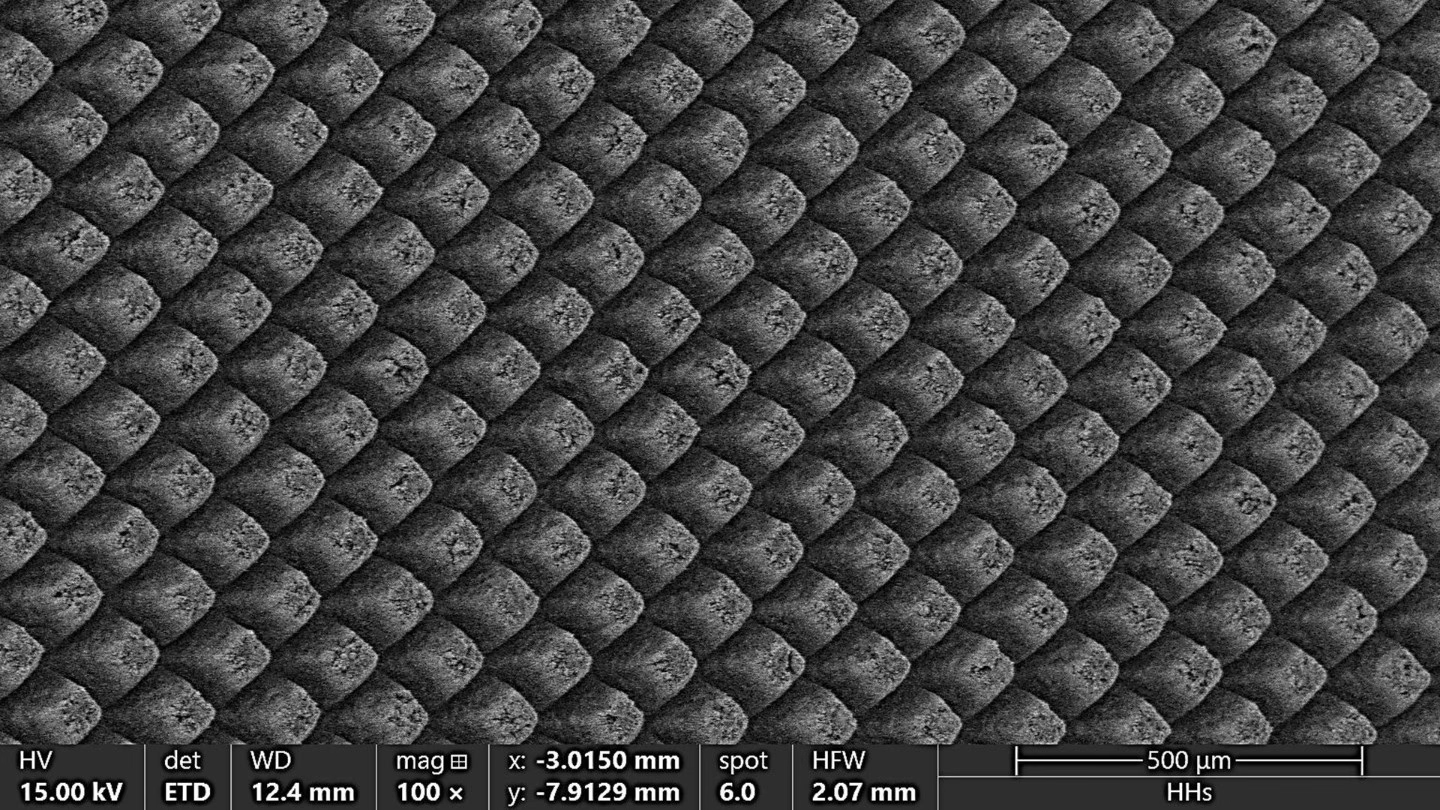
Interface quality hinges on surface tweaks. Ultrashort femtosecond lasers etch 30 µm microstructures into electrolytes. This enlarges contact areas and evens current flow. Better wettability aids lithium spread, slashing impedance. Raman spectroscopy probes crystal shifts post-processing. Yet, some tests reveal resistance hikes from defects. Researchers probe plating dynamics and anodeless designs.
Lithium foil cutting poses separate woes. Lasers cut contact-free, dodging mechanical flaws. They enable complex shapes beyond linear stamps. Argon atmospheres yield clean edges at dew points below –70°C. Nitrogen risks nitrides; water spurs oxides. Ultrashort picosecond pulses minimize heat zones and splashes. Nanosecond options cut costs for scale-up. Mini-environments integrate easily. Particle control boosts yield. Therefore, lasers unlock flexible, clean solid-state battery manufacturing.
Path to Industry and Smart Integration
Lithium-ion lines offer blueprints, but solid-state demands more purity, Lasers already shine in slitting, drying, and notching. Transferring know-how accelerates ramps. Fraunhofer ILT spans sintering, structuring, cutting, and contacting. Dual-focus teams bridge lab-to-factory gaps.
Europe seizes chances before Asian dominance solidifies. Standards emerge now. Battery management adds smarts via printed micrometer sensors. They track temperature, force, and chemistry. AI crunches data for lifespan predictions. Real-time tweaks optimize welding or assembly. In turn, this ensures safety and performance.
Solid-state batteries target aviation, high-end EVs, and data centers first. Costs will drop, broadening appeal. Lasers prove pivotal, enabling scalability and competitiveness. Overall, they pave a viable road from prototypes to production lines.