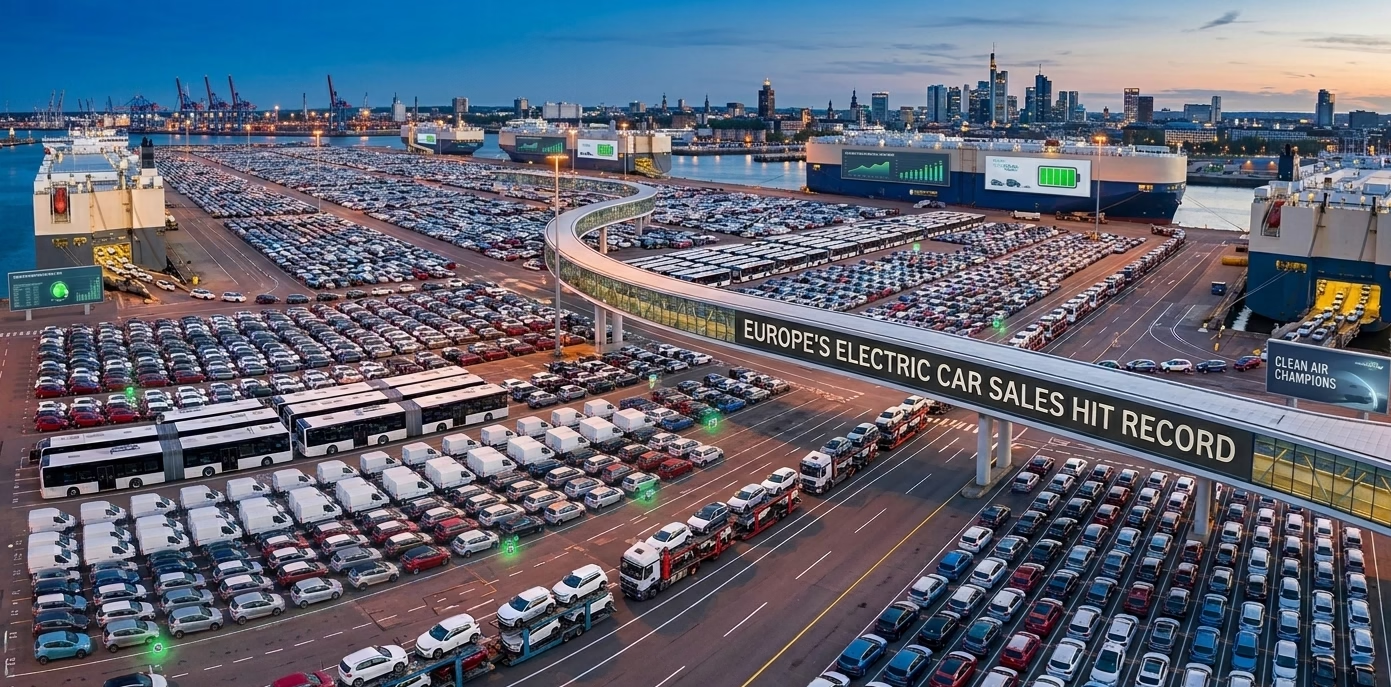

European battery electric vehicle registrations reached a stunning 23.6% market share in May 2026. This figure represents 212,387 units sold across 17 key European markets. Sales jumped 34.4% compared to the same month last year. Year-to-date BEV sales now total 962,010 units through May. This represents a 31.8% rise against 2025 performance levels. The data indicates structural momentum rather than temporary cyclical growth.
Seven of the ten best-selling models in Europe come from European brands. Order books for these vehicles continue rising steadily. European manufacturers are clearly benefiting from this growing consumer demand. This trend strengthens the continent’s automotive industry position globally.
France and Germany Lead Large Market Electric Vehicle Adoption
France led Europe’s large markets with a 29.5% BEV share during May. The country recorded 59,969 new electric vehicle registrations. Year-to-date growth reached 41.5% compared to 2025 figures. This performance places France at the forefront of European EV adoption. French consumers are responding strongly to electric mobility options. Government policies and subsidies likely support this accelerating trend.
Germany Posts 25% Market Share with Strong Growth
Germany followed closely with a 25% BEV market share in May. The nation’s electric vehicle sector shows consistent expansion momentum. German automakers are investing heavily in battery technology development. This investments support domestic manufacturing capacity for electric powertrains. Consumers increasingly choose electric models over traditional combustion engines.
Italy Becomes Fastest-Growing Electric Vehicle Market in Europe
Italy emerged as Europe’s fastest-growing market with registrations up 100.8% year-to-date. New government subsidies drove this dramatic increase in electric car sales. Italy reached an 8.8% BEV share in May alone. The subsidy program appears highly effective at accelerating market transition. Italian consumers are embracing electric vehicles more rapidly than expected. This growth trajectory could continue throughout 2026.
Renault reported 50% EV order growth across its European operations. BMW’s iX3 attracted more than 50,000 customer orders. These figures demonstrate strong consumer confidence in European electric brands. Manufacturer order books remain robust heading into the second half of 2026.
High-Share Markets Show Near-Total Electric Vehicle Dominance
Norway achieved 97.8% BEV market share, nearly reaching total electric vehicle dominance. This Scandinavian nation leads the world in electric car adoption rates. Norwegian policy incentives have successfully eliminated most combustion engine sales. The country serves as a model for other European markets.
Denmark and Finland Reach Majority Electric Share
Denmark recorded 78.7% BEV market share in May 2026. Finland achieved 49.6% electric vehicle market penetration. Both nations demonstrate strong transition momentum toward sustainable transportation. Danish and Finnish consumers prioritize environmental considerations in vehicle purchases. These markets show what widespread adoption looks like in practice.
Belgium Crosses One-Third Electric Vehicle Threshold
Belgium reached 36.8% BEV market share during May. This exceeds one-third of all new car sales being fully electric. Belgian policy frameworks support continued electric mobility expansion. The country’s coastal location and urban density favor electric vehicle use.
Markets Facing Registration Declines Despite Overall Growth
Sweden and the Netherlands saw year-to-date BEV registrations decline. These exceptions contrast with the broader European growth trend. Specific market conditions likely explain these temporary setbacks. Both countries previously showed strong electric vehicle adoption rates. Analysts should monitor whether declines reverse in coming months.
Emerging Markets Show Growth but Low Current Market Share
Spain, Poland, Romania, and Slovakia each recorded growth above 28% year-to-date. However, these markets remain at or below 10% BEV share. Significant expansion potential exists in these emerging European economies. Infrastructure development and subsidy programs could accelerate adoption further. Consumer awareness of electric benefits is growing in these regions.
E-Mobility Europe Leadership Highlights Energy Security Benefits
Chris Heron, Secretary General of E-Mobility Europe, issued an important statement. He declared electric vehicles as Europe’s biggest growth story in 2026. Nearly one in four new cars sold in May were fully electric. Consumers and governments respond to Europe’s energy security challenge actively. Every new electric car sold cuts fuel costs permanently. Electric vehicles also reduce oil imports indefinitely.
Heron emphasized particular encouragement regarding European manufacturer benefits. Domestic automakers gain from growing consumer demand for electric models. This strengthens Europe’s automotive industry competitive position globally. The statement underscores both economic and environmental advantages of electrification.
Key Factors Driving Europe’s Electric Vehicle Momentum
Several critical factors explain this structural market transformation. Energy security concerns motivates both consumers and government policymakers. Fuel cost savings provide immediate financial benefits to electric vehicle owners. Oil import reduction strengthens Europe’s economic independence from external suppliers. European manufacturer competitiveness improves through electric technology leadership.
Government subsidies in France, Germany, and Italy accelerate adoption rates. Charging infrastructure expansion supports practical everyday electric vehicle use. Battery technology improvements extend range while reducing purchase prices. Consumer awareness of environmental benefits continues growing steadily.
European Brands Dominate Best-Selling Electric Vehicle Models
Seven of ten best-selling models come from European manufacturers. This dominance contrasts with earlier market expectations about foreign competition. Renault, BMW, and other European brands capture significant market share. Domestic automakers benefit from established manufacturing infrastructure and brand loyalty. European engineering expertise in electric powertrains proves competitive globally.
Rising order books indicate sustained demand through 2026 and beyond. Manufacturer production capacity must expand to meet growing orders. Supply chain investments in battery components remain critical priorities.
Market Transition Indicators Suggest Continued Growth Trajectory
The 34.4% year-on-year increase demonstrates accelerating adoption rates. Year-to-date growth of 31.8% confirms sustained momentum. Structural factors support continued expansion rather than temporary spikes. Six months remaining in 2026 could push annual share higher. Industry analysts project BEV share exceeding 30% by end of year.
Electrical Vehicle Infrastructure and Policy Support Requirements
Continued growth requires sustained infrastructure investment and policy support. Charging station density must expand in emerging markets like Poland. Subsidy programs in Italy demonstrate effective policy intervention models. France and Germany show how large markets can achieve high adoption rates. Standardized charging protocols improve consumer confidence across borders.
Comparison with Previous Year Performance Shows Clear Acceleration
May 2025 BEV share remained significantly below the 23.6% record. The 34.4% year-on-year increase represents substantial acceleration. This growth rate exceeds typical automotive market transition patterns. Electric vehicles are replacing combustion engines faster than historical hybrids did. The pace suggests electric mobility will reach mass adoption sooner than expected.
Important List of Europe’s Top Electric Vehicle Markets by Share
- Norway: 97.8% BEV market share
- Denmark: 78.7% BEV market share
- Finland: 49.6% BEV market share
- Belgium: 36.8% BEV market share
- France: 29.5% BEV market share
- Germany: 25% BEV market share
- Italy: 8.8% BEV market share
These rankings show clear geographic adoption patterns across Europe. Northern European nations lead while Southern and Eastern markets follow.
Conclusion: Europe’s Electric Vehicle Revolution Achieves Milestone
One in four new cars sold in Europe is now fully electric. This milestone represents a fundamental transformation of the automotive industry. European manufacturers benefit from growing domestic consumer demand. Energy security, fuel costs, and environmental concerns drive adoption. The structural momentum suggests continued growth through 2026 and beyond.
Sources: E-Mobility Europe