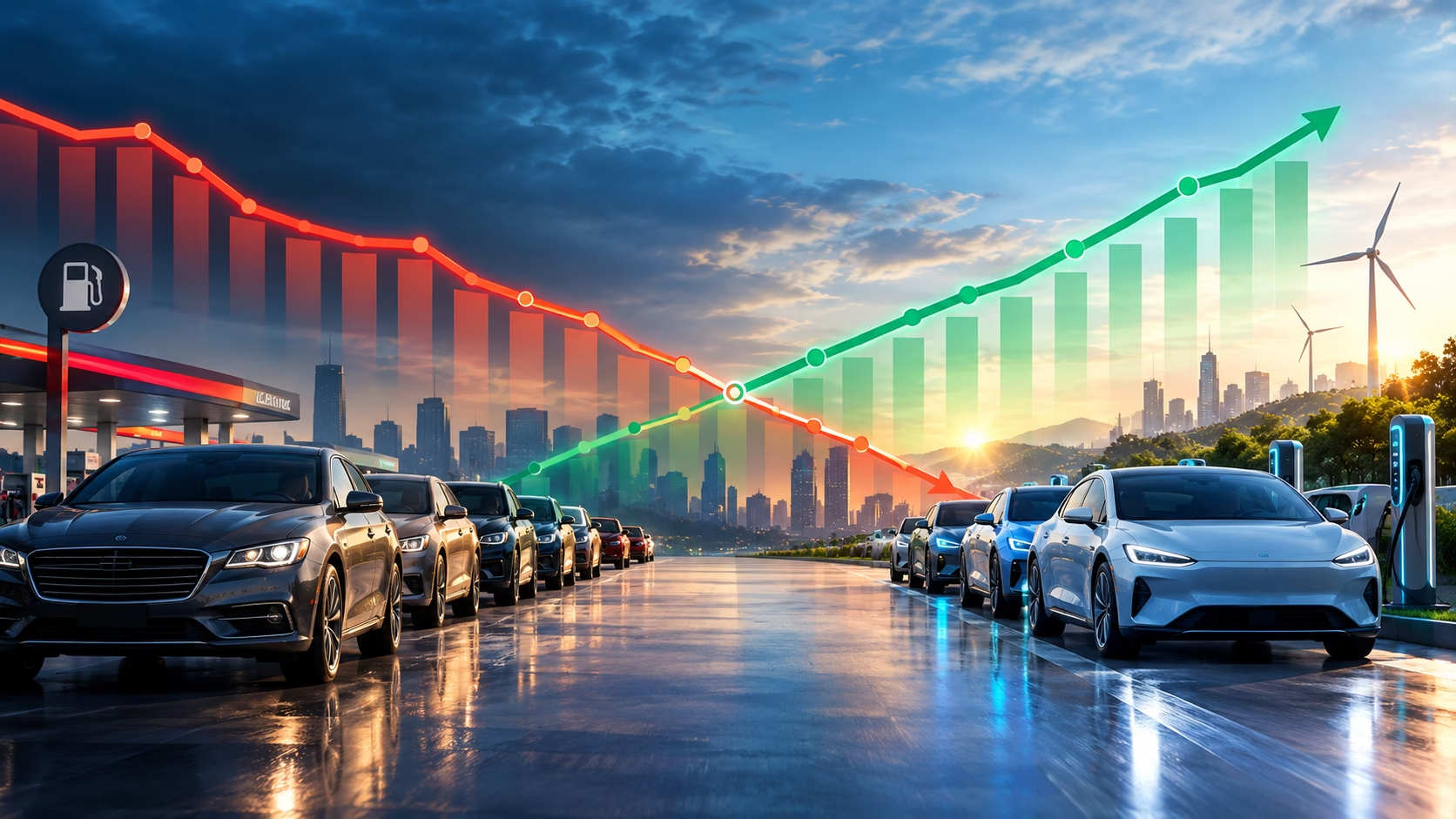

Historic Milestone for Electric Vehicle Adoption
Global gasoline-only car sales dropped below 50% market share for the first time. This milestone occurred during the first half of 2026 according to Mobility Global data. New gas-only model sales fell 10% year over year worldwide. The total reached 20.25 million units during this period.
The report excludes both plug-in and plug-less hybrids from gas vehicle totals. Hybrids still consume gasoline intermittently when batteries deplete. This distinction matters for understanding the full electrification picture.
International Energy Agency Forecasts EV Growth
The International Energy Agency projects different timelines for electric vehicle dominance. Fully electric vehicles will represent about 28% of total new-car sales in 2026. The agency forecasts 50% electric vehicle share by 2035.
A Harvard study points to 38% electric vehicle share by 2030. These varying projections reflect different methodology and policy assumptions. The pace of adoption diverges significantly by country and region.
Electric vehicles already dominate several Nordic markets today. Norway, Denmark, Sweden, Netherlands and Finland lead global adoption rates. These countries demonstrate what rapid electrification looks like in practice.
Rising Fuel Prices Drive Consumer Behavior Changes
Combustion engine decline coincides with geopolitical conflicts affecting oil supplies. Wars in the Middle East and Eastern Europe squeeze global oil flows. Gas and diesel prices surge as supply constraints tighten worldwide.
American drivers pay 39% more at gas pumps compared to last year. Diesel prices increased even more dramatically at 72% higher costs. Multiple factors drive these increases including refinery attacks.
Pumped-up fuel costs destroy demand for gas cars in specific regions. Europe and Southeast Asia experience particularly strong demand destruction. Italian drivers endure prices around USD 10 per gallon currently.
Tesla Maintains Global EV Sales Leadership Position
Tesla’s Model Y remains the bestselling electric vehicle model globally. Chinese automaker models from BYD dominate other bestseller list positions. Tesla topped third-quarter estimates with 486,532 deliveries recently and deliveries remain slightly down from the previous year period. Tesla stock rose almost 5% following the quarterly announcement. The company continues focusing on robots and robotaxi development.
Chinese manufacturers supply 60% of global electric car sales in 2025. European and North American automakers each account for about 15%. This concentration reflects China’s manufacturing dominance in batteries.
Energy Security Concerns Accelerate Electrification Policies
The fuel crunch elevates electrification into an energy security issue globally. Road transport represents close to half of oil demand today. Policy responses to the current crisis will shape car markets for years.
The International Energy Agency emphasized this connection earlier this year. Middle-term wary politicians advocate for various policy interventions. Some propose U.S. diesel export bans to address rising costs.
Experts disagree on possible effects from such policy interventions. Many say bans would lower U.S. diesel prices short term. Gas and jet fuel prices could rise soon after implementation.
Global Electric Vehicle Sales Reach Record Levels
Electric car sales grew by 20% globally to exceed 20 million in 2025. One-quarter of all new cars sold were electric during that year. Europe saw the strongest growth among major electric vehicle markets.
European electric car sales rose by more than 30% to reach 28%. This growth followed increased stringency in European Union CO2 standards. China’s growth slowed slightly but EVs still accounted for nearly 55%.
United States electric car sales remained relatively stable at under 10%. The end of EV tax credits coincided with year-end sales drops. Emerging markets saw steep increases in electric car sales during 2025.
Southeast Asia and Latin America Show Strong Growth
Southeast Asian annual sales more than doubled to reach nearly 20%. Viet Nam, Indonesia and Thailand led this regional growth strongly. Latin American sales grew by 75% during the same period.
Brazil and Mexico led Latin American electric vehicle adoption rates. More than 100 countries recorded electric car sales growth in 2025. One-third of these countries saw EVs represent at least 10% of sales.
Global electric car sales are expected to grow to 23 million in 2026. This represents 28% of total car sales worldwide this year. Europe is poised for the largest growth among major markets.
European Market Shows Continued Expansion Momentum
European sales are projected to increase by around 20% in 2026. One in three cars sold will be electric in Europe this year. China’s electric car sales will reach almost 60% of total sales.
Sales across Asia Pacific countries other than China will grow over 50%. Latin American sales are projected to rise by 45% during 2026. Wider economic impacts from Middle East conflicts might temper overall sales.
Many regions show upside potential to the 2026 electric vehicle forecast. Policy enactment timing affects how these projections materialize. Current high oil prices draw consumer attention to EV economic benefits.
Battery Electric Vehicles Offer Lower Running Costs
Electric cars generally have lower running costs than internal combustion vehicles. Higher efficiency drives these economic advantages for consumers. Recent oil price rises increased cost savings from driving electric vehicles.
Annual fuel cost savings for European Union EV drivers grew 35%. Corporate fleets traveling long distances see several times larger savings. Preliminary signs suggest EV sales increasing where fuel prices rose steeply.
Full implications of the current crisis will take time to register. Lag between vehicle orders and deliveries affects market timing. Electric two- and three-wheelers look attractive for emerging economy consumers.
E-Truck Sales Double in Major Markets
Electric truck sales more than doubled in 2025 compared with 2024. Nine percent of all truck sales worldwide were electric last year. China drove the vast majority of this growth in truck electrification.
One in four trucks sold in China was electric during 2025. Electric truck sales also grew in Europe and North America. These regions grew at much lower levels than China currently.
Electric trucks remain two to three times more expensive than diesel. Total cost of ownership is already competitive in China today. Falling battery prices drive this cost competitiveness in Chinese markets.
European Union Expands Charging Infrastructure for Trucks
European Union now has over 1,000 charging points for electric trucks. These chargers support electric long-distance trucking operations. Electric trucks will constitute at least 20% of global truck sales by 2035.
China will lead with 60% electric truck sales share by 2035. New electric truck producers from machinery sectors gain market share. Almost 30% of Chinese electric truck market came from new entrants in 2025.
Chinese electric truck sales come almost exclusively from Chinese manufacturers. Chinese batteries supply 80% of the total through CATL. Truck chassis also come from domestic Chinese supplier networks.
Two-Wheeler and Three-Wheeler Electrification Continues
Electric two- and three-wheelers represent the most electrified transport segment. Sales in China and India grew only slightly in 2025. Total reached 8.4 million units in these large markets.
Vietnamese sales doubled and underpinned global growth strongly. African sales grew markedly to reach about 70,000 two-wheelers. This represents over 80 times more than at the decade’s start.
Electric three-wheeler sales share stood at over 25% globally. This share continues increasing even as overall markets contract. These segments demonstrate electrification potential for developing regions.
China Dominates Global EV Manufacturing and Exports
China remains the world’s largest EV manufacturing hub globally. Nearly 75% of electric cars were produced in China during 2025. Almost 22 million electric cars were produced globally last year.
Chinese electric car exports doubled to a record high. Over 2.5 million electric vehicles were exported in 2025. Production outstripped domestic demand and pushed manufacturers overseas.
China overtook the European Union as largest car exporter in 2024. More than 35% of China’s car exports were EVs in 2025. This increased from 20% during the previous year period.
Battery Production Concentration Raises Supply Concerns
China accounted for over 80% of battery cell production in 2025. Even higher shares came from Chinese production of active materials. Nearly all battery cells worldwide come from China, Korea or Japan.
Chinese producer market share grows especially fast in European Union. This share almost doubled since 2023 in European markets. Narrow profit margins pressure some battery manufacturers currently.
Lithium-ion battery manufacturing capacity grows faster in EU and US. China will remain the largest battery producer to 2035. Stated policies support this continued Chinese manufacturing dominance.
Software-Defined Vehicles Transform Automotive Industry
Major automakers develop vehicles with more centralized software systems. Key functions and systems allow remote updates increasingly. Battery electric vehicles are currently the most advanced software-defined vehicles.
These vehicles rely on more centralized control architectures. Falling sensor prices and powerful computing chips enable developments. Artificial intelligence use supports these vehicle developments broadly.
Advanced driver assistance systems represent key applications today. EV battery management improvements also benefit from these advances. Autonomous vehicle use accelerates with driverless taxis operating commercially.
Charging Technology Advances Enable Faster Refueling
Technological advances improve EV charging times significantly. New power-electronics materials enable more efficient charging systems. Battery cell technologies and pack architectures support higher voltage.
First 1,000-volt models came out during 2025. Charging time announcements under 10 minutes continued into 2026. Less than 5% of vehicle stock uses chargers above 250 kW.
Ultra-fast and megawatt-scale chargers expand alongside vehicle sales. Grid capacity constraints could become more pronounced in regions. Electricity demand from EVs could exceed 1,500 TWh by 2035.
Smart Charging and Vehicle-to-Grid Solutions Emerge
Electric vehicle deployment increases total electricity demand by 4%. European deployment increases total electricity demand by 10%. Chinese deployment increases demand by under 6% through 2035.
Smart charging reduces peak demand by shifting charging loads. Vehicle-to-grid allows EVs to feed electricity back to grid. These measures offer additional flexibility for grid operators.
First commercial V2G offers for private owners appeared in 2025. Few V2G-capable models remain available currently. Regulatory landscape for V2G remains fragmented across regions.
European Battery Electric Vehicle Affordability Improves
Battery electric vehicle prices decreased about 18% in real terms. This decrease occurred between 2020 and 2025 in Germany. Combustion engine car prices increased 2% during same period.
Median BEV sales price increased nominally by 42% recently. Performance improvements drove much of this nominal increase. Electric ranges increased approximately 30% in past five years.
Battery costs declined about 35% globally in past five years. This decline drove much of the real cost decrease. BEV models on German market quadrupled between 2020 and 2025.
Total Cost of Ownership Favors Electric Vehicles
Battery electric vehicles are 33% cheaper to drive than gasoline. This advantage exists even prior to the 2026 oil crisis. BEVs represent the most economically viable decarbonization pathway.
BEVs save the EU around EUR 4.5 billion annually. These savings come from reduced fossil fuel imports. Running cost advantages reinforce upfront price improvements.
Truck total cost of ownership approaches parity with diesel. Regional and long-haul trucks in Germany reached parity. CO2 charges and differentiated road tolls support this transition.