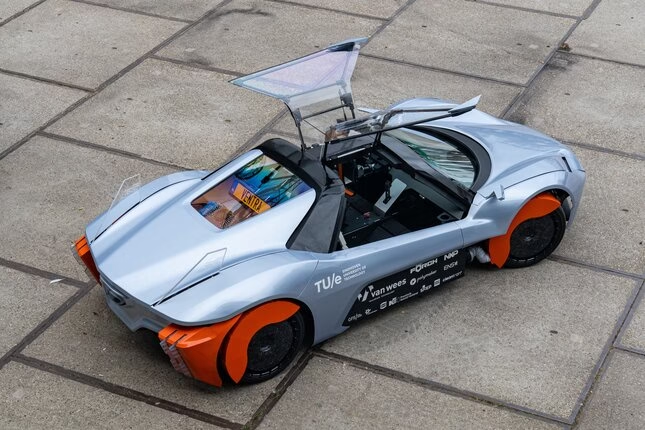

TU Eindhoven student team TU/ecomotive unveiled VENTRA. This electric concept car captures particulate matter from tire and brake wear during operation. The vehicle also promotes sustainable driving behavior through onboard feedback systems. VENTRA produces less particulate matter through lightweight construction materials. The team aims to inspire automotive manufacturers to address non-exhaust emissions.
Electric vehicles eliminate tailpipe emissions but still generate fine particles. Tire, brake, and road surface wear releases particulate matter while driving. Team manager Tim Spencer notes that zero exhaust does not mean zero emissions. Electric cars may create more particulate matter due to higher vehicle weight. Heavier vehicles exert greater force on tires during acceleration phases.
Electrostatic Particulate Matter Capture System
VENTRA features an innovative particulate matter collection system around the wheels. The system targets air precisely where tire and brake particles originate. This approach captures emissions at their source rather than filtering ambient air. The collection mechanism uses electrostatic charging instead of physical filters.
Particles receive an electrical charge as they enter the collection zone. Charged particles then move toward a grounded collection surface. The particles remain attached to this surface until cleaning occurs. This electrostatic method avoids conventional filter replacement requirements.
The system name is T.R.A.C.E., which stands for Tire and Road Abrasion Capture by Electrostatics. Airflow carries particles into the collection system at higher speeds. Small fans assist particle capture during low-speed city driving conditions. This dual approach optimizes capture efficiency across different driving scenarios.
Capture Efficiency and Performance Data
Simulations indicate varying capture rates depending on vehicle speed. The system captures 24 percent of particulate matter at speeds between 50 and 80 kilometers per hour. Lower speeds below 50 kilometers per hour achieve 42 percent capture efficiency. City driving conditions therefore yield higher particulate matter collection rates.
The team conducted computer simulations to model particle behavior. Real-world traffic performance remains unverified through physical testing. The higher city capture rate results from fan-assisted air intake. Highway speeds rely primarily on natural airflow through the system.
Maintenance and Particle Recycling
The collection system requires simple maintenance after vehicle use. Owners can clean the grounded surfaces with a standard vacuum cleaner. Water rinsing also removes captured particulate matter effectively. No specialized equipment or filter replacements are necessary.
Captured particles can be recycled into new materials. The team incorporated collected particulate matter into the car’s interior. Some material was sealed into an enamel coating for dashboard surfaces. This approach makes invisible pollution physically visible inside the cabin. The recycled material demonstrates circular economy principles in automotive design.
Lightweight Chassis Construction
VENTRA reduces particulate matter generation through weight reduction. The chassis uses carbon-fiber-reinforced thermoplastic panels extensively. This lightweight construction saves nearly 100 kilograms compared to conventional designs. Reduced vehicle weight decreases tire pressure and wear rates.
Lower tire wear directly reduces particulate matter emissions. The lightweight approach complements the electrostatic capture system. Both strategies work together to minimize overall particulate output. Material selection prioritizes strength while minimizing mass.
Clean Drive Behavior Monitoring System
VENTRA includes a Clean Drive system that monitors driving patterns. The system provides real-time feedback on a dashboard screen. Drivers receive tips for smoother and steadier operation. The interface encourages gradual acceleration and gentle braking.
Unnecessary steering movements are also discouraged through feedback. Smooth driving reduces tire wear significantly over time. Brake longevity improves through less aggressive braking patterns. Driver behavior modification complements the technical emission reduction measures.
Health Impacts of Particulate Matter
Fine particles pose serious risks to human respiratory health. Some extremely small particles penetrate deep into lung tissue. Certain particles can enter the bloodstream from the lungs. This process increases cardiovascular disease and stroke risks.
Particulate matter exposure also impairs lung development. Conditions such as COPD and lung cancer are linked to exposure. The health impacts extend beyond individual drivers to entire communities. Urban areas face particular challenges from accumulated vehicle emissions.
Euro 7 Emissions Regulations
European regulations increasingly address non-exhaust emissions. The Euro 7 standards take effect in November 2026. These regulations introduce requirements for brake and tire wear emissions. This marks the first time such emissions face regulatory limits.
Spencer states that VENTRA shows possible solutions to industry. The team wants manufacturers to look beyond exhaust pipes. Regulatory pressure creates incentives for innovation in this area. Automotive companies must develop new approaches to meet standards.
TU/ecomotive Student Team Background
VENTRA was developed over one year by TU/ecomotive. The multidisciplinary team includes 40 students from 23 nationalities. Members represent eight different academic fields of study. This diversity enables comprehensive approach to vehicle design challenges.
The student team previously developed sustainable vehicle concepts. VENTRA represents their latest prototype in this series. The team showcases the concept car to the public. Their work demonstrates student-led innovation in sustainable mobility.
Industry Implications and Future Development
VENTRA aims to inspire broader automotive industry adoption. The concept proves technical feasibility of particulate capture. Manufacturers could integrate similar systems into production vehicles. Regulatory compliance may accelerate such development efforts.
The electrostatic approach offers advantages over physical filters. No filter replacement reduces long-term maintenance costs. Simple cleaning procedures increase owner acceptance. Recycled materials create additional value from captured emissions.
Lightweight construction techniques benefit multiple vehicle attributes. Reduced weight improves energy efficiency and range. Lower tire wear extends component service intervals. These benefits extend beyond particulate matter reduction alone.
Technical Challenges and Limitations
The team has only shared simulation results to date. Physical testing under real-world conditions remains pending. Traffic variability may affect actual capture performance. Different road surfaces could influence particle generation rates.
The definition of “lower speeds” lacks specific clarification. Real-world urban driving includes frequent speed changes. System performance during acceleration and deceleration needs evaluation. Long-term durability of electrostatic components requires testing.
Sources: TU Eindhoven