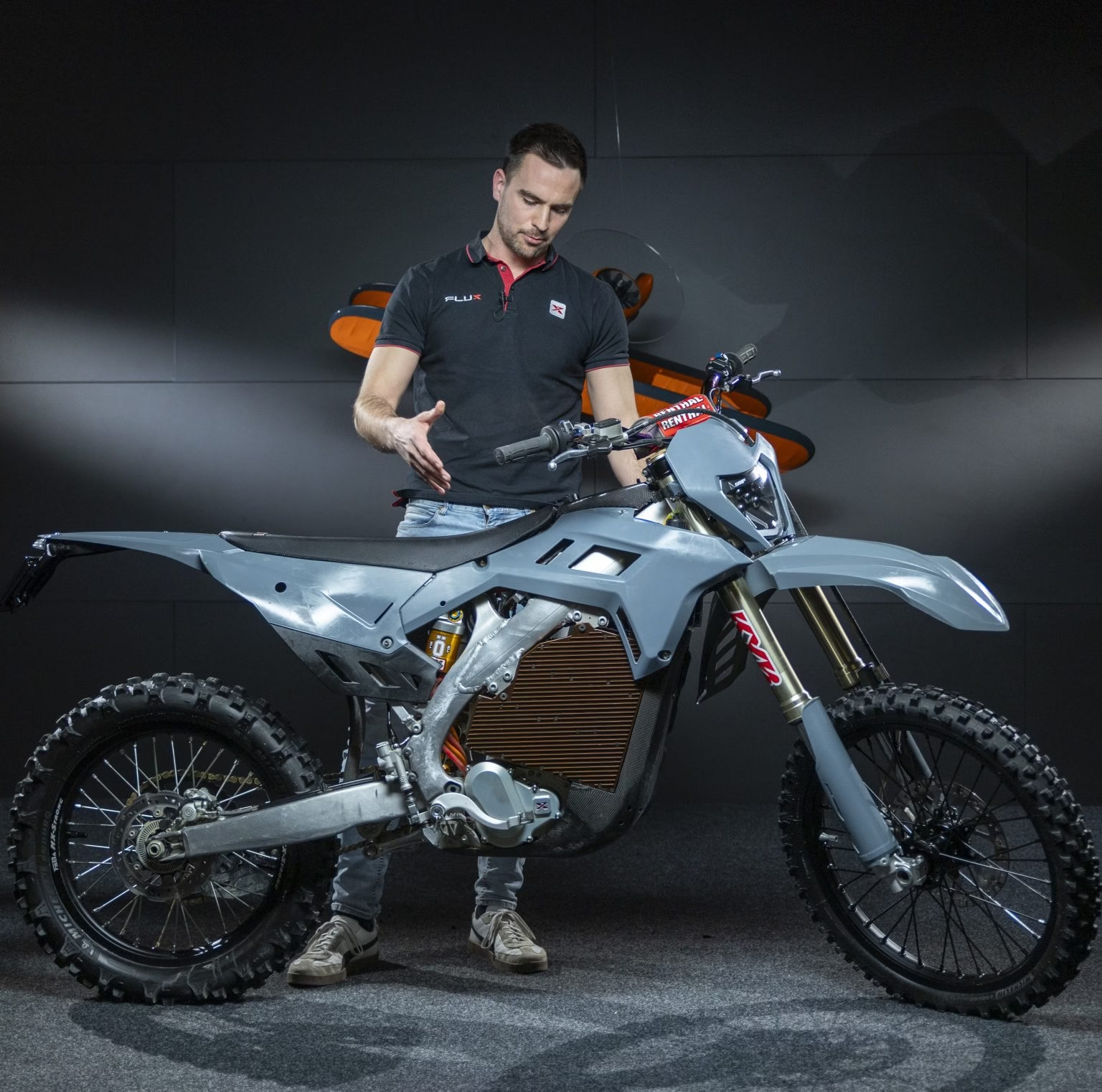

BMW Motorrad has invested in Venna, a young company developing high-performance electric motorcycles. The move gives BMW a route into electric off-road mobility while allowing Venna to keep its independence.
The partnership is not a takeover or a product launch. Instead, it connects a fast-moving startup with the development, quality, and industrialization experience of a major motorcycle manufacturer.
Venna’s Appeal to BMW Motorrad
BMW Motorrad sees electric off-road motorcycles as a growing market with strong potential. The company wants early access to new technologies, customer groups, and riding experiences in this segment.
Younger riders increasingly treat motorcycling as a performance-led leisure activity. They seek immediacy, innovation, and a different kind of connection with the machine.
Venna fits that direction because it focuses on powerful electric motorcycles rather than conventional designs. Its stated approach combines high output, low weight, and an emotional riding experience.
BMW Motorrad CEO Markus Flasch described the company as a partner that shares BMW’s passion for technical excellence and exceptional riding. He also emphasized that the deal opens a new segment for the brand.
Strategic Value for BMW
The investment supports BMW Motorrad’s wider strategy of shaping future technologies. It also gives the company practical exposure to a market segment that is still developing.
BMW already has a broad motorcycle business, global production capability, and a strong premium brand. However, Venna offers specialized knowledge in electric performance motorcycles and an entrepreneurial pace that large organizations often find difficult to replicate.
The arrangement should therefore work in both directions. BMW can contribute engineering discipline, manufacturing knowledge, and global reach. Venna can continue developing its own technology and product identity.
The Startup Expertise Behind the Deal
Venna builds high-performance electric motorcycles and describes its machines as “instruments for achievement.” The company says it has spent five years developing its motorcycles and plans to reveal its first production model soon.
The startup highlights three central qualities: speed, strong power delivery, and featherlight weight. It also positions electric technology as a way to rethink traditional motorcycle categories.
Venna’s founders, Marko and Marc, present the company as a blend of American Midwest and Central European influences. Their website suggests a culture rooted in workshops, motocross, skating, custom cars, and hands-on building.
That identity matters. Venna is not positioning itself simply as another electric vehicle maker. It is trying to create a distinct off-road and performance culture around electric riding.
Venna’s Product Ambition
Venna CEO Marko Ukota said the company aims to build high-performance electric motorcycles across all riding categories. He called BMW’s investment a major endorsement of Venna’s technology and direction.
The company has not yet announced a specific production motorcycle, launch date, or technical specification. Its website says the first bike will arrive “soon” and invites interested riders to join its newsletter for updates.
Even without a confirmed model, the partnership gives Venna a stronger path from prototype development to reliable industrial production. That transition is often one of the hardest stages for electric mobility startups.
A Partnership, Not a Full Integration
BMW Motorrad states clearly that Venna will remain independent. The startup will preserve its agility and innovative speed while drawing on BMW’s industrial and global expertise.
This structure is important for both sides. Venna avoids losing the flexibility that makes it attractive as an innovator. BMW avoids forcing a young company into a large corporate process too early.
The companies will combine expertise in selected areas. BMW’s announcement does not specify those areas in detail, so it would be inaccurate to claim a shared motorcycle, a BMW-branded Venna model, or a factory racing program.
What Is Not Announced
Several important details remain open:
- The size and financial terms of BMW’s investment.
- The exact technologies the companies will develop together.
- Whether Venna motorcycles will use BMW components or platforms.
- The launch date, price, and specifications of Venna’s first motorcycle.
- Any plan for BMW-branded electric off-road models.
The official announcement focuses on cooperation, capability building, and market access. It does not present the investment as the immediate start of a new BMW motorcycle range.
Electric Off-Road Motorcycles Take Center Stage
The core market focus is electric off-road mobility. This includes motorcycles designed for dirt riding, motocross-inspired use, and performance-focused recreational riding.
Electric powertrains can change the off-road experience. Instant torque, reduced mechanical complexity, and quieter operation can create a different relationship between rider, machine, and terrain.
Venna explicitly frames electric motorcycles as something new rather than a direct replacement for combustion bikes. It says it wants to challenge established category boundaries and rider expectations.
BMW’s interest suggests that premium manufacturers now view electric off-road riding as more than a niche experiment. The segment can serve as a testing ground for technology, brand appeal, and new customer relationships.
Electric Off-Road Riding Gains Momentum
BMW Motorrad announced the investment on October 29, 2026. The company framed it as part of a long-term growth strategy rather than a short-term product decision.
The motorcycle industry is under pressure to adapt to electrification, changing rider expectations, and new forms of mobility. Off-road motorcycles offer a focused environment for developing performance electric technology.
For BMW, working with Venna provides a way to learn quickly without committing to a full internal program from the outset. For Venna, BMW’s backing adds credibility during a crucial development phase.
Access to New Riders
BMW Motorrad believes electric off-road motorcycles can attract younger, performance-oriented customers. These riders may not yet connect with traditional large-capacity motorcycles.
The partnership therefore has a customer-acquisition element. BMW wants to inspire new groups with the appeal of motorcycling, while Venna wants to reach riders looking for a fresh electric performance experience.
This shared audience focus could help both companies build relevance beyond their current customer bases. It also aligns with BMW’s broader emphasis on innovation, riding dynamics, and premium experiences.
BMW Motorrad’s Innovation Strategy
BMW Motorrad presents itself as a brand built around innovation, performance, and the willingness to explore new paths. Its current identity includes road bikes, adventure motorcycles, motorsport, rider training, and global riding experiences.
The Venna investment adds another layer to that strategy. Rather than relying only on internal research and development, BMW is using an external partnership to accelerate learning in a specialized field.
This approach can reduce development risk. It also allows BMW to observe how riders respond to electric off-road products before deciding how deeply to enter the market.
A Long-Term Growth Platform
BMW describes the deal as a foundation for long-term growth in the emerging electric off-road motorcycle market. The company does not claim immediate commercial results.
That language is deliberate. The partnership is designed to build capability, relationships, and market knowledge over time. It positions both companies to respond as electric off-road riding matures.
The investment also reinforces BMW Group’s broader focus on sustainability and future technologies. BMW Group says sustainability spans its supply chain, production, products, and end-of-life processes.
Key Points at a Glance
- BMW Motorrad has invested in Venna, an electric motorcycle startup.
- Venna develops high-performance electric motorcycles with a focus on power, light weight, and riding emotion.
- The partnership targets the growing electric off-road motorcycle segment.
- Venna remains independent and retains its own innovation pace.
- BMW contributes development, industrialization, quality, and global expertise.
- The companies will cooperate in selected areas, though exact projects are not specified.
- The deal aims to reach younger, performance-focused riders and new customer groups.
- No production model, technical specification, launch date, or BMW-branded Venna motorcycle has been announced.
Milestones to Follow
The most important next step will be Venna’s first motorcycle reveal. The company says its bike is coming soon, but it has not disclosed its category, range, power output, battery capacity, or price.
Observers should also watch for signs of deeper cooperation. Shared testing, component development, manufacturing support, or a future BMW electric off-road concept would show the partnership moving beyond investment.
For now, the announcement establishes a clear strategic direction. BMW Motorrad is using Venna to explore electric off-road performance, while Venna gains the backing needed to turn its vision into a viable product business.
Sources: BMW Motorrad