
Electric vehicles and autonomous delivery systems are pivotal trends shaping urban mobility. Rapid advancements in AI, sensor technology, and vehicle automation have enabled commercial deployment of self-driving vehicles in last-mile logistics. Retailers worldwide are exploring how autonomous electric vans can enhance delivery efficiency, reduce carbon emissions, and meet growing e-commerce demand. In Germany’s Ruhr region city of Bochum, REWE leads the way by testing a highly automated VW ID. Buzz delivery van, integrating cutting-edge AI software from LOXO to perform real-world autonomous grocery deliveries. This is an important milestone in electric vehicle and urban logistics applications.
The Pilot Project and Technological Innovation
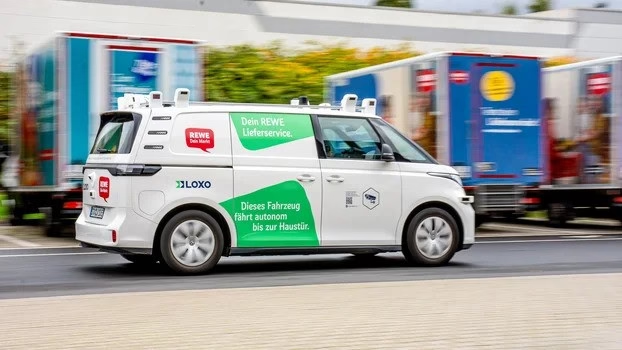
REWE, Germany’s leading food retailer, has partnered with LOXO, a Swiss deep tech company specializing in autonomous vehicle software, to pilot a Level 4 autonomous delivery vehicle on Bochum’s streets. The tested vehicle, a specially equipped electric VW ID. Buzz van, operates autonomously within a defined urban area while accompanied by a safety driver for safety intervention if needed. LOXO’s Digital Driver software combines AI with advanced sensors for rapid data processing, enabling the vehicle to independently navigate complex urban environments. This project marks the first usage of such highly automated delivery technology in the German grocery retail sector.
Integration with Existing Delivery Infrastructure
The autonomous VW ID. Buzz is fully integrated into REWE’s existing delivery ecosystem. Routes are manually planned and managed through REWE’s e-commerce platform, ensuring a seamless customer experience. Customers place grocery orders as usual, and the vehicle delivers directly to their doors, overseen by a safety driver. This pragmatic approach allows REWE to pilot autonomous delivery while maintaining operational control and safety. Situated near REWE’s fulfillment center in Bochum’s west, the vehicle autonomously serves nearby residential districts, showcasing how electric and autonomous vehicle applications can be embedded realistically into urban logistics networks.
Objectives and Expected Outcomes
Over approximately six months, REWE and LOXO aim to identify the technical and economic feasibility of scaling autonomous delivery services. Key performance indicators under evaluation include achievable levels of autonomy, operational capacity, safety, and cost-efficiency. The project offers valuable insights into how highly automated electric vehicles can augment traditional delivery methods, reduce environmental footprint, and contribute to digital transformation in the retail sector. Both companies emphasize continuous adaptation and innovation to refine autonomous delivery capabilities, highlighting their commitment to pioneering smart urban mobility solutions with sustainable impact.
Significance for the Future of Mobility in Bochum and Beyond
Bochum exemplifies a city embracing mobility transformation, from being a traditional industrial hub to a laboratory for future transportation technologies. The collaboration between REWE and LOXO showcases how urban areas can leverage autonomous electric vehicle technologies to create safer, more sustainable, and intelligent delivery systems. This pilot not only advances electric vehicle application but also supports broader goals for smarter cities and improved everyday lives. As autonomous urban logistics develops, this project sets a benchmark for integrating AI-driven EVs into daily commercial operations, helping to shape the future landscape of urban freight and last-mile delivery.