
AI adoption accelerates across automotive value chain
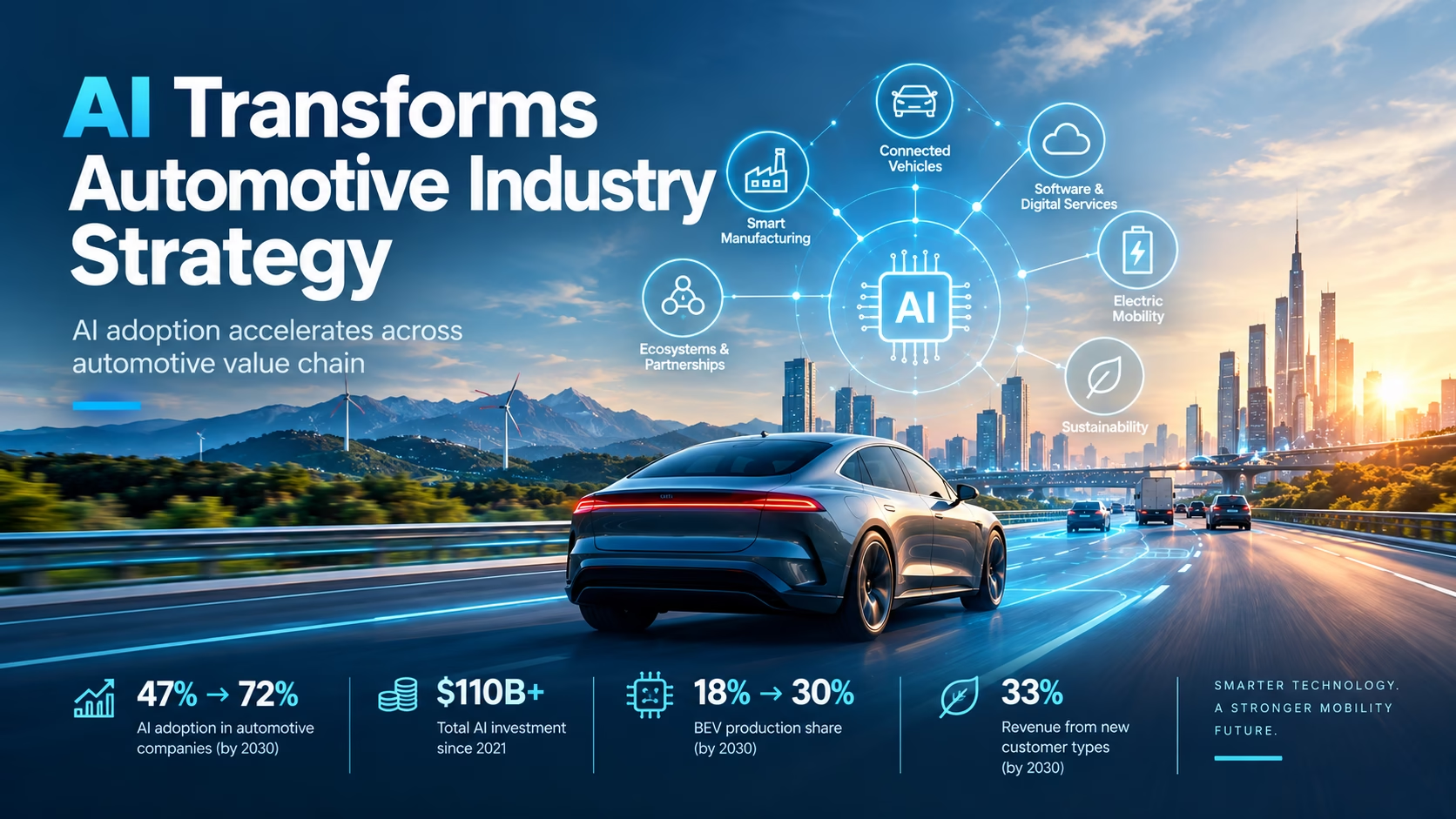
Artificial intelligence usage will jump dramatically within the automotive sector over the coming five years. Current adoption stands at 47% among automotive companies today. This figure will reach 72% by 2030 according to new PwC research findings. The surge reflects mounting competitive pressures throughout the industry. Technology now defines vehicles more than traditional manufacturing does. Software and digital services shape the modern mobility experience fundamentally.
More than half of automotive executives view AI as critical for strategic goals. This percentage exceeds those prioritizing battery and electric powertrains at 41%. In-vehicle software connectivity ranks third at 39% among cited technologies. The focus spans manufacturing, research, supply chains, and sales functions. Digital-first vehicles have become central to customer expectations now.
Competitive landscape shifts dramatically
New entrants from adjacent industries pose significant competitive threats. Almost half of executives identify technology and energy companies as key rivals. These newcomers challenge traditional automotive manufacturers directly. The competitive pressure drives strategic repositioning across the sector. Technology firms will displace industrial manufacturers as top collaborators. This shift reflects the software-defined vehicle transformation underway.
A clear divide exists between future-ready companies and others. Four-fifths of future-fit automotives show high tolerance for strategic risk. Less than half of other companies demonstrate similar risk appetite. This gap determines competitive positioning in the mobility age. Future-fit firms also report stronger software engineering capabilities. They expand into new customer segments more aggressively than peers.
Ecosystem participation becomes strategic priority
Almost two-thirds of automotive companies pursue ecosystem participation actively. This represents the most frequently cited strategic move currently. Among future-fit companies, ecosystem engagement rises to 80%. Being embedded in ecosystems enables cross-sector insight leverage. Technology collaboration drives much of this ecosystem focus.
Autonomous driving and ADAS systems gain revenue importance rapidly. Only 9% of OEMs rate these as top-three revenue sources today. This figure will climb to 24% by 2030 according to projections. The shift reflects software-defined vehicle economics emerging now. Connected and automated services attract substantial AI investment already. Nearly two-thirds of automotive AI funding flows to these areas.
Electric vehicle production transforms market dynamics
Battery electric vehicle production will swell considerably over five years. BEVs currently represent 18% of production volume on average. This share will grow to 30% within the forecast period. Traditional internal combustion engines face corresponding decline. ICE share falls from 60% to 41% during the same timeframe. The transition accelerates faster in certain geographic markets.
China shows particularly sharp electrification momentum currently. BEV production there will rise to 40% from 29%. ICE production falls to 29% from 43% in the Chinese market. European markets face stricter CO2 emission targets soon. These regulations drive significant BEV demand increases regionally. Global battery project pipelines can meet deployment needs through 2030.
Geographic growth patterns transform substantially
South Asia and Southeast Asia emerge as top growth markets. Less than one-third cite Western Europe as a top growth market now. This figure dropped from 44% in previous assessments. South Asian growth expectations rose from 24% to 45%. Southeast Asian projections increased from 31% to 44%. These shifts reflect changing global automotive demand patterns.
The traditional consumer base evolves toward commercial customers. Respondents expect 33% of revenue from new customer types. Commercial fleet operators represent one growing customer segment. Mobility service providers and governments form additional revenue sources. This figure rose from 21% in current revenue mixes. The shift requires different go-to-market strategies entirely.
Capability gaps challenge industry transformation
Talent shortages rank among the biggest barriers to value creation. Half of companies cite talent acquisition as a major challenge. Current workforce skills gap affects 45% of respondents similarly. AI and software engineering capabilities rank as most critical needs. These gaps constrain scaling of AI initiatives significantly. Legacy systems and fragmented ownership create additional friction.
Investment allocation reveals tension between present and future returns. Three-quarters of companies allocate capital to highest-return initiatives. Yet 73% focus manufacturing investments on productivity gains. Only 12% target growth and market share expansion primarily. This pattern limits funding for tomorrow’s growth engines. Future-fit companies fund specific bets with unclear ROI currently.
Strategic recommendations for future-proofing
Four key actions can help automotive companies future-proof their businesses. First, firms must reframe strategy from sector to domain thinking. Companies defining themselves as vehicle manufacturers will fall behind. Second, active ecosystem participation becomes essential for success. Embedded ecosystems enable rapid cross-sector expertise leverage.
Third, capital allocation logic must shift from returns to options. Future-fit firms fund bets whose ROI remains invisible initially. Incumbents must build new business while winding down old operations. Fourth, companies should think more like technology firms overall. The wider mobility experience matters more than core products now. Governance must balance capital discipline with strategic agility.
Investment trends support AI transformation
The automotive industry announced over $80 billion in AI investments recently. Early 2026 alone saw nearly $30 billion more committed. Total capital invested reached almost $110 billion since 2021. Product-focused AI initiatives deliver substantial returns on investment. These projects generate ROI ranging from 0.7 to six times initial investment. Operational AI projects produce smaller but meaningful returns typically.
PwC forecasts product-focused AI investment share will grow substantially. Current allocation sits around 60% of total AI spending. This figure will reach nearly 75% by 2035 according to projections. R&D and engineering attract 30% of AI investment currently. Connected services and automated features draw 35% of funding. These trends support software-defined vehicle development strategies.
Key strategic actions for automotive leaders
- Reframe strategic identity from vehicle manufacturer to mobility domain player
- Embed actively within cross-sector technology ecosystems
- Shift capital allocation from pure returns to strategic options
- Adopt technology company mindset for wider mobility experience
- Build enterprise-grade data backbone with quality contracts
- Establish Machine Learning Operations pipelines for AI scaling
- Embed Security-by-Design into software-defined vehicle stacks
- Develop responsible AI frameworks for safety-critical contexts
- Publish integration playbooks tailored to OEM and Tier-1 needs
- Create uniform KPIs for AI performance measurement
Sources: PwC