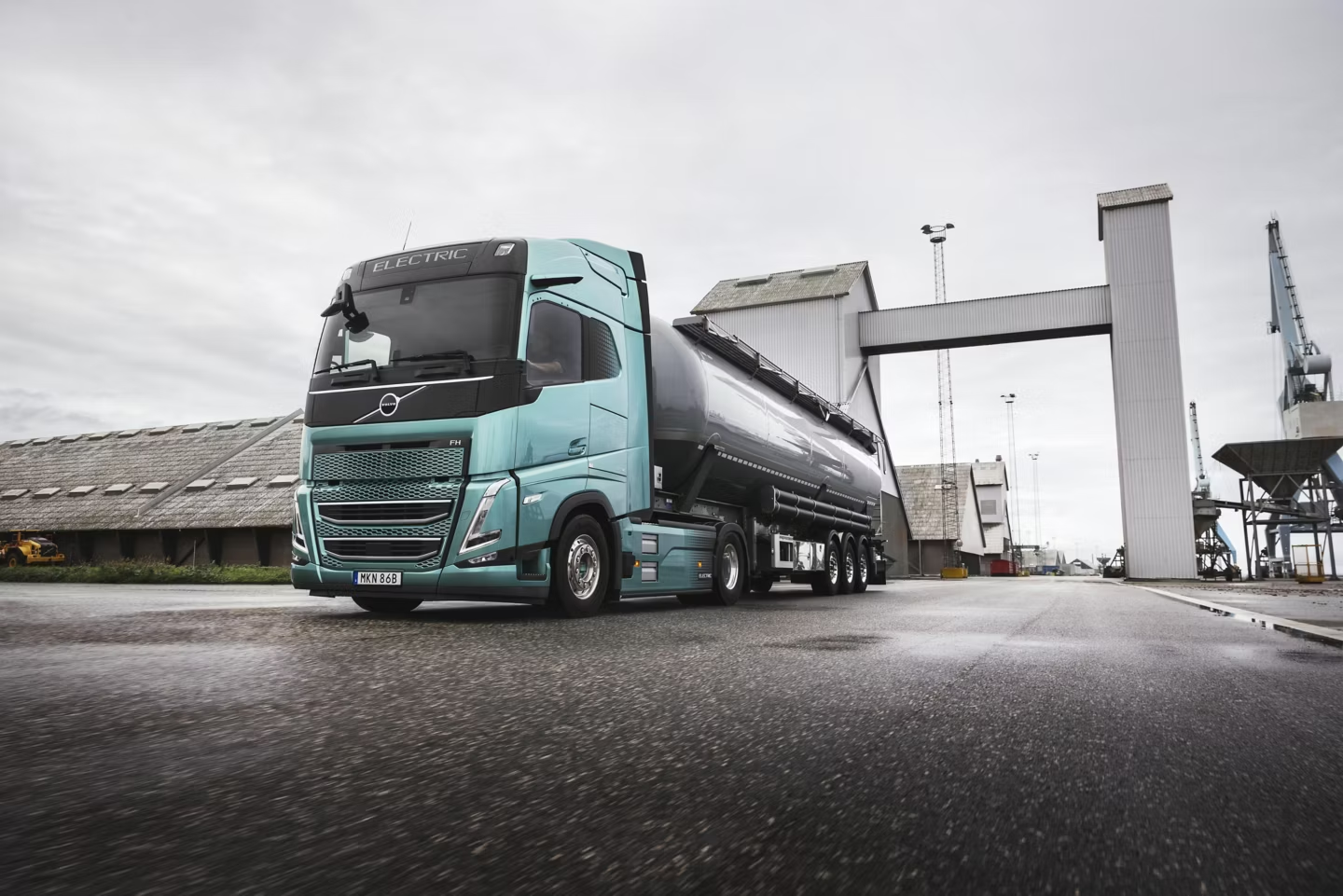

Volvo Trucks has unveiled a fresh generation of battery electric heavy‑duty trucks. They cover up to 700 km on a single charge, targeting long‑haul and regional distribution. The centerpiece is the new Volvo FH Aero Electric with extended range. It sets a new benchmark for fully electric long‑distance trucking. Alongside this flagship model, Volvo is also rolling out next‑generation FH, FM and FMX Electric trucks with ranges up to 470 km and enhanced drivability. These updates reflect Volvo’s broader push to make electric trucking standard across more transport segments.
A Range‑breaking Long‑haul Electric Truck
The Volvo FH Aero Electric with extended range is designed for long‑haul and intercity routes. This is where trucks must cover 700 km or more within a single working day. Its maximum range of up to 700 km comes from a compact e‑axle that integrates two electric motors and a six‑speed gearbox into the rear axle. This layout frees up chassis space for more battery capacity without sacrificing payload. The truck reaches up to 460 kW (623 hp), combining high power with good efficiency on highway duty cycles. With a gross combination weight (GCW) of up to 48 tonnes, it delivers payload capacity of up to 28 tonnes.
Fast Megawatt Charging and Driver‑time Optimization
To support long‑haul operations, the FH Aero Electric with extended range uses the new Megawatt Charging System (MCS) standard and can charge at up to 700 kW. Charging its eight batteries from 20% to 80% takes about 50 minutes. This fits within the EU’s legislated driver rest periods. On 350 kW CCS charging, the same 20–80% window takes roughly 85 minutes. This quick‑charge capability helps fleets maintain the same productivity levels as diesel trucks while eliminating tailpipe emissions. Volvo positions the truck as ideal for hub‑to‑hub and two‑shift operations, where predictable charging windows exist.
Next‑generation FH, FM and FMX Electric Trucks
Alongside the long‑haul FH Aero Electric, Volvo is launching upgraded FH, FM and FMX Electric models with ranges up to 470 km. These trucks feature an all‑new dual‑motor drivetrain paired with an eight‑speed gearbox optimized for electric torque delivery. The system delivers up to 540 kW (731 hp) and is tuned for smooth, responsive performance across different driving conditions. They are built for on‑road construction, regional distribution, urban logistics, utilities, refuse, and heavy special applications. With GCW up to 65 tonnes, the FH, FM and FMX Electric can carry payload up to 23.8 tonnes in a 4×2 tractor configuration.
Flexible Driveline and Integrated Power Take‑off
A key innovation in the new FH, FM and FMX Electric trucks is an integrated gearbox‑based power take‑off (PTO) that eliminates the need for extra motors or add‑on equipment. Drivers can use the truck’s power to run auxiliary systems such as concrete mixers, hook lifts, and refuse units while the vehicle is moving. This split‑motor or dual‑motor setup supports simultaneous truck and body operation, which improves uptime and reduces complexity. The driveline can be specified with twin‑drive axles and low gearing to handle heavier loads and demanding topography. The trucks also support multiple PTO configurations, giving bodybuilders and operators more freedom in customizing the final vehicle.
Seamless Gear Shifting and Driver Comfort
All new Volvo electric trucks—FH, FM, FMX Electric and the FH Aero Electric with extended range—come with new powershift gearboxes tuned for electric drive. The FH, FM and FMX Electric use an eight‑speed gearbox, while the FH Aero Electric with extended range uses a six‑speed unit. These gearboxes enable smoother, more controlled gear changes and lower noise and vibration levels inside the cab. The result is a quieter, more comfortable workday for drivers, which can help reduce fatigue on long routes. Volvo emphasizes that the overall driving experience of these new models closely matches or exceeds that of diesel trucks.
Towards Fossil‑free Transport and Zero Tailpipe Emissions
Volvo Trucks sees these new electric models as core elements of its strategy to reach net‑zero emissions by 2040. The company is pursuing a three‑path technology approach based on battery‑electric, fuel‑cell‑electric, and combustion engines running on renewable fuels. Battery‑electric remains the primary route for medium‑ and heavy‑duty trucks in regions with strong charging infrastructure. With the new FH Aero Electric and updated FH, FM and FMX Electric lines, Volvo makes zero‑tailpipe‑emissions transport viable for a wider range of assignments. The trucks’ flexible battery configurations and improved driving comfort make it easier for fleets to switch from diesel to electric without compromising productivity.