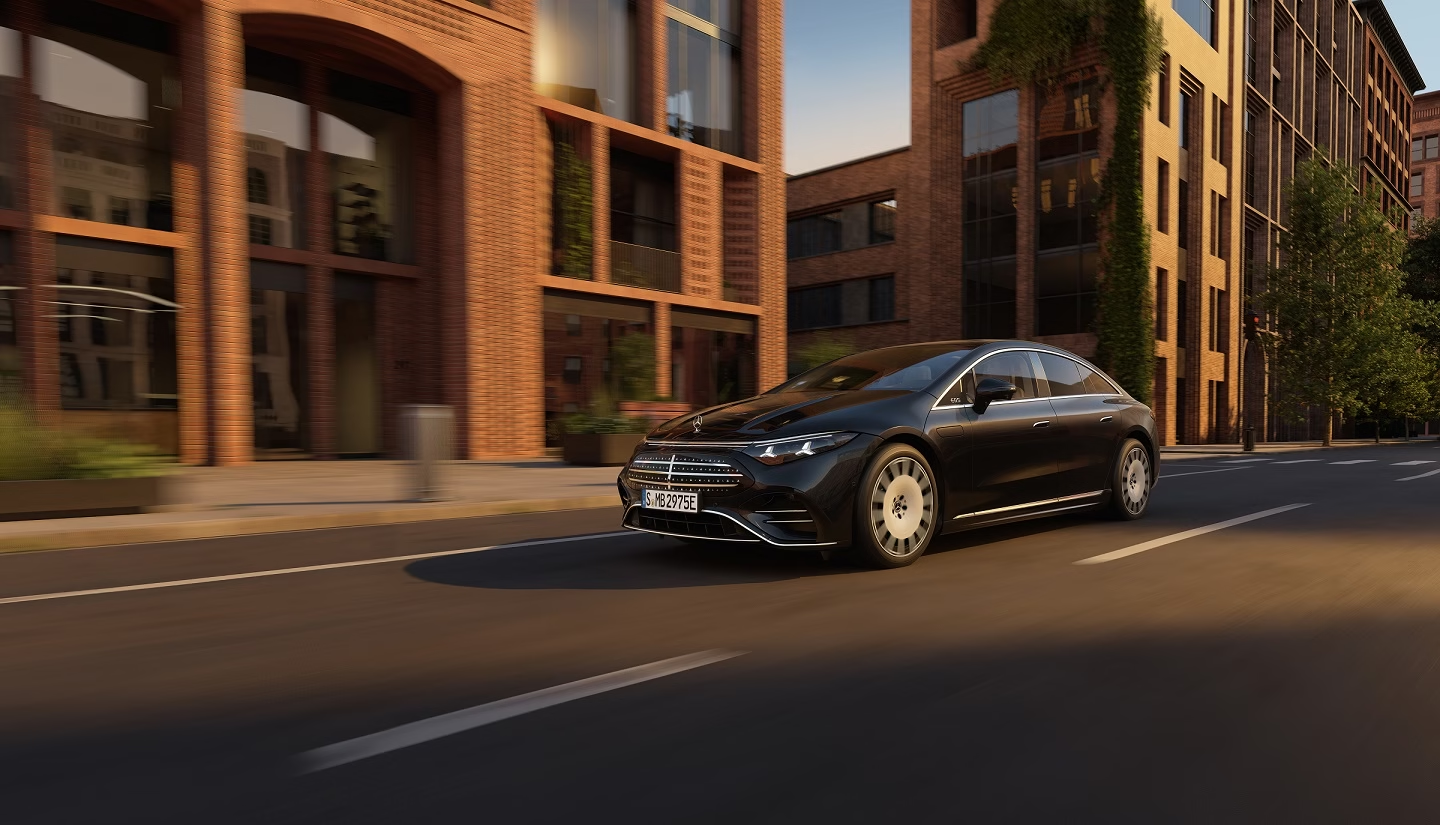

The new Mercedes-Benz EQS is not a simple facelift. It is a broad technical and digital upgrade that pushes the flagship electric sedan further into Mercedes-Benz’s future strategy. Mercedes says more than a quarter of the vehicle’s components are newly developed, updated, or refined, which shows how extensive the revision is. The car keeps its luxury-sedan identity, but it now adds a new electric architecture, sharper efficiency, and far more software intelligence. In practice, the EQS is being recast as a more capable long-distance EV and a more connected luxury product.
Range, Charging, and Efficiency
The headline figure is the WLTP range of up to 926 kilometers for the EQS 450, which is a 13 percent improvement over its predecessor. Mercedes says that range can make real long-distance trips easier, and it even gives examples like Munich to Paris or Zurich to Hamburg. The car also supports up to 350 kW charging through 800-volt technology, which can add up to 320 kilometers in ten minutes under WLTP conditions. At 400-volt stations, the battery can split virtually into two halves, allowing charging at up to 175 kW for better compatibility and efficiency. Recuperation also rises to 385 kW, which improves energy recovery during braking and supports the car’s overall efficiency focus.
New Electric Architecture
Mercedes-Benz says the new EQS uses a next-generation electric architecture built around in-house drive units, a two-speed gearbox on the rear axle, and larger batteries with optimized cell chemistry. The battery grows to 122 kWh from 118 kWh while staying within the same packaging space, thanks to improved energy density and silicon oxide blended with graphite in the anodes. The rear-drive variants also gain a higher towing capacity of 1,600 kilograms, which is more than double the previous level. That improvement matters because it broadens the car’s real-world usefulness beyond pure luxury cruising. Mercedes is clearly trying to make the EQS feel more versatile, not just more efficient.
MB.OS and AI Features
The EQS also becomes the first model to fully show Mercedes-Benz Operating System, or MB.OS, which controls every major vehicle function. Mercedes describes the system as a supercomputer linked to the Mercedes-Benz Intelligent Cloud, with over-the-air updates keeping the car fresh over time. The new MBUX generation also adds artificial intelligence from Microsoft, allowing the MBUX Virtual Assistant to hold more complex, multi-part conversations. Various avatars make the assistant feel more personal and more expressive, while the MBUX Hyperscreen remains central to the cabin experience. This makes the EQS feel less like a traditional car and more like a digital companion.
Steer-by-wire and Driving Feel
One of the most important engineering changes is steer-by-wire, which Mercedes says will arrive in the EQS only a few months after launch. That makes it the first German series-production car to get the technology, and it changes the relationship between driver and vehicle in a major way. The system removes the mechanical connection between the steering wheel and the wheels, which reduces vibrations and allows a flatter steering wheel shape. It also works with rear-axle steering to improve agility, parking, and high-speed stability. Mercedes backs the setup with redundancy, so steering remains possible even in unlikely failure scenarios.
Assistance and Ride Comfort
The new EQS also improves driving support with MB.DRIVE systems powered by up to 27 sensors, including cameras, radar, and ultrasonic units. Mercedes says MB.DRIVE PARKING ASSIST now detects spaces more effectively, supports diagonal parking, and can park at speeds up to 5 km/h, which is around 60 percent faster than before. On the comfort side, the AIRMATIC suspension gains intelligent damper control that reacts before speed bumps by using Car-to-X information from other Mercedes vehicles. That kind of connected suspension logic makes the car feel more adaptive on rough roads and especially beneficial for rear passengers. The result is a calmer ride that fits the EQS’s luxury positioning.
Lighting, Safety, and Air Quality
Mercedes has also updated the lighting and cabin environment in meaningful ways. The standard DIGITAL LIGHT system now uses micro-LED technology, creating a high-resolution lighting field that is around 40 percent larger while using up to 50 percent less energy. The ULTRA RANGE high beam reaches up to 600 meters, while partial high beam functions and cornering light behavior are integrated more intelligently. Inside, the EQS includes seat-belt heating that quickly warms front belts to 44 degrees Celsius for added comfort and better belt fit in cold weather. The HEPA filter also cleans incoming air at a very high level, removing over 99.65 percent of particles. These details show that Mercedes is refining both comfort and safety at the same time.
Cabin, Rear-seat, and Personalization
The interior continues the EQS’s “welcome home” theme with new open-pore poplar trim, laurel stitching, and a more expressive, premium visual identity. Rear-seat passengers get two 13.1-inch displays, improved entertainment functions, and support for business tools like Microsoft Teams, Zoom, and Webex. Audio quality comes from a 15-speaker Burmester system with 710 watts and Dolby Atmos, which reinforces the car’s lounge-like atmosphere. Mercedes also expands personalization through the MANUFAKTUR program, offering 125 paint colors and bespoke design choices. The company is making the EQS feel both technically advanced and emotionally tailored.