
BMW Group Plant Munich launches series production of the BMW i3 from the Neue Klasse range this August. This step marks a key milestone in the plant’s shift to electric vehicles. Meanwhile, the site prepares for exclusive all-electric output by 2027.
Historic Site Embraces Electric Future
BMW Plant Munich, over 100 years old, now focuses on electric mobility. Workers rebuilt key areas while maintaining 1,000 daily vehicles. They created new body shops and assembly lines on a third of the site.
This transformation invests €650 million in modern structures. Production costs drop 10% below current levels for the BMW i3. The Neue Klasse architecture boosts overall efficiency further.
Employees drive this change with expertise and dedication. Future models like the BMW i3 Touring will follow here. Their efforts ensure world-class output under tough conditions.
BMW iFACTORY Drives Efficiency and Flexibility
The BMW iFACTORY framework guides this overhaul across global plants. It emphasizes efficiency, sustainability, and digital tools. Munich applies these principles fully for all technologies.
Teams rethought the entire value stream from suppliers to customers. They optimized every process in detail. Now the plant runs more efficiently and flexibly than ever.
This approach builds resilience for worldwide delivery. Digital live tracking connects vehicles and tools seamlessly. It secures the site’s long-term viability too.
Advanced Press Shop Boosts Output
In the press shop, automated lines shape steel and aluminum daily. Uniform standards across BMW’s network speed up tool swaps and staff mobility. An AI camera system checks quality early.
Parts move underground to the body shop next. Scrap metal recycles into new coils efficiently. Output rises significantly over past setups.
These changes cut waste and enhance precision. Workers benefit from standardized processes. The shop supports the 2027 all-electric goal smoothly.
New Body Shop with Robot Precision
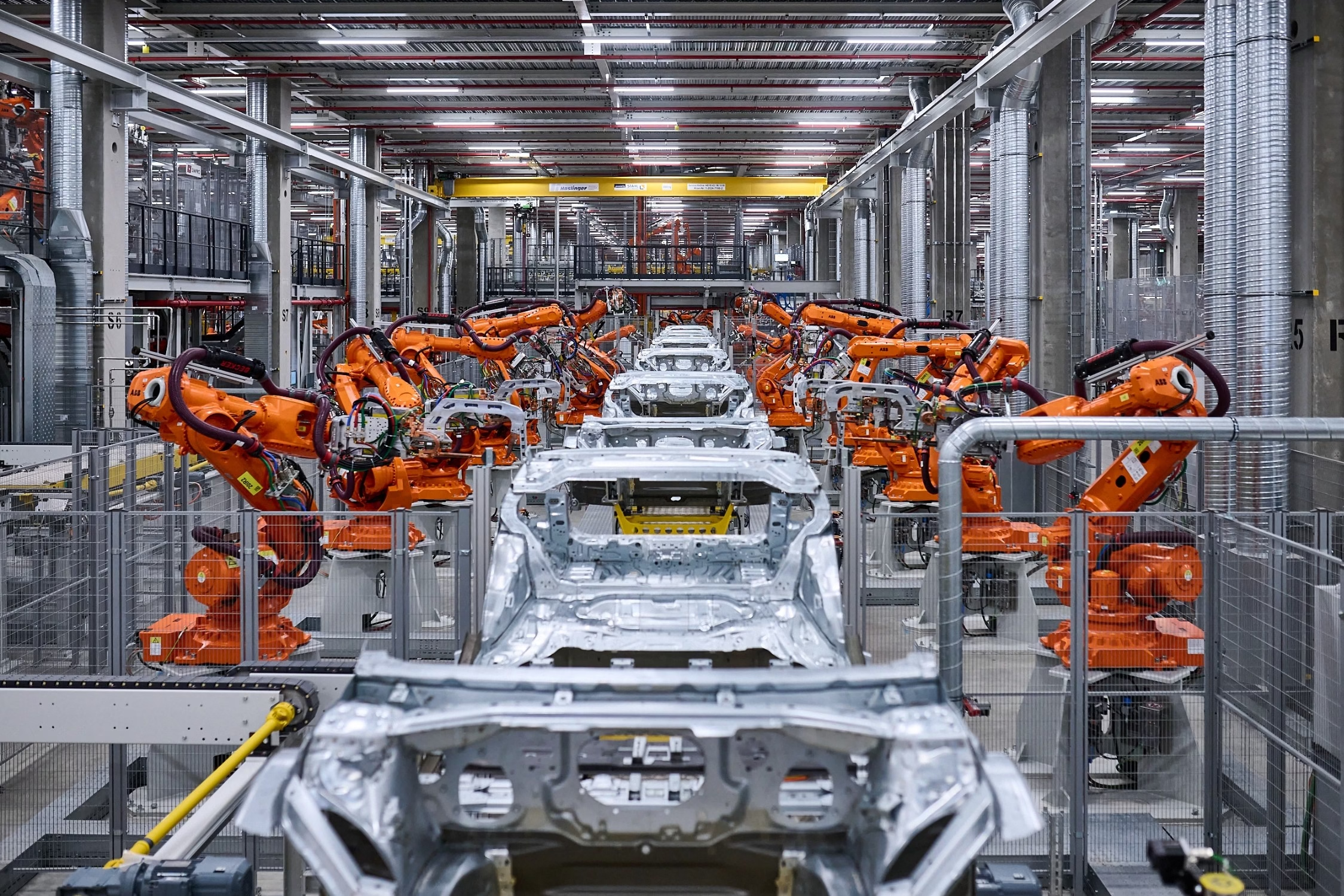
Munich’s new body shop uses a virtual twin for planning. It features 800 robots for joining tasks at 98% automation. Just five joining types simplify operations greatly.
Automated surface inspection ensures top quality. Robots handle standardized steps reliably. This setup prepares for high-volume Neue Klasse runs.
The design fits the urban site perfectly. It reduces complexity and speeds workflows. By 2027, it focuses solely on electric models.
Paint Shop Leverages AI for Quality
Digital systems and AI control quality in the paint shop. Cameras detect tiny surface flaws instantly. Automated processing fixes issues during production.
The eRTO process cleans exhaust air efficiently with electricity. Heat recovery and water cycles save resources. These steps align with sustainability aims.
AI integration minimizes defects proactively. It documents issues digitally for quick fixes. The shop supports the plant’s full electric transition by 2027.
Streamlined Assembly and Logistics
Former engine areas now host Neue Klasse assembly. Digital processes track up to 20,000 features per vehicle. Ergonomic stations ease worker tasks.
Logistics moves 2.5 million parts daily with 70% direct delivery. Multi-storey buildings use conveyors for efficiency. Automation handles 60% of supplies via robots.
A central control station optimizes flows with data. This cuts transport distances and space needs. It readies the plant for 2027’s all-electric production exclusively.
In-House Seat Expertise and Battery Supply
Munich’s seat facility acts as a “plant within a plant.” It builds seats just-in-sequence for assembly. Automated checks ensure benchmark quality across BMW.
It tests new materials as an innovation hub. This strengthens group-wide expertise. Seats support multiple Neue Klasse variants reliably.
Nearby Irlbach-Straßkirchen assembles Gen6 batteries for Munich. Steyr in Austria makes e-motors with on-site components. These “local for local” ties boost Bavaria’s value creation. By 2027, Munich produces only all-electric vehicles, ending combustion engine output after 75 years.