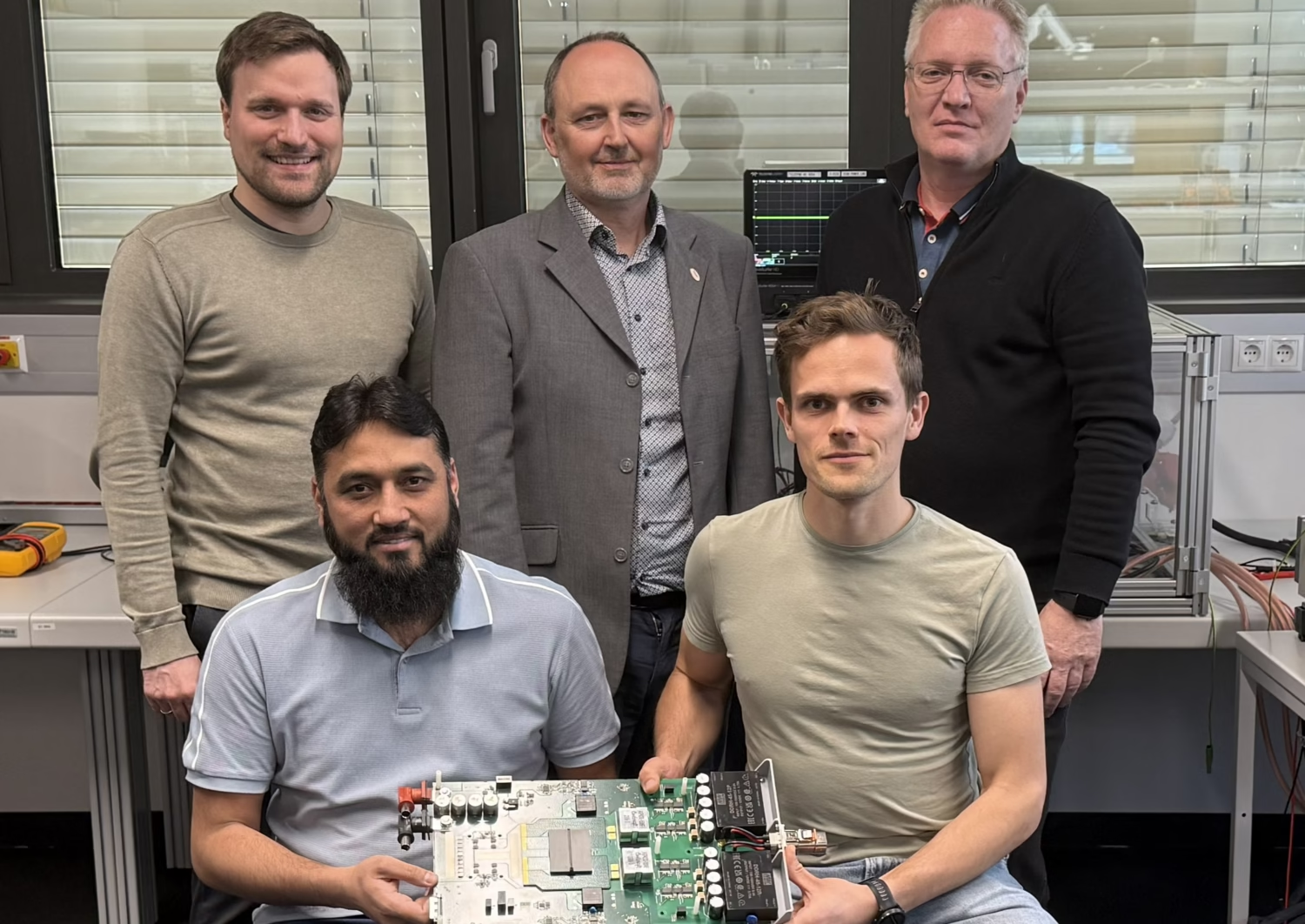

Austrian researchers from Silicon Austria Labs, Infineon Technologies Austria, and AVL List completed the REDSEL project successfully. They developed redundant high-voltage and low-voltage systems for electric vehicles. These innovations promise more compact and fault-tolerant designs. Moreover, the project eliminates the need for traditional low-voltage batteries over time. This step forward supports lighter vehicles and reliable power supply.
REDSEL Project Delivers Cutting-Edge Innovations
The core of REDSEL features active load balancing between two high-voltage batteries. This setup ensures even power distribution and boosts operational reliability greatly. Engineers also created a multi-input power electronics converter with innovative magnetic integration. As a result, it saves space, improves efficiency, and fits tight vehicle compartments well.
They used advanced semiconductors like 750V silicon carbide MOSFETs on the high-voltage side. On the low-voltage side, 30V OptiMOS™-7 devices offer superior efficiency over older 40V options. Additionally, a new safety architecture replaces mechanical relays with semiconductor switches. Consequently, this reduces weight, installation space, and enhances overall system safety.
Industry experts praise this collaboration between research and industry partners. Ernst Katzmaier from Infineon highlights the scalable demonstrator’s potential. Meanwhile, Albert Frank from Silicon Austria Labs notes its groundwork for autonomous driving. These technologies align with 2026 trends in wide-bandgap semiconductors.
Advanced Semiconductors Drive EV Efficiency Gains
Silicon carbide MOSFETs enable higher voltages, temperatures, and frequencies than silicon. In EVs, they power inverters that convert DC to AC more efficiently. Recent Gen-3 SiC MOSFETs from Infineon and STMicroelectronics exceed 99% powertrain efficiency. Therefore, vehicles charge faster and lose less energy during operation.
Redundant architectures add fail-safe layers, crucial for high-voltage systems. For instance, Texas Instruments notes that dual-battery powering keeps gate drivers active during failures. This redundancy meets ISO 26262 safety standards for automotive power supplies. Thus, it prevents total power loss in critical scenarios.
Current EV trends favor 800V-plus platforms for better thermal management and thinner wiring. The REDSEL converter supports these high-voltage shifts seamlessly. As a result, manufacturers produce lighter powertrains with extended range.
Overcoming Key Barriers in EV Electrical Systems
Traditional low-voltage batteries add weight and failure points in EVs. REDSEL’s design removes this dependency through redundant high-voltage feeds. This change cuts overall vehicle mass and simplifies maintenance routines. Furthermore, semiconductor switches last longer than mechanical relays.
Safety remains paramount as EVs adopt x-by-wire and autonomous features. VDA450 principles demand redundancy for energy supply in these systems. Fail-passive states no longer suffice; active fail-safe power ensures continued operation. Hence, REDSEL addresses these evolving requirements head-on.
Market reports predict SiC adoption surging in 2026, especially in automotive sectors. Power electronics efficiency improves by up to 50% with SiC over silicon. This gain reduces energy losses and supports sustainable mobility goals effectively.
These innovations pave the way for fully autonomous electric vehicles. Reliable power supports advanced driver-assistance systems without interruptions. Additionally, compact designs free space for larger batteries or passenger comfort. Industry watchers see this as a step toward Gen-3 EVs dominating roads soon.
Global EV sales hit record highs in 2025, with battery-electric models at 17.4% market share in Europe. Yet, electrical reliability remains a key adoption barrier. Projects like REDSEL tackle this directly, boosting consumer confidence.
Looking ahead, collaborations like REDSEL will shape 2026 standards. They integrate with grid-aware charging and energy storage trends. Ultimately, safer, lighter EVs accelerate the shift to sustainable transport worldwide.