
TÜV NORD teams up with Carly to tackle a key issue in the EV market. They focus on battery health transparency for electric vehicles. Buyers often worry about hidden battery degradation in used cars. This partnership introduces a standardized check using Carly’s app. It provides reliable data on the State of Health (SoH). Moreover, certification comes directly from TÜV NORD experts.
The Need for Battery Health Checks Grows
Electric vehicles gain popularity across Europe and beyond. However, battery condition remains a major purchase barrier. Many used EVs show unclear degradation levels after years of use. Carly’s diagnostics platform now integrates TÜV NORD’s rigorous standards. Together, they offer CARA-certified reports for consumers. This move builds trust in the second-hand EV market. For instance, studies show batteries degrade noticeably after 90,000 km.
Why Battery Transparency Matters Now
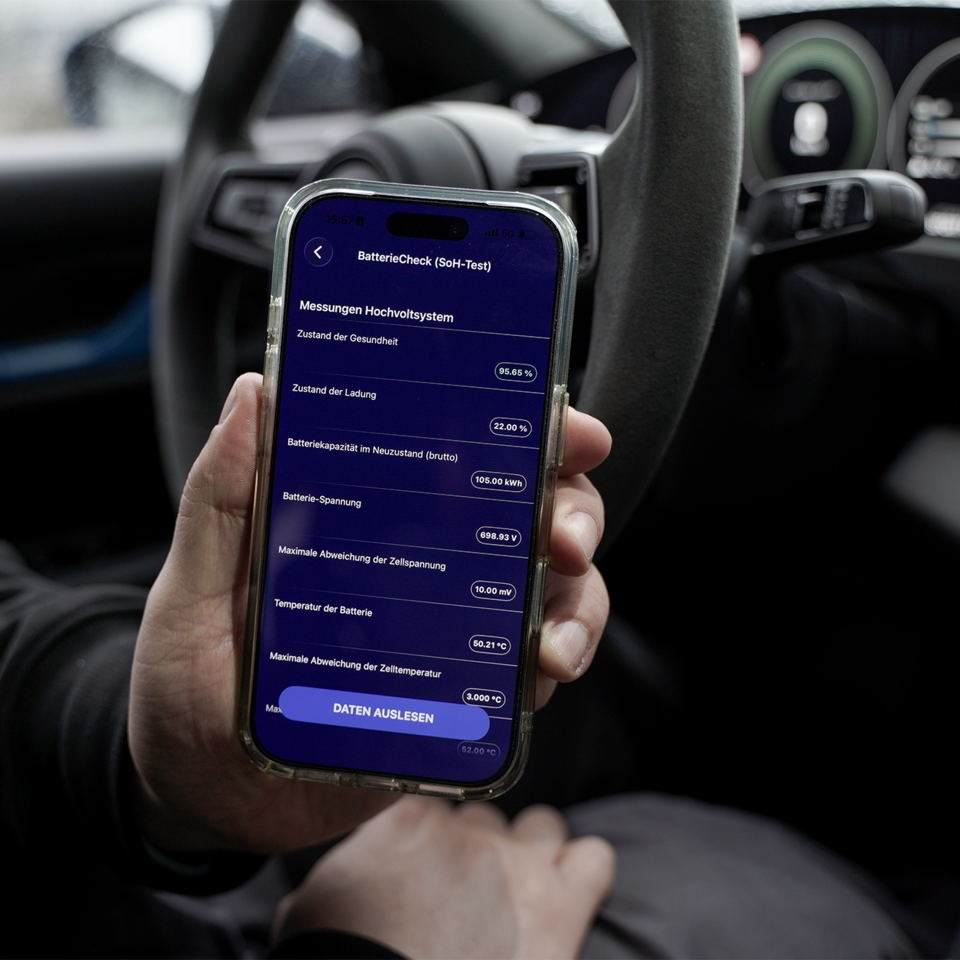
Potential buyers demand verifiable data before purchase. Sellers benefit too as certified health checks boost resale value. TÜV NORD ensures impartiality with their testing expertise. Carly provides the tech backbone through its OBD scanner app. Users simply connect the device to their vehicle. Then, the app runs a comprehensive SoH analysis in minutes. Results appear clearly with certification seals.
How the Partnership Works in Practice
Carly users access the new feature via app update. They plug in the Carly Universal Adapter to the OBD port. The system reads real-time battery data from the vehicle. TÜV NORD validates these metrics against industry benchmarks. Finally, users receive a digital certificate. This document details capacity retention and degradation rate. Consequently, transactions become faster and safer for everyone involved.
Technical Details of the SoH Check
The check measures key parameters like cell voltage balance. It also assesses overall capacity compared to original specs. TÜV NORD’s CARA certification adds credibility to findings. Recent research confirms minimal degradation up to 100,000 km in many models. However, fast charging and extreme temperatures accelerate wear. Carly’s tool flags these risks early. Thus, owners make informed maintenance decisions.
Benefits for Consumers and the EV Market
This collaboration addresses a critical gap in used EV sales. Buyers avoid overpaying for degraded batteries. Sellers prove their vehicle’s true condition easily. The service costs around typical diagnostic fees. Yet, it saves thousands in potential repairs. Additionally, insurance firms show interest in such data. They may offer lower premiums for certified batteries. Overall, transparency drives EV adoption forward.
Impact on Resale Value and Consumer Confidence
Certified reports increase used EV prices by up to 10 percent. Data from recent studies support this trend. Batteries often retain over 90 percent capacity initially. However, degradation varies by model and usage. Carly and TÜV NORD standardize reporting across brands. Tesla, VW, and BYD owners all benefit equally. Therefore, the second-hand market grows more robust.
Broader Industry Implications Unfold
Automakers watch this development closely for future standards. Independent checks reduce reliance on dealer inspections. Workshops integrate Carly’s tool into routine services. Fleet operators gain tools for large-scale monitoring. Moreover, regulators may adopt similar protocols soon. Europe pushes for mandatory battery passports by 2027. This partnership positions both firms as leaders. It also encourages competitors to innovate.
Future Innovations in Battery Diagnostics
App updates will include predictive analytics soon. Users get warnings about potential issues ahead. Integration with vehicle telematics adds real-time tracking. Researchers note slower-than-expected degradation rates. For example, some batteries last beyond 200,000 km with care. Carly plans expansions to hybrid models next. Thus, the service appeals to wider audiences.
Challenges and Solutions in EV Battery Care
High-mileage EVs face scrutiny over long-term durability. Extreme climates speed up capacity loss significantly. Owners often neglect cooling system maintenance. Carly’s check highlights these vulnerabilities clearly. TÜV NORD recommends regular inspections every 20,000 km. Simple habits like optimal charging extend battery life. Furthermore, recycling programs gain traction for end-of-life units. This holistic approach sustains EV growth.
Tips for Maximizing Battery Longevity
Charge to 80 percent daily for best results. Avoid frequent DC fast charging when possible. Park in moderate temperatures always. Use the app’s health trends over time. Professional checks confirm app data annually. These steps preserve over 85 percent capacity after five years. Owners report higher satisfaction with proactive monitoring.
Market Response and Adoption Trends
Since the December 2025 launch, thousands use the service weekly. German used EV sales rose 15 percent in early 2026. Carly reports doubled app downloads post-partnership. TÜV NORD expands to other diagnostic areas now. International rollout targets 20 countries by year-end. Feedback praises ease and accuracy highly. Consequently, trust in EV batteries strengthens market wide.
Competitive Landscape Emerges
Rivals like Geotab and Nordsys develop similar tools. However, TÜV certification sets this duo apart. Independent validation trumps manufacturer claims. Consumers prefer neutral third-party reports. Workshops partner with Carly for revenue streams. This ecosystem fosters innovation rapidly. EV market maturity accelerates as a result.