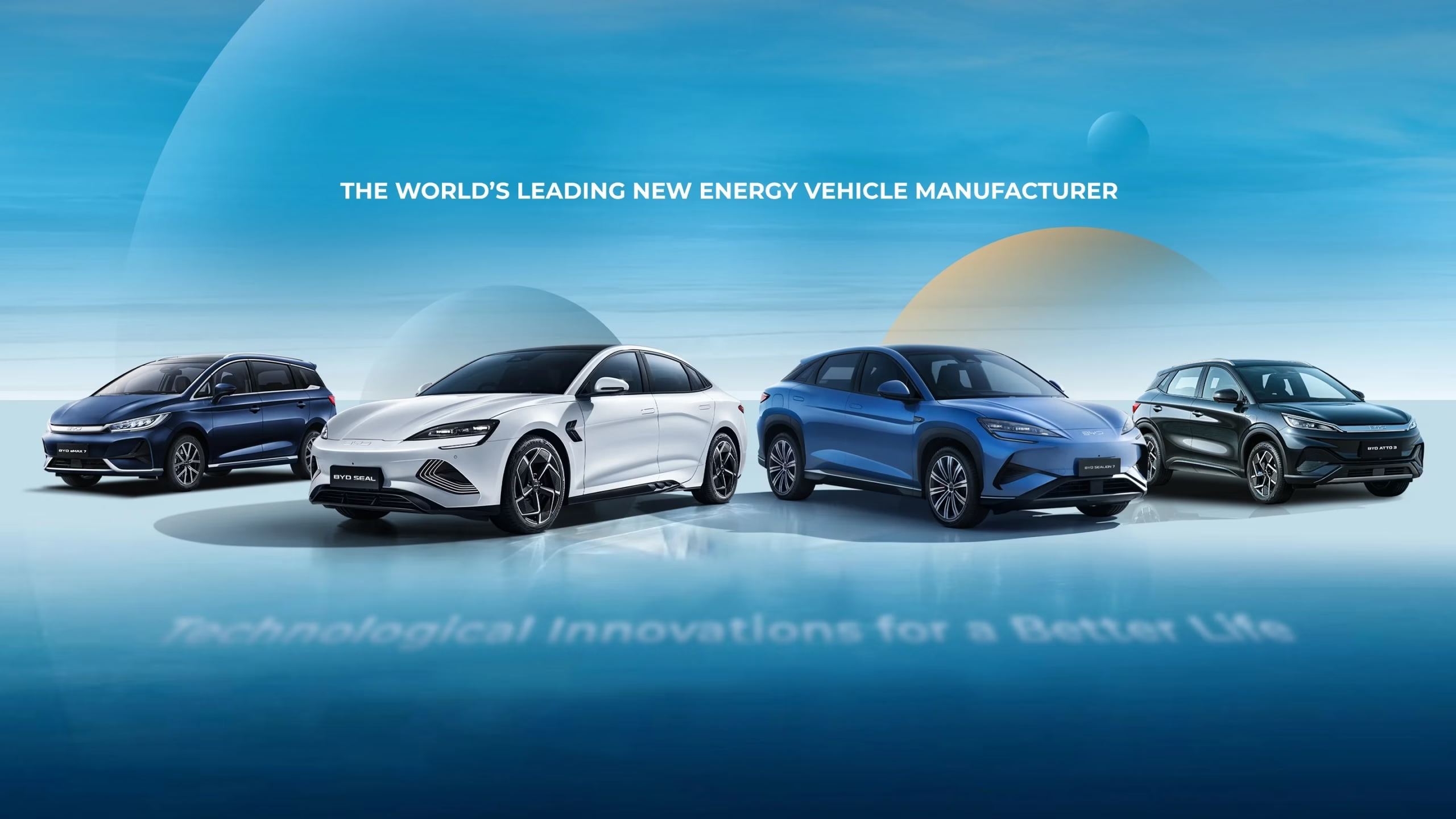

In 2025, the electric vehicle (EV) market shifted dramatically. BYD delivered 2,256,714 battery-electric vehicles (BEVs), surpassing Tesla’s estimated 1.64 million units. This milestone crowns BYD as the world’s largest EV producer, despite Tesla’s past dominance.
BYD’s Record Sales Surge Ahead
BYD achieved strong growth in BEVs, up 27.9% from 2024. Meanwhile, Tesla faced declines, delivering only 1.22 million BEVs in the first three quarters. Factors like Elon Musk’s political ties to President Donald Trump hurt Tesla’s performance in key markets.
The Chinese firm sold 4.6 million New Energy Vehicles (NEVs), including plug-in hybrids (PHEVs). However, BEV focus propelled BYD forward. Exports hit 1.05 million units, a 151% jump, fueling global expansion.
Challenges and Strategic Wins
Growth slowed for BYD overall, with NEVs up just 7.7%. PHEV sales dropped 7.9%, hitting 2.29 million units. December saw BEV sales fall 8% year-over-year to 190,712.
Yet, BYD adapted quickly. Overseas markets became key, with December exports soaring 133% to 133,172 units. This diversification offsets domestic slowdowns from fierce competition.
Battery production boomed too. BYD installed 285.6 GWh in 2025, up 47%, including 82.4 GWh in Q4. These Blade batteries power affordable, long-range EVs worldwide.
EV Applications in Daily Use
BYD EVs shine in urban commuting and fleets. Models like the Seagull offer 300+ km range for city rides, while the Seal sedan suits families with 500+ km WLTP range and fast charging.
Commercial applications thrive too. BYD’s NEV trucks and vans, with 57,013 sold in 2025, support logistics. Their durability cuts costs in ride-hailing and delivery services.
Why BYD Leads the EV Race
BYD’s vertical integration—from batteries to vehicles—lowers costs. Unlike Tesla’s stagnant lineup, BYD floods markets with sedans, SUVs, and micro-EVs. Exports now exceed 1 million annually.
Tesla struggles with outdated models, relying on refreshed Model 3/Y for 95% volume. BYD’s BEV surge (49.6% of sales) signals full electrics’ rise over hybrids.
This leadership boosts sustainable transport. BYD EVs reduce emissions in rideshares, buses, and personal use, accelerating global adoption.