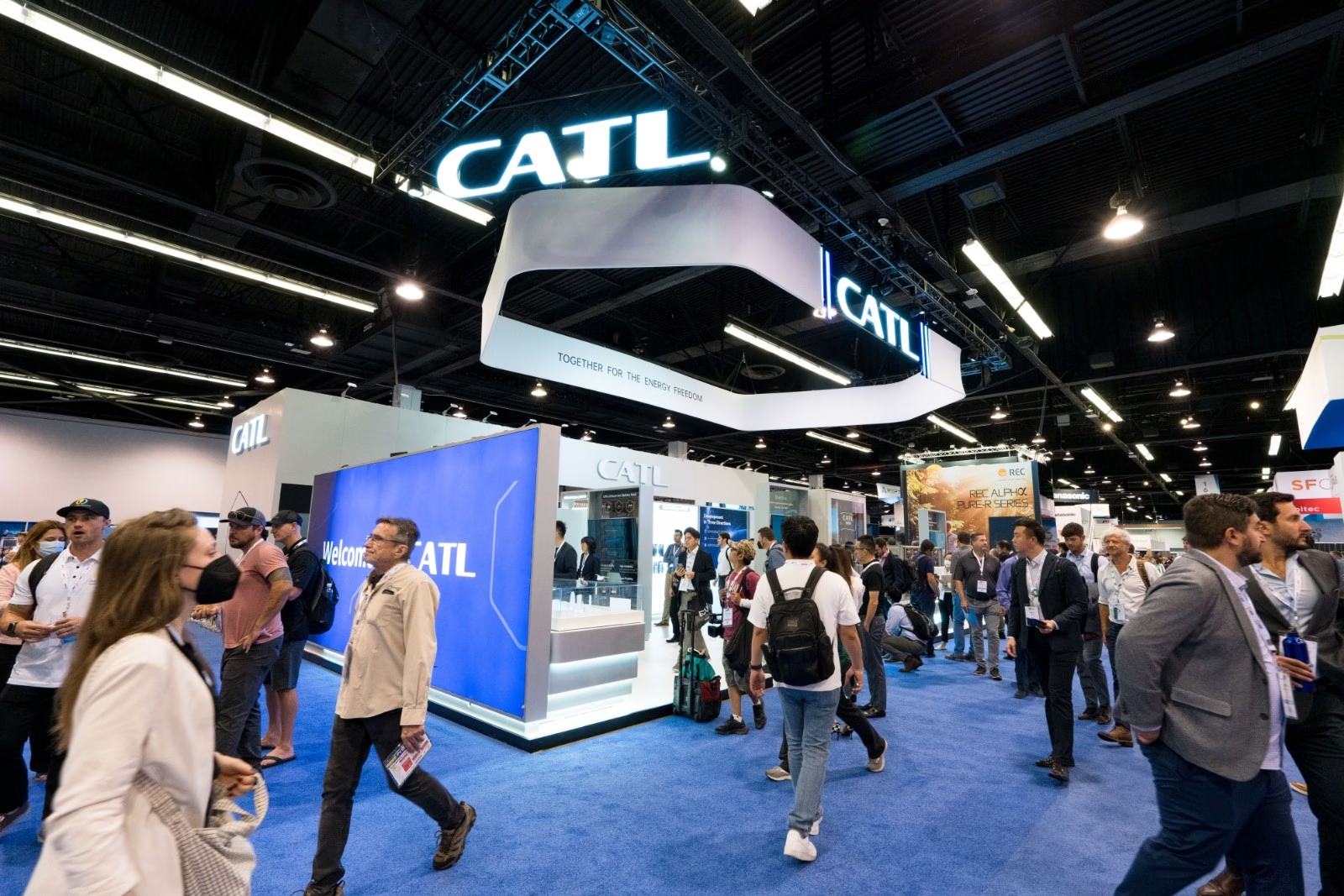

CATL grabs over 50% of China’s domestic EV battery production in Q1 2026. This marks the first time in five years the leader hits this milestone. Production surges 22% year-over-year to 310 GWh in early months.
Moreover, installation rates drop to a historic low of 19%. Demand dips due to subsidy phase-outs. Yet, energy density improves across batteries.
CATL’s Stronghold in Battery Segments
CATL commands 81.6% of ternary NMC batteries in Q1 2026. Rivals shift to LFP chemistry, boosting CATL’s edge. Meanwhile, CATL’s LFP share climbs to 41%, the highest in four years.
BYD slips to 17.5% overall share, down 4.3% from last year. However, BYD holds 22.6% in LFP. This reflects BYD’s full pivot to cost-effective LFP tech. In addition, 15% of installed batteries exceed 160 Wh/kg density. Low-density packs below 125 Wh/kg vanish completely. Most BEV batteries range from 125 to 160 Wh/kg now.
Market Challenges and Production Dynamics
EV battery installations fall sharply in February 2026. BEVs drop 41%, PHEVs plunge 61%, and trucks decline too. Total installs hit 370,000 units amid subsidy cuts. Production outpaces installs at a 19% ratio, the lowest ever. China faces short-term demand slump from policy changes. Still, total output grows steadily.
Furthermore, global context shows CATL at 45.2% in January installs worldwide. BYD sits at 13.8%, with both holding 59% combined. Korean makers fade to 12%.
Competitor Landscape and Top Rankings
BYD’s decline stems from sales drop in China by 23.4% in January. Yet, LFP focus strengthens its niche. Other makers trail far behind CATL and BYD.
Top 10 list features CATL first, BYD second. Smaller players gain in specifics but lack scale. Competition heats up as shares consolidate. Transition words highlight shifts: for instance, NMC favors premium range, LFP cuts costs for mass market. Asia leads LFP adoption via CATL and BYD.
Emerging Battery Technologies Ahead
Competition moves to sodium-ion and solid-state batteries soon. China sets solid-state standards for July 2026 release. BYD plans sodium-ion volume production in 2027. CATL advances sulfide solid-state with better cycles and fast charging. Sodium-ion promises 10,000 cycles but shorter range than lithium-ion. Chinese firms lead investments.
In fact, Na-ion targets lead-acid replacements, not full EV disruption. Europe and US watch closely for roadmaps. These innovations promise longer life and lower costs.
CATL’s dominance signals maturing supply chains in China. Higher densities enable better ranges and efficiency. However, demand volatility tests makers. Policy shifts like subsidy ends slow growth temporarily. Exports and global demand will balance this. Battery prices rebound on material costs.
Overall, Q1 data points to innovation-driven recovery. CATL invests in next-gen tech aggressively. The EV battery market evolves rapidly toward sustainability.