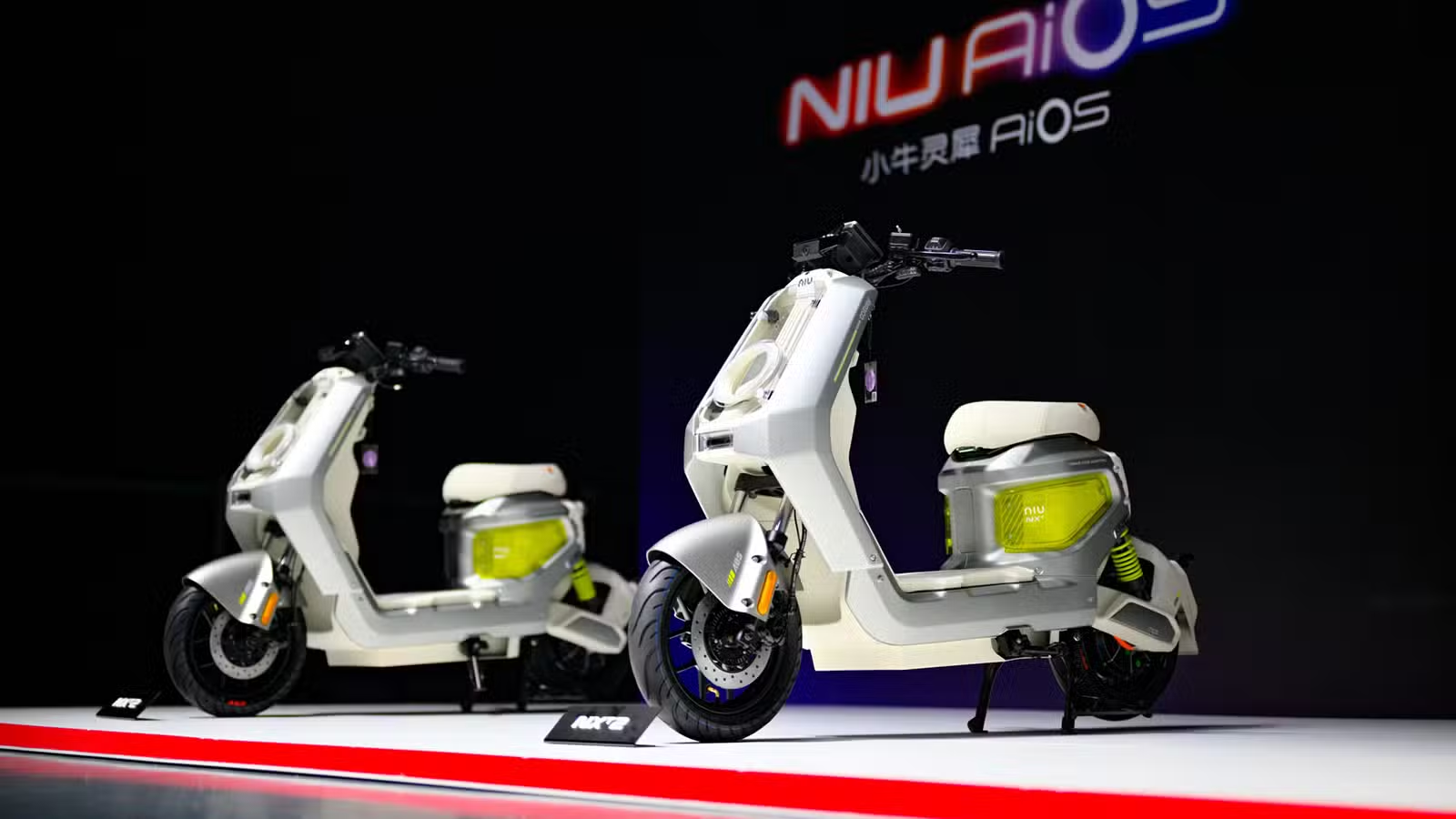

Lidar Enters China’s E-Two-Wheeler Market
China leads in electric two-wheeler tech. Companies now integrate lidar sensors into scooters and e-bikes. Hesai Technology spearheads this shift. They supply advanced lidar units for mass production. This move boosts safety on busy urban roads. For instance, electric scooters gain collision avoidance features. Manufacturers like Yawei Technology partner with Hesai for real-world lidar deployment. Production starts soon for models with autonomous braking. These vehicles target delivery fleets first. Riders benefit from precise obstacle detection. Transitioning from cameras, lidar offers superior performance in fog and night. Market demand surges as regulations tighten safety standards.
Hesai’s ATX lidar powers these innovations. It delivers high-resolution mapping at low cost. Electric two-wheelers previously lacked such advanced sensors. Now, they compete with cars in perception tech. China dominates global e-two-wheeler sales at over 50 million units yearly. This adoption accelerates smart mobility trends. Experts predict widespread use by late 2026. Urban congestion drives the need for smarter vehicles. Delivery services like Meituan push for reliable autonomy. Hesai reports strong orders from multiple OEMs. Production scales rapidly in Shenzhen hubs. Costs drop below $50 per unit for mass models.
Key Technologies Driving Adoption
Hesai’s lidar stands out for its compact design. The ATX model fits slim scooter frames easily. It scans 360 degrees with 0.2-degree resolution. Electric two-wheelers handle speeds up to 60 km/h safely now. Algorithms process data in real-time for emergency stops. Battery life remains unaffected by sensor power draw. Manufacturers add AI chips from Huawei partners. This combo enables Level 2 autonomy on two wheels. Rain and dust barely impact performance. Unlike radar, lidar maps pedestrians accurately. China’s supply chain supports quick scaling. Local firms like Robosense follow Hesai’s lead. Global players watch closely for exports.
Integration challenges fade with modular kits. OEMs retrofit existing scooter lines swiftly. Testing on Shanghai streets shows 95% detection rates. Government subsidies encourage ADAS features. Safety crashes drop in pilot programs. Battery electric scooters gain V2X communication too. They share road data with cars seamlessly. This ecosystem grows faster than expected. Hesai invests heavily in two-wheeler R&D. Partnerships expand to e-motorcycles next. Innovation cycles shorten dramatically.
Market Growth and Economic Impact
China’s e-two-wheeler market hits $100 billion in 2026. Lidar adds premium pricing of 10-15%. Volume sales rise 20% year-over-year. Export to Southeast Asia booms with smart features. Hesai captures 40% sensor share quickly. Revenue from two-wheelers triples forecasts. Local jobs surge in sensor assembly lines. Supply chain localizes 90% components. This reduces import dependency significantly. Consumers pay extra for safety peace of mind. Fleet operators see insurance savings. Data analytics improve route efficiency too. Global EV trends influence this shift. For example, Europe’s e-bike rules mirror China’s now.
Competition heats up among sensor makers. Hesai leads, but Livox challenges aggressively. Price wars benefit buyers ultimately. Economies of scale drive unit costs down. By mid-2026, standard on high-end scooters. Rural areas adopt slower due to infrastructure. Urban youth drive premium demand however. Sales data from CNevPost confirms explosive growth. Transition to full autonomy seems inevitable. Investors pour billions into startups. This sector rivals four-wheel EVs in hype. Economic ripple effects boost related industries.
Safety and Regulatory Advances
Lidar slashes accident rates by 30% in tests. Real-time alerts prevent rear-end collisions effectively. Pedestrian detection works at 100 meters range. Chinese regulators mandate ADAS on new models soon. This pushes all players to innovate faster. Hesai complies with GB/T standards fully. Crash data from pilots proves efficacy clearly. Riders trust sensors over human reflexes. Night riding becomes safer instantly. Integration with ABS brakes enhances stopping power. Governments worldwide eye similar mandates. For instance, EU trials follow China’s model. Safety stats improve dramatically overall.
User feedback praises reliability highly. Delivery riders report fewer close calls. Insurance firms offer discounts for lidar-equipped bikes. Regulations evolve with tech maturity. Hesai collaborates on national standards committees. This ensures long-term compliance easily. Broader adoption curbs urban traffic deaths. Sensors enable confidence, confidence drives sales. Future updates add over-the-air improvements. Global standards harmonize gradually. China sets the pace undeniably.
Future Outlook and Global Influence
Electric two-wheelers evolve into robotaxis soon. Lidar paves the way for unmanned delivery. Hesai eyes international markets aggressively. Exports to India and Vietnam start Q3 2026. Tech transfer sparks local manufacturing. Battery life extends with efficient sensors. Sustainability improves as fleets electrify fully. Global sales forecasts predict 70 million units. China’s innovations influence everywhere. For example, US startups license Hesai tech now. Autonomous e-bikes reshape last-mile logistics. Investors bet big on this trajectory. Challenges like weatherproofing persist, yet solutions emerge quickly.
Industry experts foresee lidar as standard by 2028. Costs plummet with production ramps. OEMs diversify suppliers wisely. This competition fuels better products. Global EV ecosystem benefits indirectly. Transition to smart cities accelerates. China’s lead inspires worldwide change. Long-term, two-wheelers lead autonomy race.