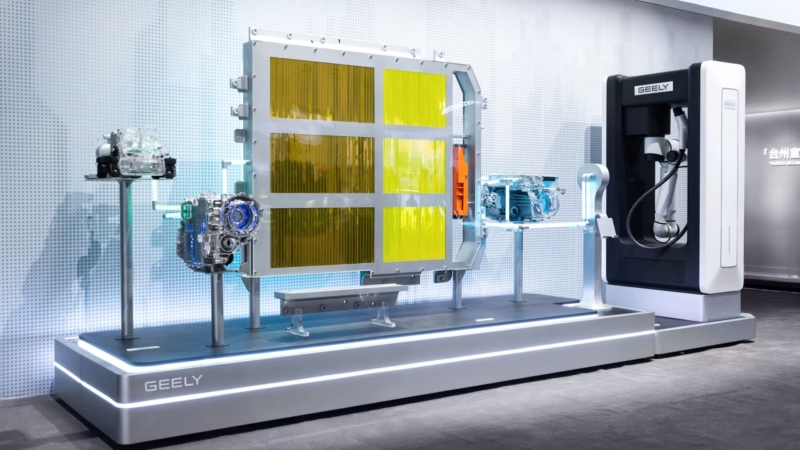

Geely Group is developing a 1000V high-voltage architecture for electric vehicles. This system targets charging from 10% to 80% in under 5.5 minutes.
Geely aims to rival BYD’s flash charging technology with this new platform. The Hangzhou-based group seeks to lead in ultra-fast charging performance. This move responds to intensifying competition in the Chinese EV market.
BYD currently leads with megawatt-level flash charging solutions. Geely’s 1000V system intends to surpass existing benchmarks. The goal is to make EV charging feel as quick as refueling gasoline cars.
Current 800V Architecture Deployment
Geely already integrates 800V high-voltage systems across its vehicle lineup. These systems cover batteries, e-motors, and power controllers. Wiring, chargers, and even vehicle body components support 800V operation.
This architecture delivers faster charging, greater range, and higher efficiency. Vehicles benefit from reduced energy loss during power transfer. The 800V foundation prepares the group for higher voltage transitions.
Lynk & Co 10 Charging Performance Data
The Lynk & Co 10 sedan showcased impressive charging speeds recently. It charged from 10% to 80% in 5 minutes and 32 seconds. The same test reached 97% state of charge in 8 minutes and 42 seconds.
Some reports claimed this vehicle used a 900V architecture. Geely clarified that the battery’s rated voltage is 772.8 V. This confirms the system operates as a standard 800V platform.
During testing at Zeekr-branded stations, peak power reached 1,100 kW. At BYD flash charging stations, peak power dropped to 430 kW. This highlights the need for matched infrastructure and vehicle architecture.
1000V Architecture Development Goals
Geely is now engineering a bespoke 1000V high-voltage architecture. This system targets charging times below the 5.5-minute barrier. The group also works on powertrain systems with even higher voltages.
The 1000V platform will unlock stable 1,500 kW charging intake. Current Geely vehicles cannot fully utilize such high-power stations. This development aligns vehicle capacity with existing Zeekr charger output.
Higher voltage reduces current for the same power level. This lowers heat generation and improves overall efficiency. Thermal management becomes easier with reduced electrical stress.
Charging Infrastructure Readiness
Geely built over 2,100 Zeekr-branded single-gun chargers by March 2026. These chargers deliver a peak power output of 1,500 kW. This infrastructure serves as a reserve for future 1000V vehicles.
Current 800V cars cannot charge at full 1,500 kW capacity. The new 1000V architecture will enable full power utilization. This ensures sub-five-minute charging becomes repeatable in daily use.
Zeekr stations already support high-power delivery for testing. Geely plans to expand this network alongside vehicle launches. Infrastructure and vehicle development proceed in parallel for synergy.
Technical Components and System Integration
The 1000V architecture covers all high-voltage vehicle components. Batteries, electric motors, and power controllers operate at higher voltage. Chargers, wiring harnesses, and body systems support 1000V ratings.
Higher voltage demands improved insulation and safety measures. Components must handle increased electrical stress without failure. Geely designs these systems for production-grade reliability.
Integration spans multiple brands under Geely Holding Group. Zeekr, Volvo, Polestar, and Lynk & Co benefit from this platform. Shared architecture reduces development costs and accelerates deployment.
Performance Targets and User Experience
Geely targets 10% to 80% charging in under 5.5 minutes. Some goals aim for sub-five-minute charging in real-world conditions. This brings EV ownership closer to gasoline car convenience.
Faster charging reduces wait times at public stations. Drivers gain flexibility for long-distance travel planning. Quick top-ups become practical during short stops.
User experience improves with predictable, rapid energy replenishment. Range anxiety diminishes as charging speed increases. This supports broader EV adoption across consumer segments.
Key Technical Specifications List
- Current high-voltage system: 800V architecture with 600V–900V operating range.
- Upcoming high-voltage system: 1000V architecture in active development.
- Target charging time: 10% to 80% in under 5.5 minutes.
- Peak charging power: Up to 1,500 kW at Zeekr-branded stations.
- Demonstrated performance: Lynk & Co 10 achieved 1,100 kW peak intake.
- Battery capacity tested: 95 kWh pack with 772.8 V rated voltage.
- Infrastructure deployed: Over 2,100 Zeekr single-gun 1,500 kW chargers.
Sources: CarNewsChina