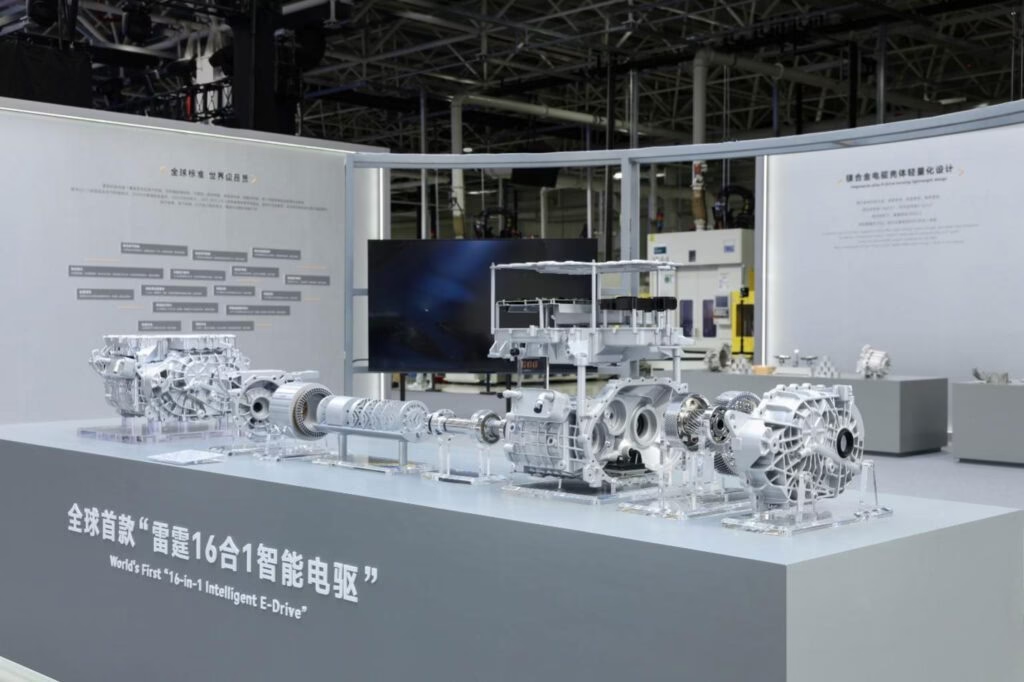

Geely ’s new Thunder 16-in-1 electric drive deserves a bigger focus on its record claims. The company says it reaches 93.8% comprehensive efficiency, weighs 75 kg, and replaces more than 180 parts.
Record claims first
Geely frames the launch around two records, not just one product update. The company says the system achieved 93.8% comprehensive efficiency, and it also links the platform to a 8.20 kWh/100 km energy-use record at Qinghai Lake.
A second Guinness claim covers a wet-surface twin-vehicle drift of more than 46 km. That gives the launch a broader marketing and validation narrative, because Geely is presenting both efficiency and dynamic control as headline strengths.
What the system combines
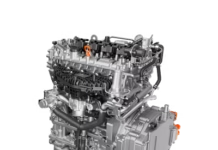
The Thunder unit is called 16-in-1 because it folds many functions into one architecture. Geely says the setup integrates the motor, controller, reducer, DC/DC converter, onboard charger, power distribution unit, battery management system, vehicle control unit, thermal management, pre-charge control, and power-domain gateway.
On top of that hardware stack, Geely adds four software layers for energy, charging, motion, and health management. This approach reduces complexity, shortens wiring paths, and should improve both packaging and serviceability.
Efficiency and size
The strongest technical claim is the 93.8% efficiency figure. Geely says this is a CLTC comprehensive efficiency value and describes it as a production-level record.
The system is also compact and light. Reported weight sits at 75 kg, while one source says the unit is under 325 mm tall.
That matters because mass and size directly affect vehicle design freedom. A smaller drive system can help with cabin space, trunk packaging, and thermal routing.
Why integration matters
This launch is important because Geely is not only improving one powertrain number. It is changing how much hardware the EV platform needs in the first place.
By eliminating over 180 parts, Geely reduces assembly complexity and likely lowers failure points. Fewer components also mean fewer interfaces, which can help cut losses and simplify calibration work.
Geely’s 800V platform is another key part of the story. Higher voltage systems can support faster energy flow and better efficiency under load.
Performance targets
Geely says the Thunder system will debut on the Galaxy TT and support both rear-drive and dual-motor all-wheel-drive variants. The dual-motor version is reported at 425 kW, while another report lists the four-wheel-drive output at 570 hp.
The company also cites a 0–100 km/h time of 3.8 seconds. Geely says the platform was developed with a five-million-kilometer durability target, which suggests the company wants long-term reliability to match the efficiency gains.
Test claims and context
The Qinghai Lake test result is interesting because it shows Geely is tying efficiency to real-world publicity events. The 8.20 kWh/100 km figure is striking, but it should still be read as a test-specific claim rather than a universal road-use number.
The drift-distance record serves a different purpose. It signals control, traction management, and system stability under demanding conditions. Together, the two records help Geely sell the idea that this drive is efficient without being fragile or dull.
Brand strategy context
Geely Global describes Geely Auto Group as a Hangzhou-based automaker founded in 1997 under Zhejiang Geely Holding Group. The company says it manages Geely Auto, Lynk & Co, and Zeekr.
That broader structure matters because the Thunder drive is not an isolated engineering experiment. Geely is expanding across Europe, broadening its NEV lineup, and positioning itself as a global platform company rather than a domestic-only brand. The new drive system fits that strategy because it can scale across multiple models and markets.
Key figures
- 16 integrated functions in one electric drive system.
- 93.8% comprehensive efficiency, according to Geely.
- 75 kg total system weight.
- More than 180 parts eliminated.
- 8.20 kWh/100 km energy-use record at Qinghai Lake.
- More than 46 km drift-distance record on wet surface.
- 3.8-second 0–100 km/h claim.
Sources: CarNewsChina, Geely Global