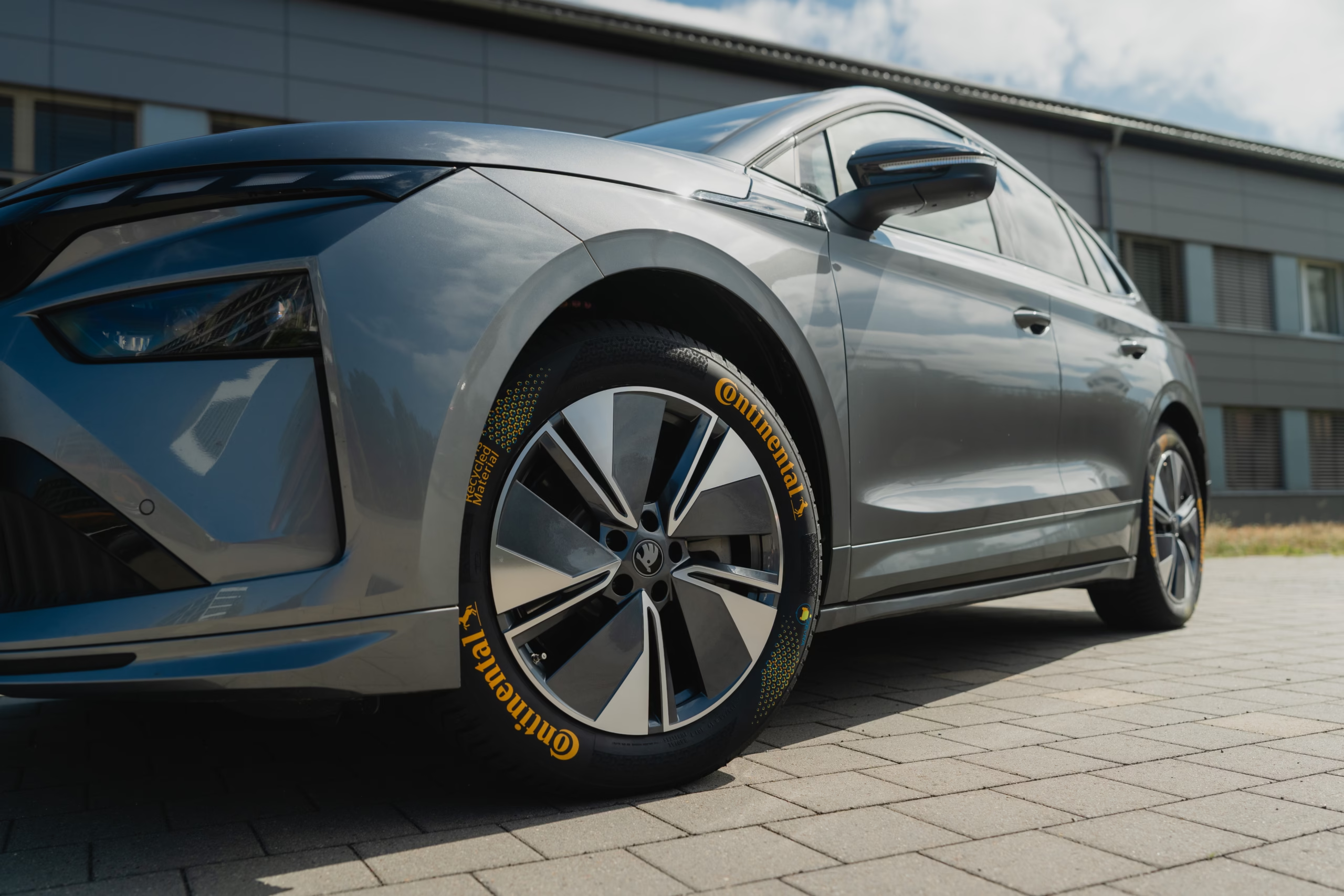

Continental developed a concept tire with about 43 percent recycled materials. This tire emerged from the EU-funded ZEvRA project. ZEvRA stands for Zero Emission Electric Vehicles Enabled by Harmonized Circularity. The two-year initiative concludes in 2026. Its goal is to optimize circular economy practices across the entire electric vehicle value chain. Continental is the only tire manufacturer among the project’s 28 partners. The consortium includes automakers, research institutes, recyclers, and suppliers.
The project treats lifecycle carbon as a system-wide challenge. It does not focus only on batteries. Instead, it examines materials, design, remanufacturing, and end-of-life flows. Continental’s deliverable is a high-performance concept tire. This tire shows that sustainability and safety can coexist.
Material composition and circular inputs
The ZEvRA concept tire uses around 43 percent recycled materials. These include recycled tall oil and recovered steel. The compound also contains rubber from end-of-life tires. Polyester fibers come from recycled PET bottles. Recovered carbon black is produced via pyrolysis of used tires. Recycled sand from foundry residues enables an alternative silica variant.
Renewable raw materials account for about 13 percent. Mass-balance-certified materials make up roughly 25 percent. Together, more than 80 percent of inputs come from recycled, renewable, or mass-balance sources. This mix reduces demand for virgin raw materials. It also keeps materials in circulation longer.
Continental has used recovered carbon black since 2023. The Korbach site applies it in all new solid rubber tires. These tires mainly serve forklift trucks. Polyester casings from recycled PET bottles entered selected passenger tires in 2022. The UltraContact NXT launched in 2023 with up to 65 percent sustainable inputs. By 2025, renewable and recycled production materials reached 28 percent. The target is at least 40 percent by 2030.
Performance results and EV efficiency gains
The concept tire achieves the highest EU rolling resistance rating. Low rolling resistance matters greatly for electric vehicles. It reduces energy consumption during driving. This effect extends vehicle range on a single charge. The result shows that circular materials need not compromise efficiency. Safety, durability, and performance remain intact.
Tires balance many high-performance raw materials. These formulations ensure safety, efficiency, and longevity. Adding large shares of recycled content creates engineering challenges. The ZEvRA tire demonstrates that these challenges can be met. It serves as a catalyst for next-generation materials.
Industrial scaling and regulatory framework needs
Continental stresses the need for clear regulatory frameworks. Technological progress requires aligned rules to scale. Europe needs standard definitions for recycled materials. Criteria must clarify when processed substances count as recycled raw materials. Harmonized accounting methods are also essential. These steps create planning certainty for investors.
Many recycling processes remain in industrialization phases. Supply chains must become resilient and internationally coordinated. Material flow allocation procedures need alignment across borders. Only then can high-quality recycled inputs reach production lines. The next step is establishing closed material flows at scale. This shift will accelerate the transition to a climate-friendly circular economy.
Sustainability strategy and reporting transparency
Continental integrates sustainability into its corporate strategy. The company sees responsible business as an innovation driver. It uses this approach to identify risks and opportunities early. Transparency in calculation and reporting matters to stakeholders. Jorge Almeida, head of Sustainability for Tires, calls for simple rules. He warns against bureaucracy that hinders genuine progress.
Dialogue between policymakers and industry should shape standards. Consumers need clear, understandable information. This clarity promotes trust and faster adoption. Continental continues to raise shares of recycled and renewable materials. The ZEvRA insights will guide further material development. Focus areas include industrial availability and process scaling.
Key materials and technologies in the ZEvRA tire
- Recycled tall oil supports bio-based compound performance.
- Recovered steel reduces demand for primary metal production.
- End-of-life tire rubber re-enters the manufacturing cycle.
- Polyester fibers from recycled PET bottles replace virgin synthetics.
- Recovered carbon black from pyrolysis cuts reliance on fossil feedstocks.
- Recycled sand enables an alternative silica variant for tread compounds.
- Renewable raw materials contribute around 13 percent of total inputs.
- Mass-balance-certified materials account for roughly 25 percent.
Sources: Continental