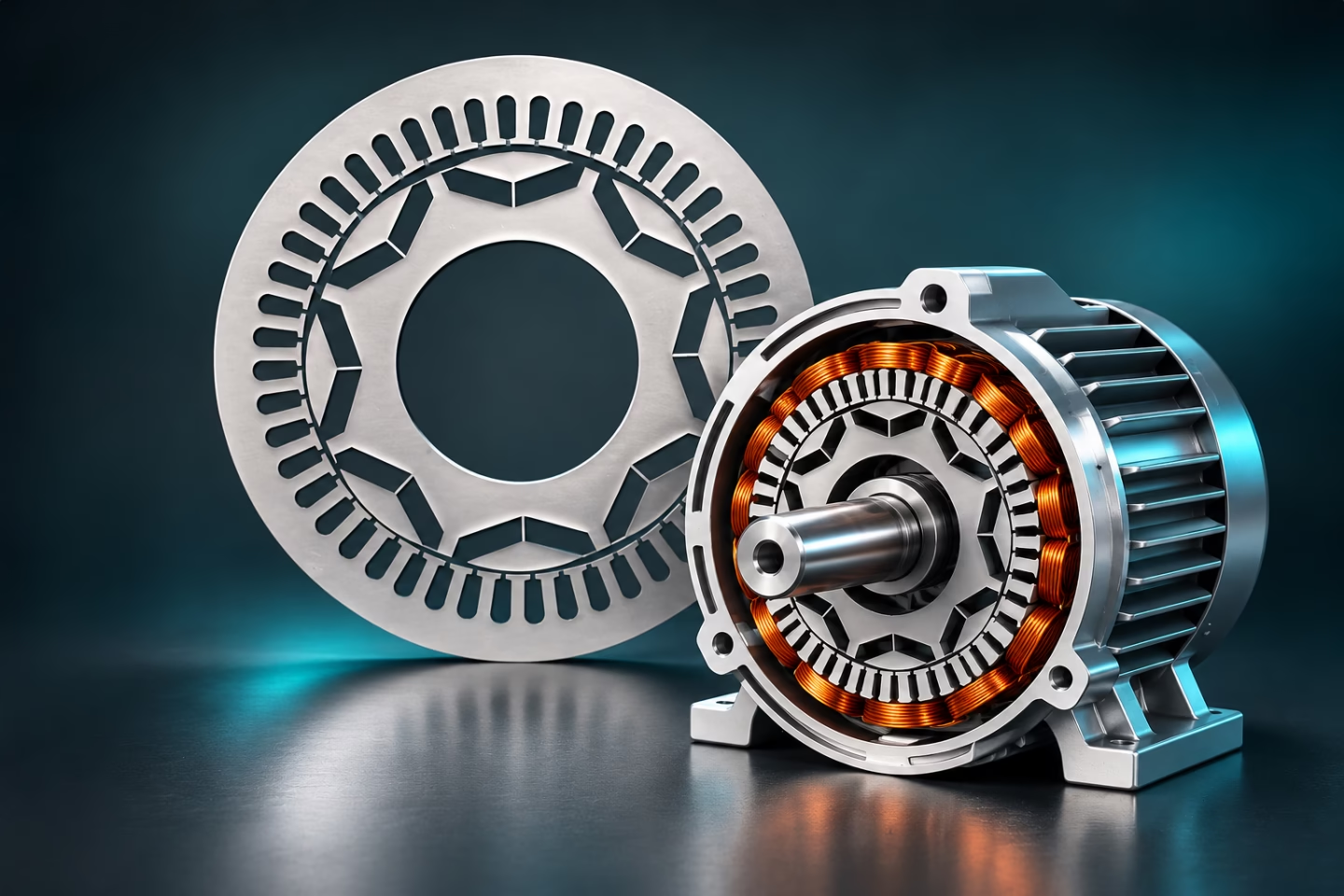

Fraunhofer IFAM Dresden has launched SIREN, a research initiative to reduce electric-motor dependence on rare earths and copper. The project will create an integrated additive-manufacturing infrastructure for next-generation, resource-efficient drive systems.
E-motors need new materials
Electric motors are central to mobility, industrial equipment, and many electrified systems. Their performance depends on materials such as rare-earth magnets and copper windings, which face supply and strategic risks.
Rare earths are concentrated among a limited number of supplier countries. This concentration creates exposure for European manufacturers, especially as demand for electrified transport and industrial systems rises.
Copper is also strategically important. Growing electrification increases the pressure on copper supply chains, making alternatives and material-efficient designs increasingly relevant.
SIREN addresses this challenge at the manufacturing level. Rather than focusing only on material substitution, it combines new materials with a complete production chain for complex motor components.
What SIREN aims to achieve
SIREN stands for “Sovereign and versatile infrastructure for next-generation, resource-independent electric drives.” Its central goal is to build an end-to-end, sinter-based additive-manufacturing process chain for electric drives.
The project will connect materials development, component production, and functional demonstrators. This approach should allow researchers and industrial partners to move from material concepts to tested motor technologies.
A key advantage is the ability to combine different metallic materials in targeted ways. Additive manufacturing can also create complex geometries that are difficult or impossible with conventional production methods.
The infrastructure is intended to support both research and technology transfer. Companies working in drive technology, supply chains, and sintering will be able to use and build on the resulting capabilities.
Multi-material motor stacks
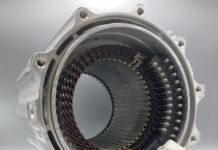
A major focus is the development of multi-material laminated stacks. These stacks combine soft magnetic and non-magnetic materials in controlled configurations.
This combination can support new motor architectures. Potential examples include high-speed reluctance motors and ferrite-excited permanent-magnet drives that operate without rare earths.
The approach builds on Fraunhofer IFAM’s existing work in soft magnetic materials. The institute has previously developed additive screen-printing methods for ultra-thin electrical steel sheets and field-assisted sintering methods for nanocrystalline materials.
Earlier projects also explored hybrid metal sheets for electric drives. In the InnoBlech project, Fraunhofer IFAM worked on printed, iron-based hybrid rotor laminations for reluctance and permanent-magnet synchronous motors.
SIREN extends this experience into a broader infrastructure. It aims to combine several additive processes in a way the institute describes as unique in Europe.
Aluminum instead of copper
The project also investigates aluminum as an alternative to copper in electrical windings. Aluminum is lighter and more abundant, but it presents conductivity and thermal-management challenges.
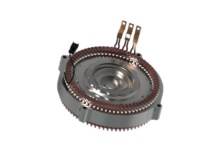
SIREN will incorporate special cooling channels into aluminum windings. These channels are designed to improve winding performance and enable high-power electric-drive applications.
This work could make aluminum windings more viable for demanding mobility systems. It may also reduce reliance on copper without compromising the performance required by modern electric motors.
Applications in demanding mobility
The research targets applications that require compact designs, high power density, and dependable operation. These requirements are especially important in air, land, and underwater vehicles.
Electric aviation, electric vehicles, marine systems, and industrial machinery all place different demands on drive systems. SIREN’s technologies could therefore support a broad range of use cases beyond a single vehicle type.
The project also sees potential in wider industrial applications. Resource-efficient motor designs may become valuable wherever electrification, performance, and supply-chain resilience intersect.
A European research infrastructure
Fraunhofer IFAM Dresden will receive more than EUR 2 million in funding through the end of 2028. The money comes from the European Regional Development Fund under Saxony’s “InfraProNet Research 2021–2027” programme.
The Saxon State Ministry for Science, Culture and Tourism supports the funding scheme. The Sächsische Aufbaubank Förderbank administers the grant.
SIREN also aligns with the European Platform for Strategic Technologies, known as STEP. This initiative seeks to strengthen Europe’s capacity to develop and manufacture strategically important, resource-efficient technologies.
Support for Saxony’s industry
The project is designed to benefit small and medium-sized enterprises in Saxony. It will provide access to advanced manufacturing processes and support knowledge transfer into industrial settings.
Companies in drive technology, supply industries, and sintering technology are expected to play an important role. Collaboration should help local firms strengthen their position in European value chains.
Fraunhofer IFAM Dresden already brings substantial expertise in powder metallurgy and additive manufacturing. Its Innovation Center Additive Manufacturing combines technologies including electron-beam powder-bed fusion, additive screen printing, gel casting, MoldJet, and liquid metal printing.
Key elements of SIREN
- Develops a complete sinter-based additive-manufacturing process chain for electric drives.
- Combines soft magnetic and non-magnetic materials in multi-material laminated stacks.
- Enables motor concepts that can operate without rare-earth materials.
- Replaces copper windings with aluminum windings where suitable.
- Adds cooling channels to improve aluminum winding performance.
- Supports high-speed reluctance motors and ferrite-excited permanent-magnet drives.
- Targets air, land, and underwater mobility applications.
- Provides a transfer route from laboratory research to industrial production.
- Supports Saxony’s SMEs through access to advanced manufacturing infrastructure.
- Receives more than EUR 2 million in funding until the end of 2028.
Reducing dependence on raw materials
SIREN links material innovation, manufacturing technology, and industrial resilience. Its approach treats electric motors not only as products to optimize, but as systems that can be redesigned from the material level upward.
The project may reduce dependence on scarce raw materials while preserving high performance. At the same time, it could give European manufacturers more control over critical technologies and production methods.
If successful, SIREN could help establish a more resource-efficient and competitive European electric-drive industry. It also positions Fraunhofer IFAM Dresden as a hub for next-generation motor manufacturing.
Sources: Fraunhofer IFAM