
MAHLE has developed an automated charging concept that combines autonomous parking with contactless inductive charging. The system aims to remove cable handling and make electric-vehicle charging simpler for private drivers and commercial fleets.
Automated Charging Without Cables
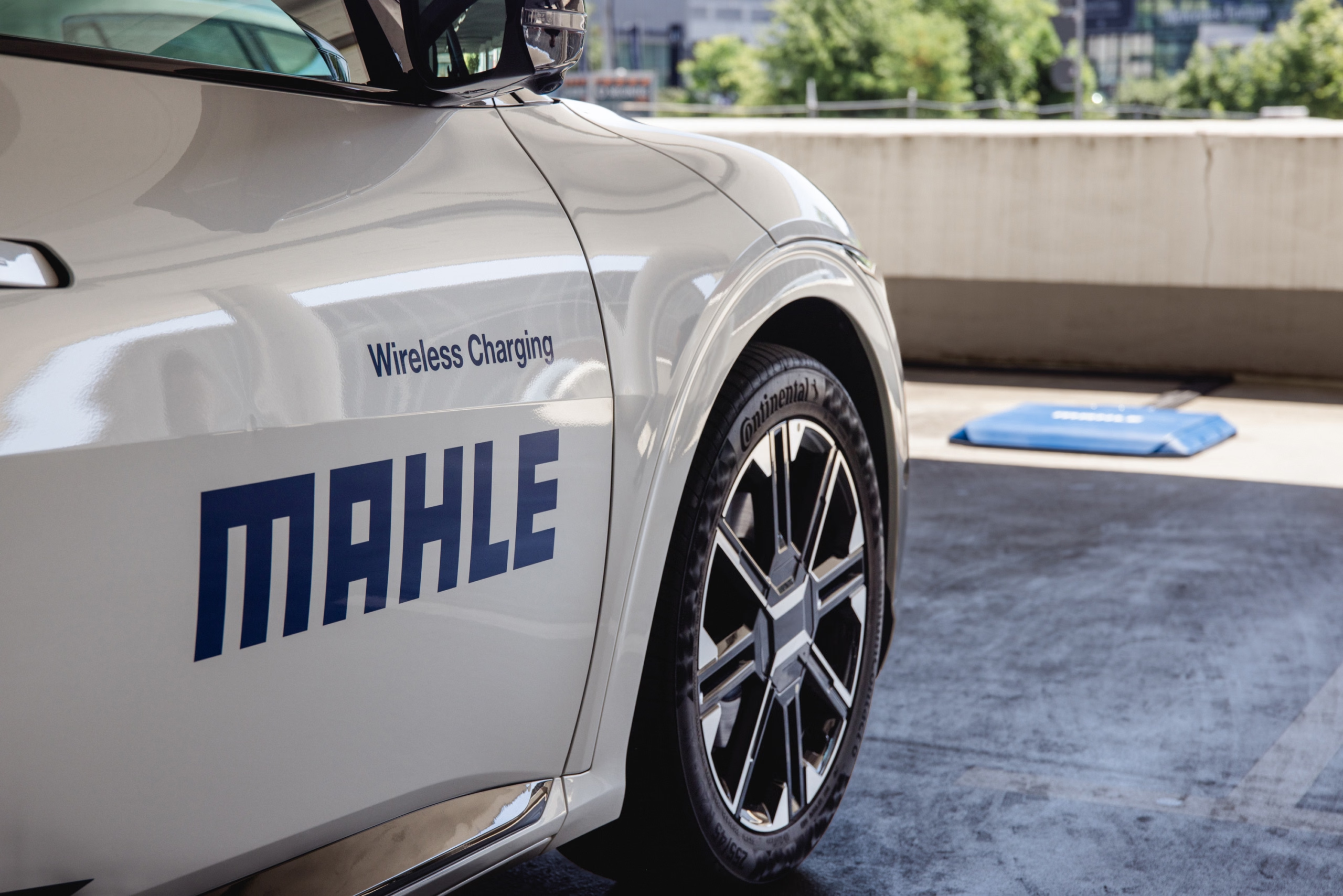
MAHLE’s Autonomous Park & Charge pilot brings together two functions. First, the vehicle can identify and enter a suitable parking space. Then, it aligns itself above a charging pad and begins charging without a physical connection.
The approach targets a common inconvenience in electric mobility. Drivers often need to locate an available charging bay, park accurately, and connect a cable. MAHLE’s concept is designed to automate these steps.
The system is intended for both private and commercial use. Car-rental firms, logistics operators, and delivery services could use it to charge vehicles with less manual intervention.
How the System Operates
MAHLE uses the vehicle’s existing camera and artificial-intelligence-based algorithms to recognize parking spaces equipped with charging infrastructure. The company states that the solution does not require additional sensors.
After identifying a suitable space, the vehicle positions itself over the ground-mounted charging pad. The Differential Inductive Positioning System, or DIPS, supports this precise alignment.
Once the vehicle is correctly positioned, energy transfer starts automatically. The process is completely contact-free and does not depend on a driver plugging in a charging cable.
Key system functions
- Detects compatible parking spaces using camera data and AI algorithms.
- Aligns the vehicle precisely above the embedded charging pad.
- Starts energy transfer automatically after parking.
- Charges the vehicle without cables or physical connectors.
- Supports bidirectional energy flow between the vehicle and the grid.
DIPS and Positioning Accuracy
DIPS is the technological basis for accurate vehicle positioning. It helps the car align correctly over the charging coil embedded in the ground.
The technology was recognized by SAE International as a global industry standard two years before MAHLE’s latest announcement. MAHLE says its positioning system enables reliable alignment between the vehicle and the charging infrastructure.
SAE International published MAHLE’s DIPS under the designation SAE J2954. According to MAHLE, the system establishes a connection with the charging point through a magnetic field as the vehicle approaches.
Charging Power and Efficiency
The Park & Charge pilot supports contactless charging at up to 11 kW. MAHLE reports an efficiency level above 92 percent under real-world vehicle conditions.
This efficiency makes wireless charging close to conventional wired charging in energy performance. The company presents this as an important factor for user acceptance and practical deployment.
MAHLE is currently validating the core technology with the BMW Group in a BMW iX3. The collaboration tests the technology against real vehicle requirements.
New Test Facility in Stuttgart
MAHLE converted a former internal-combustion-engine test facility in Stuttgart into a high-voltage and e-mobility testing center. The site supports the development, validation, and series preparation of future wireless charging systems.
The test bench recreates realistic use cases for contactless energy transfer under controlled conditions. It also allows MAHLE to examine safety functions before systems reach the market.
The facility brings development, software engineering, validation, and maintenance into one integrated team. MAHLE describes this setup as a way to deliver complete solutions, from system knowledge to final products.
Safety validation priorities
- Detects foreign objects in the air gap between vehicle and ground pad.
- Measures the system’s stray magnetic field.
- Tests shielding and safety concepts during early development.
- Replicates different vehicle architectures in a controlled environment.
- Supports future charging capacities of up to 30 kW.
Integration With BMW Platforms
The Stuttgart facility can reproduce different vehicle architectures. One example is BMW’s Neue Klasse platform, which MAHLE uses to assess early-stage integration of charging components.
MAHLE can evaluate how the vehicle-side coil integrates into the front end. It can also examine shielding and safety concepts before a system enters series development.
This approach may reduce development risk. It allows manufacturers to test compatibility, safety, and packaging requirements under controlled conditions.
Bidirectional Charging Potential
MAHLE’s technology already supports bidirectional charging. This means an electric vehicle can receive electricity from the grid and return stored energy when required.
Bidirectional capability could support future energy systems. Vehicles may act as flexible energy resources, helping to balance electricity supply and demand.
For fleet operators, this feature could become especially valuable. Delivery vehicles, rental cars, and logistics fleets may charge during low-demand periods and potentially return energy when the grid needs support.
Strategic Role for MAHLE
Intelligent charging solutions are a central part of MAHLE’s electrification strategy. The company is expanding its development and validation capabilities for e-mobility applications.
The announcement also reflects MAHLE’s broader transformation. The supplier is moving from a traditional powertrain specialist toward a technology partner for sustainable mobility.
Dr. Marco Warth, Vice President of Corporate Research and Advanced Engineering at MAHLE, said wireless charging could make electric mobility easier in everyday life. He emphasized efficiency, ease of use, automation, and integration with existing vehicle and infrastructure concepts.
Why Automated Charging Matters
Automated wireless charging may reduce one of the practical barriers to electric-vehicle adoption. Drivers would not need to handle cables, search for compatible connectors, or ensure a precise manual plug-in process.
The technology could also improve operational efficiency for fleets. Automated charging may reduce downtime and simplify depot management for vehicles that return to fixed locations.
However, widespread use will depend on compatible vehicles, installed ground pads, standardized positioning, and robust safety validation. MAHLE’s work with SAE standards and BMW provides a foundation for these requirements.
Sources: MAHLE