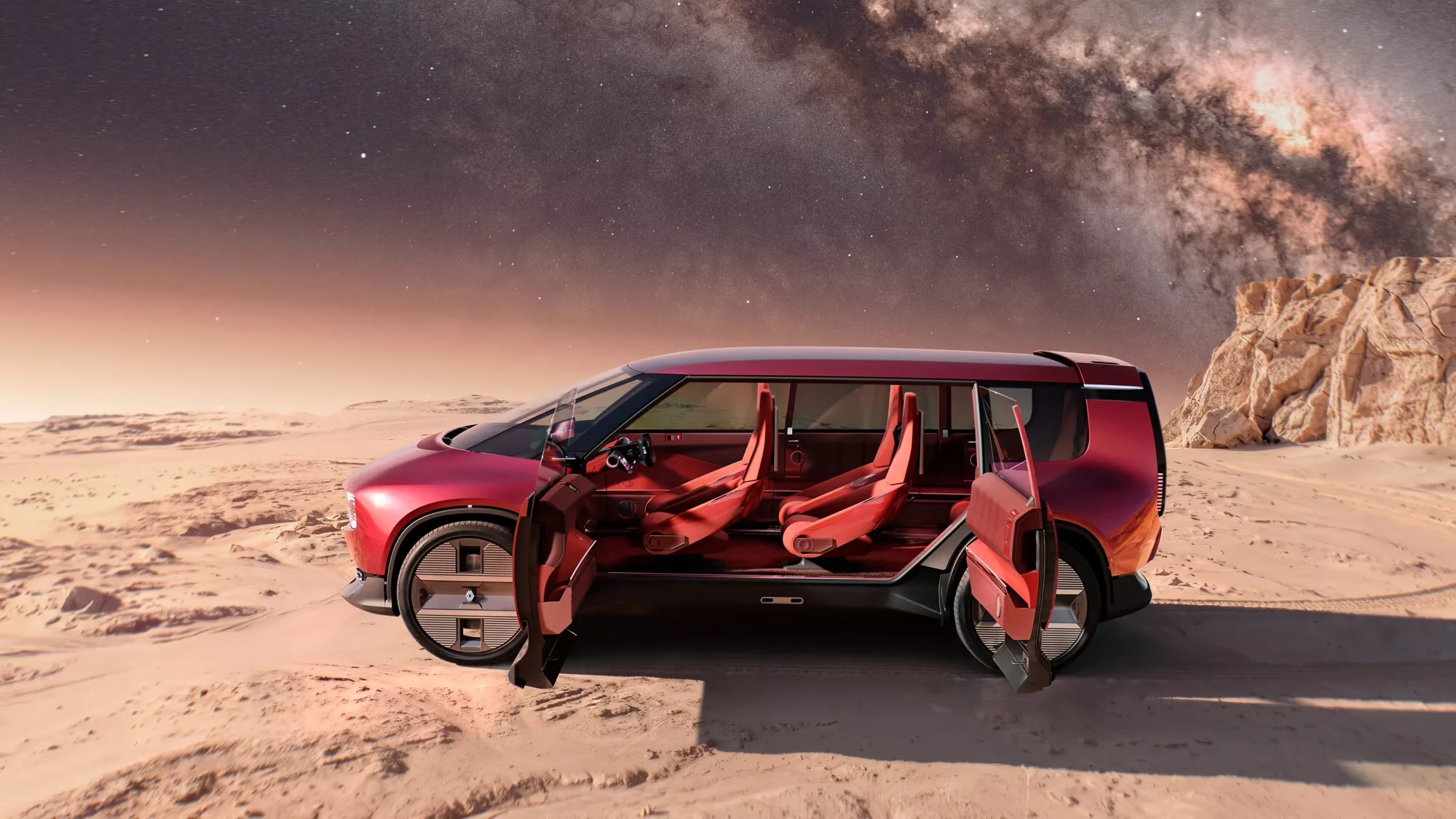

Renault has used the 2026 Paris Motor Show to revive one of its most important design ideas. The E-Space Concept presents an electric reinterpretation of the MPV, built around space, light, flexibility and shared family time.
The concept is not a production preview. Renault describes it as a forward-looking laboratory for future electric family cars and its long-standing voitures à vivre philosophy. Still, several technologies shown in the study are intended to reach upcoming Renault models.
A Return to the Original MPV Idea
Renault introduced the original Espace in 1984. The company positions that model as the vehicle that created the MPV category by placing people, comfort and daily life at the centre of vehicle design.
E-Space Concept therefore acts as a contemporary successor rather than a direct replacement for today’s Espace. Renault says it revisits the one-box silhouette, cabin-focused layout, modularity and brightness that defined the original model.
The study also challenges the current dominance of SUVs. Instead of a raised crossover body, Renault uses a clean MPV silhouette with a low waistline, generous glazing and an open interior.
Renault Brand CEO Fabrice Cambolive said the concept shows how the company’s heritage can shape its future. He framed it as an electric-era revival of the original Espace’s people-centred approach.
Four Brand Principles Shape the Concept
Renault presents E-Space Concept through four brand values. Together, they define its interpretation of voitures à vivre, or cars designed as living spaces.
- Design to be loved: simple, recognisable forms with emotional appeal.
- Electrified by passion: a fully electric layout that supports a flat floor and quiet driving.
- Human-first tech: displays and controls intended to improve usability rather than distract occupants.
- Crafted space: an interior treated like a furnished living room, with modular seating and natural materials.
These principles explain why the concept prioritises the cabin before the exterior. Renault says its designers created the living area first, then wrapped it in bodywork and extensive glazing.
Exterior Design Avoids SUV Cues
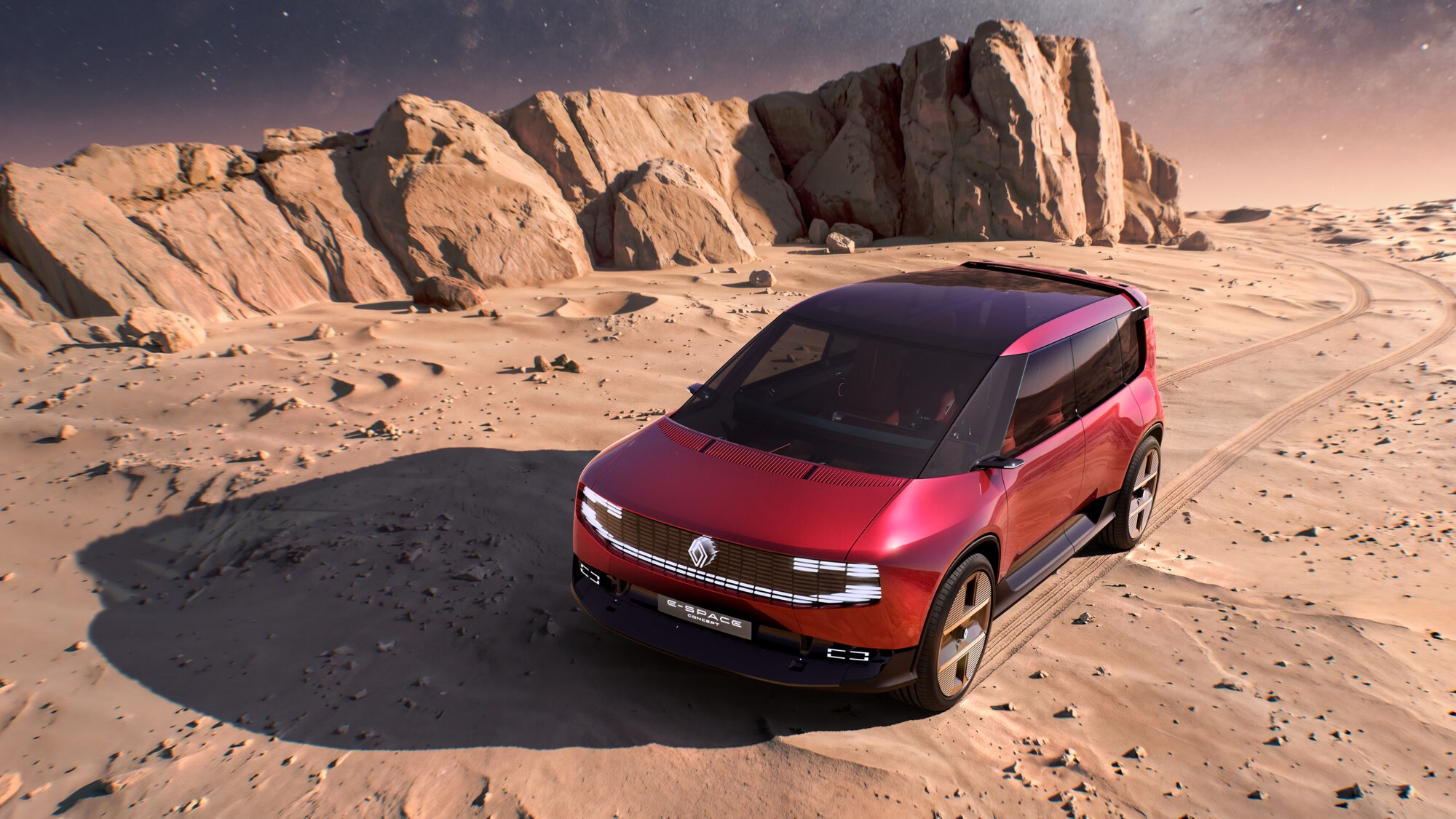
The E-Space Concept measures 4.70 metres long, 2.02 metres wide and 1.67 metres high. Its proportions deliberately recall the first Espace, while its short overhangs and 23-inch wheels give it a more modern stance.
The low waistline is central to the design. It allows occupants to see out easily and creates a connection between the cabin and the surrounding environment.
At the front, a large illuminated “U” surrounds the grille area. A floating illuminated Renault logo sits at its centre, creating a clear light signature.
The rear uses vertical surfaces to suggest space and modularity. A roof spoiler also references the second- and third-generation Espace models.
Renault has added a functional aerodynamic detail as well. The front bumper splitter can move lower at high speed to improve airflow.
A black lower body section visually separates the technical base from the glass cabin. Renault compares this element to Formula 1 sidepods and says it hints at the battery pack and aerodynamic systems beneath the body.
A Glass Cabin Inspired by Architecture
The most distinctive exterior feature is the fully glazed passenger compartment. Renault says the design draws on Bauhaus architecture and Ludwig Mies van der Rohe’s Farnsworth House.
The glass roof and side windows extend below the waistline. Body panels attach to this glazed structure without a sharp visual divide between metal and glass.
This approach makes the cabin visible from outside and increases the sense of openness inside. Renault also uses lighting to emphasise the reduced thickness between the windscreen and body panels.
The rear pillar appears to float because of this treatment. The overall effect is closer to a modern pavilion than a conventional family car.
Six Seats and a Flat Floor
Inside, the concept offers six individual seats across three rows. All seats share the same size and design, and they sit on a completely flat floor.
The electric powertrain enables this layout. Without a conventional transmission tunnel, Renault can create a more open and flexible interior.
The seats take inspiration from furniture rather than automotive seating. Their lacquered shells reference designer Pierre Paulin, while their slim upper sections echo the original 1984 Espace.
Each seat can rotate slightly on its axis. This movement helps passengers enter and exit, but it also supports more social seating arrangements.
Flexible Layouts for Family Travel
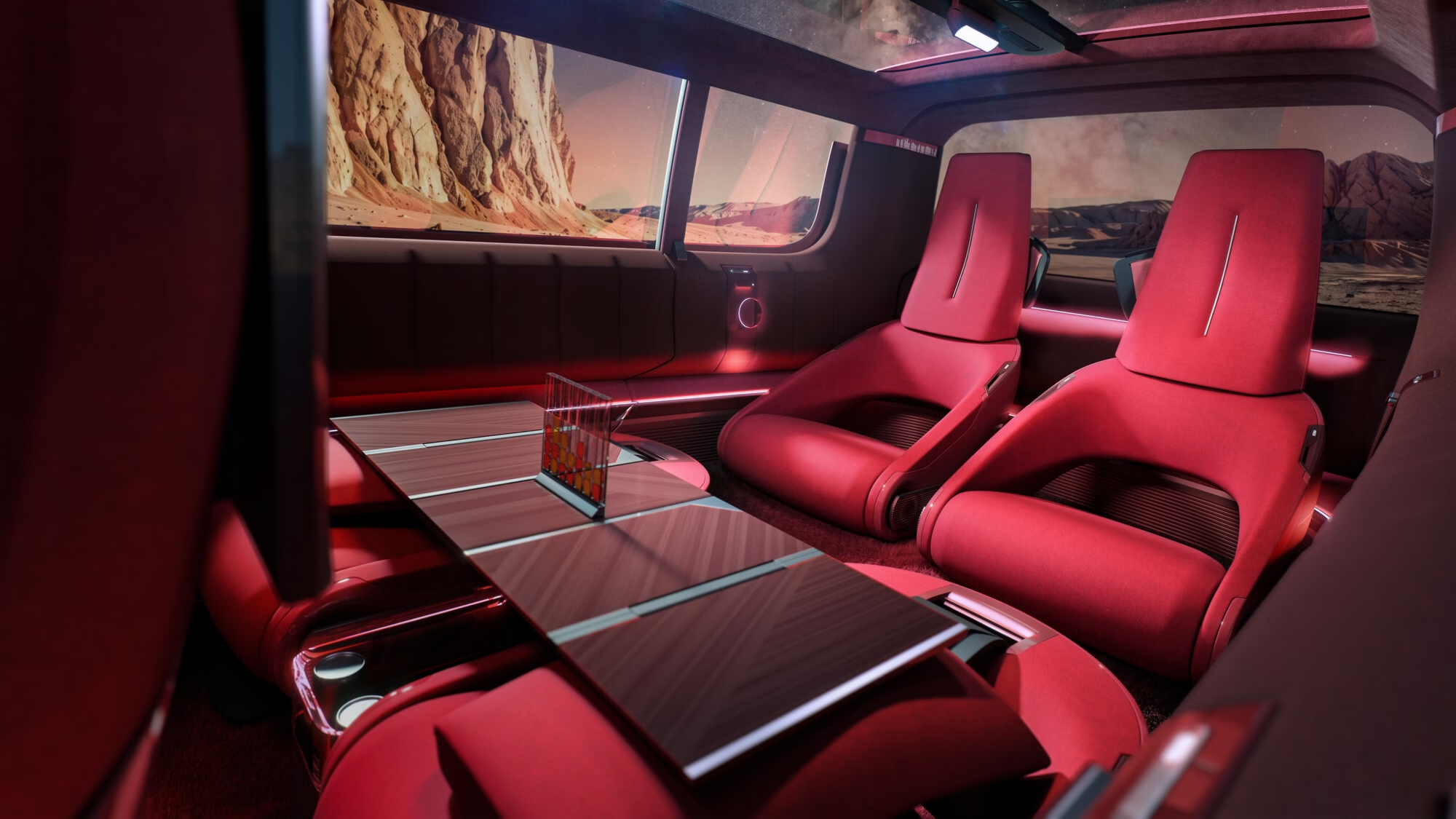
Modularity is a core part of the concept. Renault has designed several configurations that change how passengers interact during a journey.
- In the standard layout, second-row passengers face forward and can use folding tray tables.
- The second-row seats can rotate through 180 degrees to create a “TGV train square” with the third row.
- In a four-seat arrangement, the second-row seats fold completely to form a large table for third-row occupants.
- A remote-control console can slide along the central spine of the cabin.
That console includes an air purifier, a small refrigerator and video-game controllers. It also contains a physical Connect 4 game, reinforcing Renault’s focus on shared time rather than isolated screen use.
The door handles are upholstered in quilted fabric. Because the waistline is low, Renault has removed conventional armrests and allows passengers to rest their elbows on the window ledge.
Ambient lighting reinforces the lounge-like atmosphere. An illuminated line runs along the base of the cabin, while reading lights are mounted on a rail in the glass roof.
OpenR Panorama Replaces the Dashboard
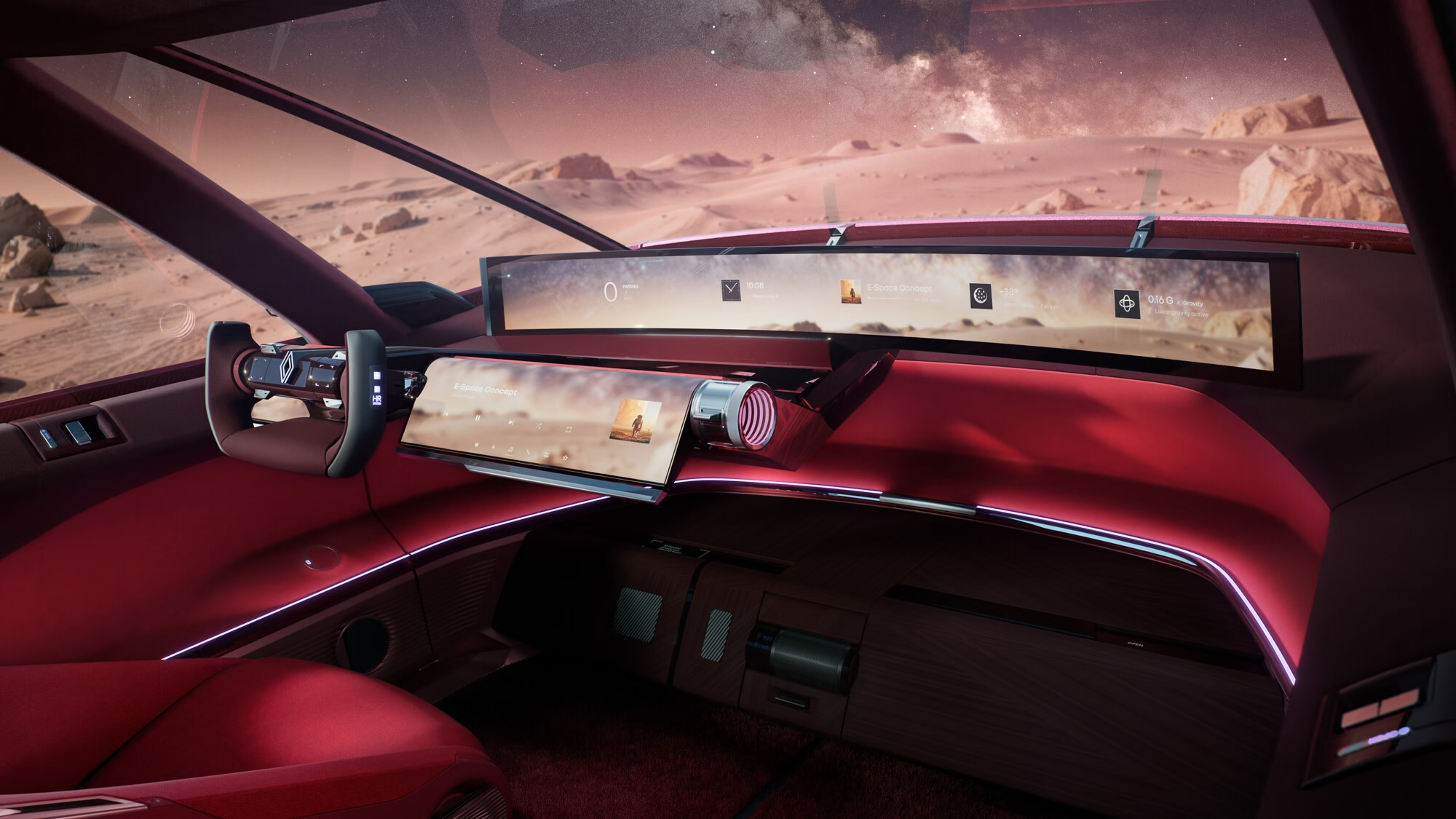
Technology is most visible at the front. The E-Space Concept features OpenR Panorama, a curved display that stretches across the full width of the cabin.
The screen measures 1,130 mm wide and 110 mm high. Renault says it will appear in future upper-range models, with the next-generation Rafale and Scenic among the first to receive it.
OpenR Panorama replaces the traditional dashboard visually. However, it is not touch-sensitive; Renault positions it low and close to the road to support ergonomics and safety.
Instead, occupants control its functions through two flexible touchscreens. These screens rotate around a tubular base connected to the steering wheel area.
This arrangement reduces visual clutter and frees space in the front row. The lower dashboard area becomes a curved full-width storage unit, with the pedals concealed beneath it.
Steer-by-Wire Changes the Driving Position
The compact steering wheel uses steer-by-wire technology. It has no mechanical connection to the front wheels, allowing Renault to rethink its shape and placement.
The wheel has a fixed hub and touch-sensitive controls. Drivers can use these controls to interact with the OpenR Panorama system.
Renault says the cylindrical crossbar echoes the dashboard design. The company also claims the technology improves interior space and creates a smoother driving experience.
Because the steering system is decoupled from mechanical constraints, the wheel can offer a clearer view of the panoramic display. This supports Renault’s aim of combining advanced technology with a calm, uncluttered cabin.
Colour Returns to the Cabin
Renault has given the interior a strong colour identity. The company references its vibrant pop interiors from the 1970s, using shades of scarlet, purple and garnet.
The 3 cm-thick carpet is particularly prominent. Its coral centre darkens toward the edges, creating a gradient effect across the floor.
Metal components and controls have a jewellery-like finish. Renault also uses straw marquetry on the rear-seat tray tables instead of conventional wood trim.
The result is an interior that feels closer to contemporary furniture design than to a traditional vehicle cockpit. Renault says the aim is to create a space that is futuristic, welcoming and slightly nostalgic.
Bio-Based Materials Take a Larger Role
Sustainability is present throughout the cabin. Renault says the concept explores bio-based materials beyond the leather and wood commonly used in the automotive industry.
The cabin trim uses dyed straw applied directly to its supporting structure. The floor is covered with a 100% wool, long-pile tufted carpet.
The interior paint contains 18% bio-based resin. The steering wheel combines fabric with a material containing 26% castor oil and 25% organic cotton.
Even the tyres include an average of 19% natural rubber from managed plantations. These choices signal Renault’s interest in renewable materials that still meet technical requirements.
What It Means for Future Renault Models
Renault has been clear that E-Space Concept does not directly preview a production car. It is also not designed to replace the current Espace.
However, the concept is not purely decorative. The OpenR Panorama display is confirmed for future executive-line Renault models, beginning with the next Rafale and Scenic.
The concept also reflects Renault’s broader product strategy. At the Paris show, the brand presents both fully electric and full-hybrid vehicles, positioning electrification as a flexible transition rather than a single-path approach.
For family mobility, the message is clear. Renault sees value in spacious, adaptable and light-filled interiors, even as the industry continues to favour SUV-shaped vehicles.
Key Specifications and Features
| Area | Renault E-Space Concept |
|---|---|
| Type | Electric MPV concept |
| Debut | 2026 Paris Motor Show |
| Length | 4.70 m |
| Width | 2.02 m |
| Height | 1.67 m |
| Wheels | 23-inch |
| Seating | Six individual seats in three rows |
| Display | 1,130 x 110 mm OpenR Panorama screen |
| Steering | Steer-by-wire |
| Production status | Design and technology study; not a production preview |
Why the Concept Matters
E-Space Concept matters because it challenges a prevailing market assumption. Renault argues that family vehicles do not need to adopt SUV proportions to feel modern, desirable or technologically advanced.
The concept combines heritage with several tangible technology directions. Its panoramic display, steer-by-wire system, modular seating and material choices all point to areas Renault may develop in future vehicles.
Most importantly, it reframes the electric car as more than a powertrain change. Renault presents it as an opportunity to redesign the cabin as a flexible social space.
The E-Space Concept may remain a show car. Even so, it gives a clear indication of how Renault intends to differentiate its future electric family vehicles through space, comfort and human-centred design.
Sources: Renault