
ABB is acquiring Advantics to strengthen its direct current portfolio and deepen its position in high-efficiency power conversion. The deal adds silicon carbide expertise that ABB wants to apply across data centers, industrial microgrids, power generation, and EV infrastructure.
The acquisition fits ABB’s wider strategy around electrified systems that need compact, efficient, and resilient power architectures. ABB says the transaction supports rising demand for DC solutions as digital infrastructure and energy networks grow more complex.
Strategic rationale
ABB presents the acquisition as a technology fit rather than a simple market expansion. Advantics adds silicon carbide-based conversion systems that improve energy efficiency and support denser power designs.
This matters because DC systems are gaining relevance in places where efficiency and footprint are critical. Data centers, fast-growing EV charging environments, and distributed energy sites all benefit from lower losses and better thermal behavior.
Main targets
- Data centers with rising power density needs.
- Industrial microgrids that require flexible power conversion.
- Power generation systems that need efficient electrical interfaces.
- EV infrastructure that depends on robust DC conversion.
What Advantics contributes
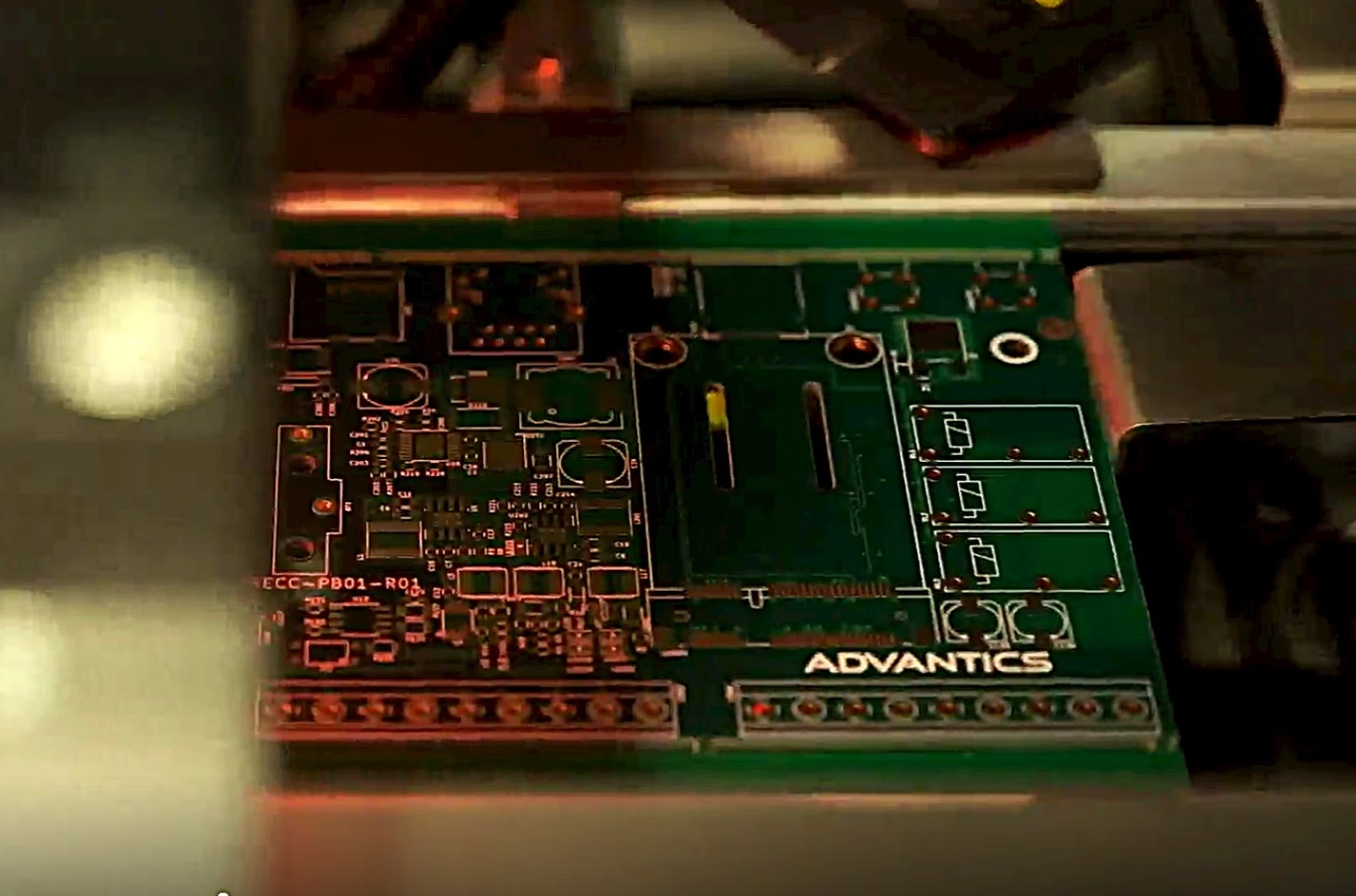
Advantics is based in Saint-Genis-Pouilly in eastern France. The company focuses on silicon carbide power conversion solutions and combines hardware, firmware, and software in its systems.
ABB says Advantics’ modules reach up to 99 percent efficiency in demanding applications. That figure is important because every point of conversion efficiency can reduce waste, cooling demand, and operating cost.
The company’s technology also adds compact engineering know-how. ABB highlights that the acquisition brings in both power converter capability and specialized engineering talent.
DC matters
Direct current systems are becoming more important in modern electrical infrastructure. They help match renewable generation, batteries, and many electronic loads more naturally than alternating current in certain use cases.
ABB’s framing suggests DC will play a larger role in future architectures that need higher power density and stronger resilience. In that context, silicon carbide becomes useful because it supports faster switching, smaller devices, and better conversion performance.
Practical effects
- Lower conversion losses can improve system efficiency.
- Smaller hardware can help reduce space requirements.
- Better thermal performance can simplify cooling design.
- Higher resilience can support critical infrastructure uptime.
Relevance for EV infrastructure
EV charging is one of the clearest application areas in this announcement. High-power charging networks need efficient conversion stages, reliable power electronics, and compact system layouts.
ABB’s acquisition suggests it wants stronger control over the DC layer that supports future charging and grid-connected energy systems. That can matter for charging hubs, depots, and sites that combine storage, solar, and grid power.
Deal terms and timing
ABB did not disclose financial terms. The company said the transaction is expected to close in the fourth quarter of 2026.
The announcement positions the deal as part of ABB’s long-term DC growth strategy. ABB says the combination strengthens the building blocks needed to design, protect, convert, distribute, and manage power in new electrical systems.
Sources: ABB